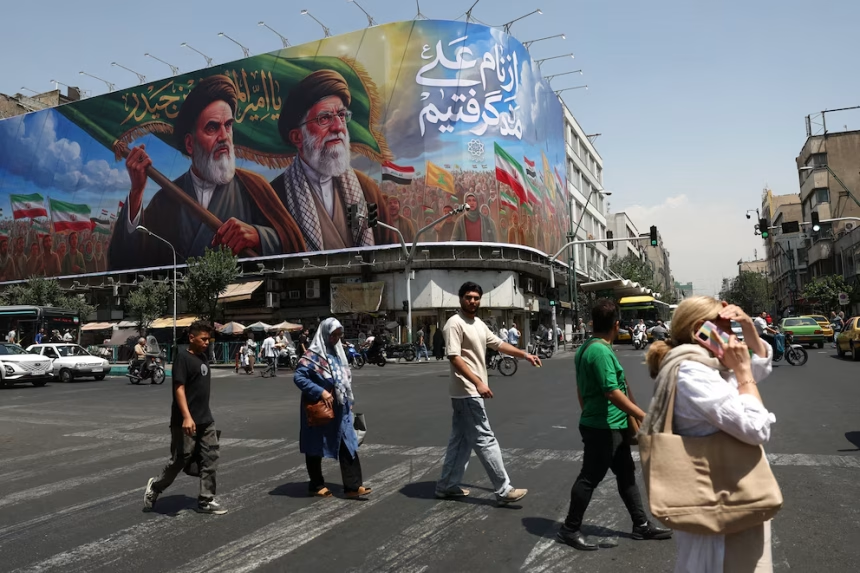
Expectations surrounding a potential peace agreement between the United States and Iran clearly demonstrate that in a globalized world, the silencing of guns in a distant region ultimately guarantees economic stability and the development of our own communities here at home. We will maintain rigorous monitoring of foreign ministries to update every technical detail of this historic negotiation that is redefining the planet’s balance minute by minute.
- Behind the Scenes in Islamabad: How the Controversial Deal Was Forged
- The Three Pillars of the Trump-Araghchi Draft
- 1. Demining and Oil Flow in Hormuz
- 2. The Financial Toll (The $12 Billion)
- 3. The International Atomic Energy Agency (IAEA) Filter
- Allies’ Discontent: Netanyahu and the Gulf Bloc
- Scenario Table: What to Expect from the Energy Market in the Next 60 Days
- Family Preparedness Guide: How to Cushion the Swings of Global Geopolitics
Those who thought the escalating war in the Persian Gulf would plunge us headfirst into a nuclear World War III must be rubbing their eyes in front of their TV screens today. This is not a hallway rumor or an unfounded diplomatic leak. After months of intense bombings, suffocating naval blockades, and an alarming spike in gasoline prices that directly hit our community’s wallets, the two most hostile powers on the planet have just made a move that has shocked global geopolitics.

The truth is that last-minute diplomacy has managed to halt, at least temporarily, the roar of hypersonic missiles. The international chessboard has been reorganized in a matter of hours.
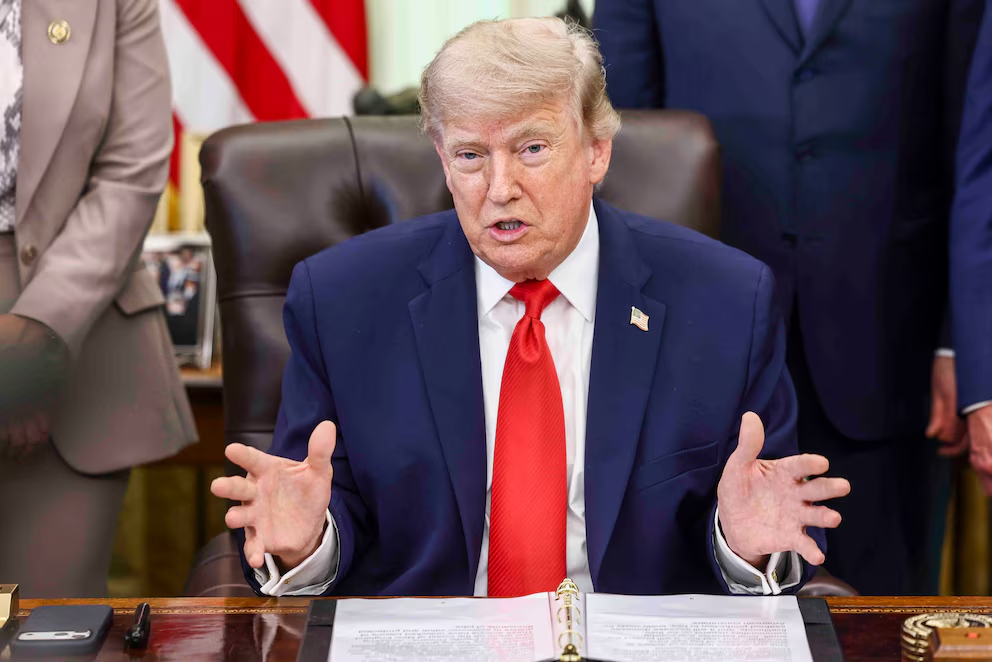
The Geopolitical Pulse (Snippet Bait): President Donald Trump formally announced the consolidation of a 60-day ceasefire extension with the Islamic Republic of Iran, opening a critical window for bilateral negotiations mediated by Pakistan. The draft for a potential peace agreement between the United States and Iran includes the start of demining and reopening commercial traffic in the Strait of Hormuz, the gradual lifting of the U.S. naval blockade, and the release of up to $12 billion in frozen Iranian assets abroad in exchange for a temporary suspension of highly enriched uranium production under direct UN supervision.
Behind the Scenes in Islamabad: How the Controversial Deal Was Forged
To grasp the magnitude of this historic political shift, we must recall the operational hell experienced weeks ago, when Operation Epic Fury—the joint military campaign between the United States and Israel—decapitated the Iranian regime by eliminating high-ranking officials in Tehran. Iran’s response was swift: a barrage of hundreds of missiles and drones that paralyzed traffic through the Strait of Hormuz, the artery through which 20% of the world’s oil flows.
Here’s the interesting part: negotiations in Islamabad (Pakistan) initially collapsed due to the White House’s demand for “unconditional surrender” and “zero uranium enrichment” from Iran. However, the pressure of two invisible clocks forced negotiators to soften their positions.
- Washington’s Election Clock: The Republican wing, led internally by Vice President JD Vance and Steve Witkoff, understood that a prolonged war of attrition ahead of the November midterm elections would devastate the domestic economy due to record fuel prices.
- Tehran’s War Fatigue: After severe damage to its energy infrastructure and water storage facilities, the Iranian delegation (silently backed by a diplomatic push from China) accepted a tactical exit that preserves its sovereignty.
Can we truly believe in the durability of this pact? (Probably not a definitive peace, but it’s the lifeline the global market urgently needed.)

The Three Pillars of the Trump-Araghchi Draft
The document circulating among the foreign ministries of Western allies is not a definitive treaty but a roadmap with three highly specific technical pillars designed to contain the humanitarian and market catastrophe:
1. Demining and Oil Flow in Hormuz
The agreement stipulates an immediate 30-day period for international maritime forces, with Iran’s technical cooperation, to begin clearing sea mines in the strait. The goal is to restore pre-war levels of crude oil commercial flows, which will immediately ease global maritime shipping costs.
2. The Financial Toll (The $12 Billion)
In exchange for freezing the ballistic missile program and halting uranium enrichment above 60%, the U.S. administration commits to releasing in a controlled manner up to $12 billion in frozen Iranian sovereign funds held in banks across Asia and Europe due to previous sanctions.

3. The International Atomic Energy Agency (IAEA) Filter
UN inspectors will receive safe passage and full access to Iran’s nuclear facilities in Natanz and Fordow. This will serve as the only legal “panic button”: if the IAEA detects a single active centrifuge refining military-grade material, the pact dissolves, and bombings will resume immediately.
Allies’ Discontent: Netanyahu and the Gulf Bloc
Let’s get to the point. This diplomatic breakthrough has not been well-received in all official circles. Internal sources from the presidential entourage report that phone calls between Donald Trump and Israeli Prime Minister Benjamin Netanyahu have been extremely tense, involving quite strong language.
Both Israel and several Gulf monarchies (such as Saudi Arabia and the United Arab Emirates) had pressured Washington to maintain the “maximum pressure” economic and military strategy until the total collapse of the theocratic regime. For them, this truce imposed from Washington’s offices represents a geopolitical betrayal that leaves Iran intact and its satellite militia networks (like Hezbollah in Lebanon and the Houthis in Yemen) operational on the ground.
Scenario Table: What to Expect from the Energy Market in the Next 60 Days
For Hispanic families and small business owners with fleets or logistics operations to plan their operating costs, we assess the three likely paths the international crude market will take following the ceasefire implementation:
| Operational Scenario of the Pact | Strait of Hormuz Behavior | Projected Barrel Price (WTI) | Real Impact at Your Local Gas Station |
| Technical Success of Demining (Compliance with 60 days) | Full opening to large oil tankers. | Drop to $74 – $78 USD (Stabilization) | Immediate relief. Reduction of up to 40 cents per gallon within weeks. |
| Peripheral Sabotage (Isolated attacks by militias in Lebanon or Yemen) | Partial opening under U.S. Navy escort. | Fluctuation between $85 – $92 USD | Moderate volatility. Prices remain high but stable without panic spikes. |
| Negotiation Breakdown (Trump cancels the deal due to nuclear progress) | Immediate military closure and blockade reactivation. | Surge above $115 USD | Inflationary crisis. Drastic increase in transportation costs and basic goods. |
Family Preparedness Guide: How to Cushion the Swings of Global Geopolitics
Regardless of whether diplomacy in the Middle East succeeds or fails in finalizing the agreement, the global economic environment in this complex year will continue to experience residual inflationary pressures. Do not leave your household’s economy at the mercy of a late-night presidential tweet. Follow this financial resilience protocol:
1. Audit and Reduce Inefficient Energy Consumption: Diversify Expenses.
Take advantage of the temporary truce in fuel prices to restructure your logistics routes if you run a service business (construction, landscaping, or deliveries). Perform preventive maintenance on your vehicles and optimize routes. The fuel saved today is reserve capital for the next geopolitical winter.
2. Monitor Interest Rates (Credit Card Control): Debt Shielding.
War instability often forces the Federal Reserve to maintain restrictive monetary policies to contain energy-driven inflation. Pay off your variable-rate credit card balances immediately. Avoid unnecessary consumer debt while market volatility persists.
3. Maintain a Basic Stockpile of Non-Perishable Goods: Reserve Supply.
Delays in global supply chains caused by months of conflict in the Red Sea and the Persian Gulf will take months to normalize. Dedicate a small percentage of your monthly budget to buying essential products in bulk before international trade disruptions affect local supermarket stocks.
Expectations surrounding a potential peace agreement between the United States and Iran reflect a stark reality: in the era of global interconnectivity, the end of a distant war is, in fact, the safeguard of economic stability in our own neighborhoods. We will maintain constant monitoring of satellites and foreign ministries to update minute by minute the impact of this ceasefire on Hispanic economies. A cool head and household planning remain our best tools for resilience against the tensions of the great power blocs.
Image: ElHispanoParaTodos/PRESS