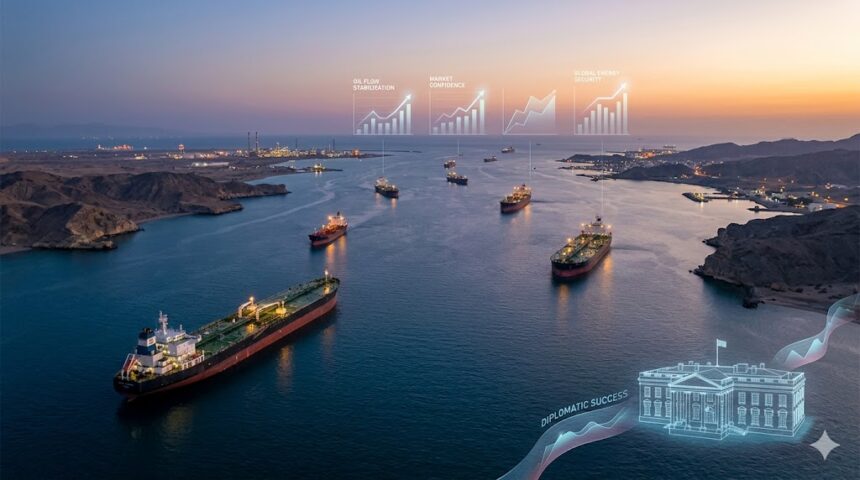
The tension was palpable, until the map shifted. The world held its breath over the possibility of a global energy collapse, but today, the outlook is different. Donald Trump has called Iran’s recent announcement of free passage through the Strait of Hormuz a “victory for global stability,” a critical chokepoint where the daily cost of living in the West is literally at stake.
Quick Response: The reopening of the Strait of Hormuz following recent negotiations and diplomatic pressures led by the Trump administration ensures the transit of approximately 21% of the world’s oil consumption. This reduces the risk of a supply crisis and stabilizes international financial markets.
Credit: ElHispanoParaTodos
The Chessboard: Why This Announcement Changes the Rules of the Game
To understand why Trump is celebrating, you have to look at the map. The Strait of Hormuz isn’t just water; it’s the carotid artery of global energy trade. If Iran shuts it down, the world economy goes into intensive care.

The truth is, for months, threats of a blockade acted as a tool of geopolitical extortion. However, Iran’s recent shift in stance isn’t coincidental. It’s the result of a mix of internal economic pressure, targeted sanctions, and, of course, Trump’s “tough hand” foreign policy rhetoric. Is it surrender? Maybe not, but it’s an undeniable tactical retreat.
The Immediate Impact on Crude Prices
Here’s the interesting part: the market doesn’t wait. As soon as the words “free transit” hit the news wires, Brent and WTI prices reacted downward.
| Economic Indicator | Before the Announcement | After the Reopening Announcement | Estimated Impact |
| Brent Barrel | $85 – $92 USD | $74 – $78 USD | Reduction in logistical costs |
| Cargo Insurance | High-risk premiums | Progressive normalization | Lower import costs |
| Global Inflation | Upward pressure | Temporary stabilization | Relief for consumers |
Trump’s Narrative: “America First” in the Waters of the Gulf
Trump hasn’t wasted time taking credit. For his voter base and Gulf allies, this validates his “peace through strength” strategy. While other governments opted for extended dialogue, the current administration insists that only firmness forced Iran to back down.
Was it really diplomacy or the fear of military escalation? Probably a bit of both, but for the driver filling up their tank in Miami or Houston, political theory matters less than the price per gallon.

- Energy Security: The U.S. strengthens its position as a power broker.
- Message to China: Oil flow to Asia now depends on stability that Washington claims as its own.
- Domestic Campaign: Trump uses this milestone as proof that his administration avoids unnecessary wars through forceful agreements.
What Iran Gains (and Hides) with This Move
Let’s not be naive. Iran isn’t reopening the strait out of generosity. Its economy is suffocating and desperately needs commercial flow to continue. By allowing passage, it eases international pressure and weakens arguments for more aggressive military intervention.
It’s a game of mirrors. By announcing the reopening, Iran also positions itself as a “responsible actor” before the European Union, attempting to fracture the U.S.-led sanctions bloc. Bottom line: it’s a strategic retreat to survive another day.
Potential Risks on the Horizon
- “Ghost” Sabotage: Even if the strait is officially open, attacks on oil tankers by proxy groups could continue.
- Sanctions Escalation: If the U.S. doesn’t offer concessions in return, Tehran could bare its teeth again in less than six months.
- Instability in the Bab el-Mandeb Strait: Sometimes, when one fire is put out in Hormuz, another flares up near Yemen.
How Does This Affect Us, Hispanics in the U.S.?
Many may ask, “What does a strait thousands of miles away matter to me?” The answer is: a lot. The Hispanic community, which drives much of the logistics, transportation, and construction in the U.S., is the first to feel fuel price fluctuations.

- Transportation Costs: If fuel prices drop, the cost of moving goods stabilizes. This should (in theory) curb rising supermarket prices.
- Investments and Remittances: Economic stability in the U.S. allows remittance flows to Latin America to remain steady. An energy crisis often precedes a recession, and that’s the last thing we need.
- Immigration Policy and Focus: With the Middle East front “calm,” the administration can shift more resources and attention to the southern border and relations with the Western Hemisphere.
Image: ElHispanoParaTodos/PRESS