
The soccer fever is in the air, and opportunities seem endless. With the arrival of millions of tourists for the 2026 World Cup, the demand for waitstaff, drivers, cleaning, and security personnel has surged in host cities. It’s tempting to think: “It’s just a month, no one will notice.” But the truth is that working at the 2026 World Cup in the U.S. without legal authorization is one of the riskiest decisions you can make for your immigration future.
- The “Siren Song” of Temporary Jobs
- The Real Consequences (What No One Tells You on TikTok)
- 1. The Punishment Law: The 3- and 10-Year Bans
- 2. Visa Cancellation and Immediate Deportation
- 3. Document Fraud: Federal Prison
- Risk Comparison: Legal vs. Illegal
- What Happens to Employers?
- How to Participate Legally in the 2026 World Cup
- El Hispano’s Advice
Authorities are not asleep. ICE and the Department of Labor have intensified surveillance in World Cup host cities. Here, you’re not just risking a paycheck—you’re risking your right to ever set foot on U.S. soil again.

Quick Answer: Working illegally during the 2026 World Cup carries severe penalties: from the immediate cancellation of your tourist visa and deportation, to a 3-to-10-year immigration ban that will prevent you from obtaining a Green Card in the future. Additionally, employers face fines of up to $25,000 per worker.
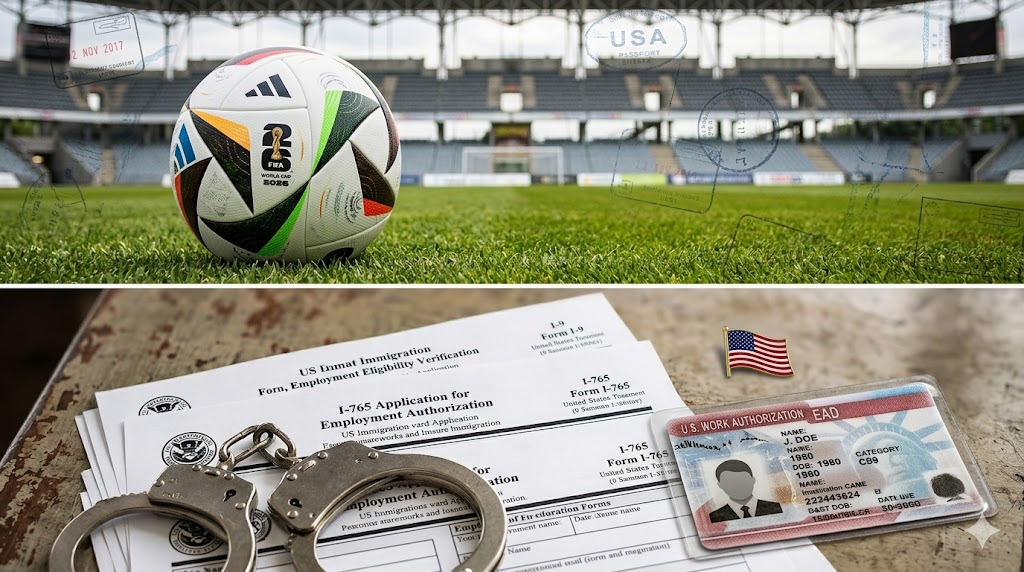
Credit: ElHispanoParaTodos
The “Siren Song” of Temporary Jobs
Many believe that because it’s a massive event, there will be “special permits” or that authorities will “look the other way.” Big mistake. No automatic work permits exist for the World Cup. If you enter on a tourist visa (B1/B2) or via ESTA, any paid activity is a direct violation of your admission terms.
Why Is It More Dangerous in 2026?
- Digital Surveillance: Data cross-referencing between transportation apps, lodging platforms, and payroll records is more efficient than ever.
- Special Operations: DHS (Homeland Security) deploys undercover agents at major events to detect unauthorized employment networks.
- Stricter Penalties: In 2026, fine rates and deportation processes have been accelerated under new federal guidelines.
The Real Consequences (What No One Tells You on TikTok)
It’s not just about getting “fired.” The legal repercussions are like a snowball crushing your residency dreams.
1. The Punishment Law: The 3- and 10-Year Bans
If you work without authorization and accumulate what USCIS calls “unlawful presence,” leaving the country could automatically trigger:
- 3-Year Ban: If you were unlawfully present for more than 180 days but less than a year.
- 10-Year Ban: If you exceed one year of unauthorized presence.
- Permanent Ban: If you attempt to reenter illegally after a removal order.
2. Visa Cancellation and Immediate Deportation
If an immigration agent catches you working on a tourist visa, your document will be canceled on the spot. You’ll be escorted to a detention center and processed for mandatory removal. Forget about ever watching a game in a U.S. stadium again.

3. Document Fraud: Federal Prison
Many fall into the temptation of buying a fake Social Security card or using someone else’s documents. This is no longer an administrative offense—it’s a federal crime. Penalties include up to 5 years in prison and fines of up to $250,000.
Risk Comparison: Legal vs. Illegal
| Factor | With Permit (H-2B / J-1) | Without Permit (“Under the Table”) |
| Salary | Protected by law (Federal/state minimum wage) | Subject to exploitation and wage theft |
| Health | Access to workers’ compensation | No protection in case of accidents |
| Immigration Future | Builds a positive record | Blocks Green Card for years |
| Status | Legal and protected | Constant risk of detention |
What Happens to Employers?
If a business offers you an “off-the-books” job for the World Cup, they’re not doing you a favor—they’re using you as a shield. But they also pay the price:
- First offenses: Fines from $500 to $5,000 per employee.
- Repeat offenders: Fines of up to $25,076 per worker and possible criminal charges for an “illegal pattern of practice.”
How to Participate Legally in the 2026 World Cup
The truth is, there are legal pathways—but they require planning. Don’t wait until you’re in line at the stadium to ask.

- FIFA Volunteer Program: FIFA typically recruits over 60,000 volunteers. Note: Volunteering is NOT employment and should not be paid. It gives you event access, a uniform, and experience, but it doesn’t allow you to stay or earn a salary.
- H-2B Visas for Non-Agricultural Workers: These are for temporary jobs in hospitality and services. They must be requested by a U.S. employer before you travel.
- J-1 Visa (Exchange Visitor): Ideal for young people and students who want to work legally in camps or services during the World Cup summer.
El Hispano’s Advice
We know the economic situation is tough, and the World Cup seems like the golden opportunity to “make a killing.” But think about this: Is it worth earning a few thousand dollars today in exchange for never being allowed to enter the U.S. again to visit your family or seek legal residency?
The answer is a resounding NO. If you want to experience the soccer celebration, do it as a spectator or pursue legal avenues months in advance. Don’t let a temporary job become a lifelong ban.
Image: ElHispanoParaTodos/PRESS