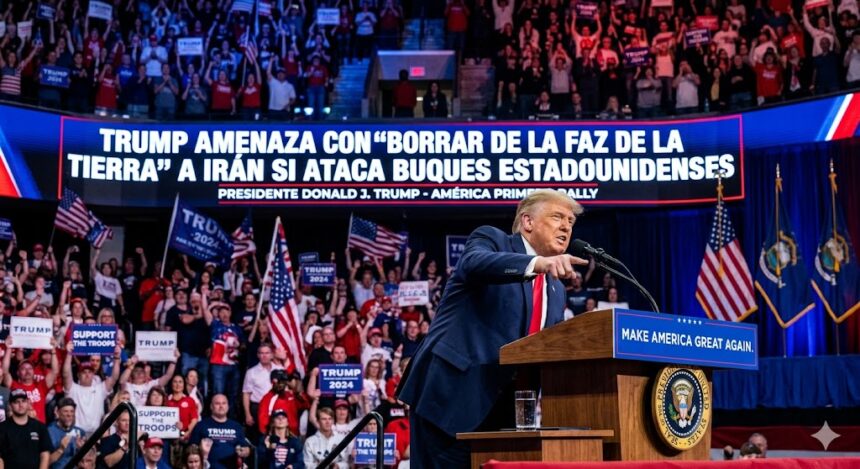
Tensions in the Gulf are no longer just diplomatic; they have become visceral. Donald Trump has raised the stakes to levels not seen in decades. The statement is devastating: “Wipe off the face of the Earth.” This is not standard diplomatic language. It is the rhetoric of total war, leaving the international community on edge and financial markets trembling.
Quick Response (Snippet Bait): Donald Trump has issued an unprecedented warning to Tehran, stating that the United States will destroy Iran if the country attacks U.S. assets or ships. This rhetoric marks a turning point in foreign policy, seeking to deter any provocation in strategic maritime routes like the Strait of Hormuz through the threat of maximum force.
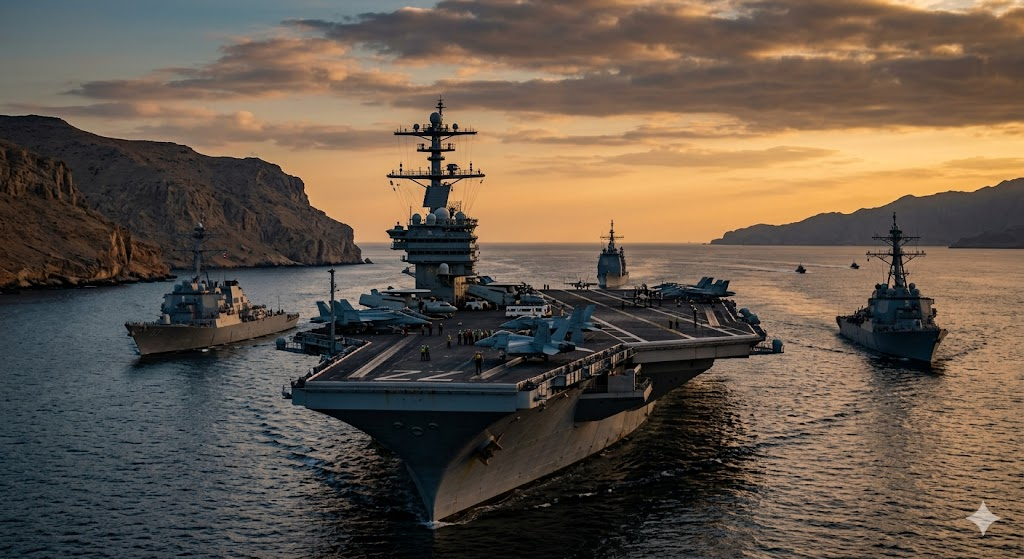
Credit: ElHispanoParaTodos
Washington’s Roar: Electoral Rhetoric or Military Strategy?
This threat cannot be analyzed without understanding the context of who is making it. Trump has always operated under the premise of “peace through strength.” But why use such extreme words now? The truth is that drone attacks and harassment of oil tankers have reached a saturation point for the Pentagon.

Here’s the interesting part: this declaration is not just for the ayatollahs in Iran. It is a direct message to Trump’s voter base in the U.S. and allies like Israel. By saying he will “wipe out” an adversary, Trump seeks to project an image of invulnerability that contrasts with the policies of previous administrations. Is it dangerous? Absolutely. Is it effective? History tells us that Iran usually backs down when the threat of total destruction is credible.
The Strait of Hormuz: The World’s Chokepoint
If Iran decides to test Washington’s resolve, the most likely scenario is the Strait of Hormuz. Why should this matter to you if you live in Miami, Texas, or California? Simple: because of your wallet.
- Oil Flow: Nearly 20% of the world’s oil consumption passes through this strait.
- Gasoline Impact: A direct conflict would send the price of a gallon of gas soaring within hours.
- Global Logistics: It’s not just oil; it’s the trade of goods that reach East Coast ports.
Table: Comparative Capabilities in the Gulf
| Factor | United States (Fifth Fleet) | Iran (Revolutionary Guard) |
| Firepower | Destroyers, Aircraft Carriers, and F-35 Fighters | Fast boats and suicide drones |
| Strategy | Technological dominance and precision strikes | Asymmetric warfare and sea mines |
| Vulnerability | Logistical distance from bases | Immediate economic blockade |
What Would Happen If the Threat Is Carried Out? Three Critical Scenarios
Sometimes we get lost in the news and forget the human consequences. If Trump were to carry out an order of this magnitude, the map of the Middle East would change forever.
- Regional Escalation: It would not just be the U.S. against Iran. Allies like Saudi Arabia and the United Arab Emirates would get caught in the crossfire, while groups like Hezbollah would open fronts in Lebanon.
- Refugee Crisis: An attack of “wiping out” would generate a wave of displacement that would destabilize Europe and eventually impact immigration policies across the Western world.
- The Nuclear Factor: Iran has been accelerating its uranium enrichment program. A U.S. preemptive strike could be the spark that ignites an irreversible nuclear arms race in the region.
The Hispanic Community’s Reaction in the U.S.
Many are asking, “What does this have to do with us?” The reality is that our community has a massive representation in the Armed Forces. Thousands of Latino youth are deployed at Fifth Fleet bases. A threat of this magnitude is not just political; it is personal for families who have children patrolling those waters.

Additionally, political instability often translates into inflation. At a time when the cost of living is already a challenge for Hispanic families, a war in the Persian Gulf would be the final blow for many household economies.
Image:ElHispanoParaTodos/PRESS