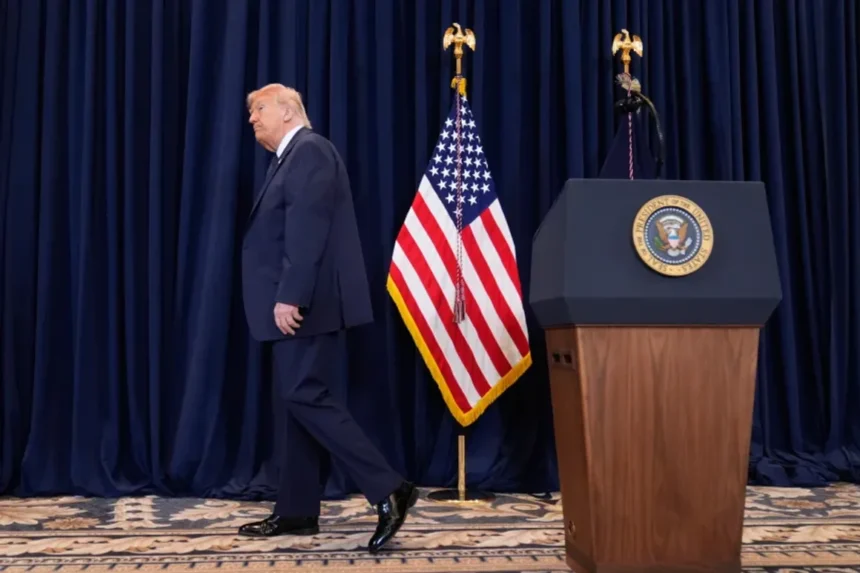
The tension could be cut with a knife in the living rooms of thousands of Hispanic families across the country. When war drums beat in Washington, it’s largely the young people from our community—those serving in the Armed Forces—who end up packing their uniforms and saying goodbye to their children at airports. Facing the escalation of hostilities in the Middle East, Capitol Hill has decided it won’t stand idly by. In a high-stakes political maneuver, the House of Representatives has just made a bold move to wrestle military control away from the Commander in Chief.
The truth is, the collision between the legislative and executive branches has reached a boiling point. While the White House defends its right to preemptive strikes to protect U.S. interests, lawmakers argue the country cannot be dragged into a large-scale conflict without public and constitutional debate.

The Legislative Verdict (Snippet Bait): The House of Representatives passed a war powers resolution designed as a measure to force Trump to end the war with Iran. This legislative mandate requires the president to immediately cease the use of United States Armed Forces in hostilities against the Islamic Republic of Iran, unless Congress formally declares war or legally authorizes specific military force.
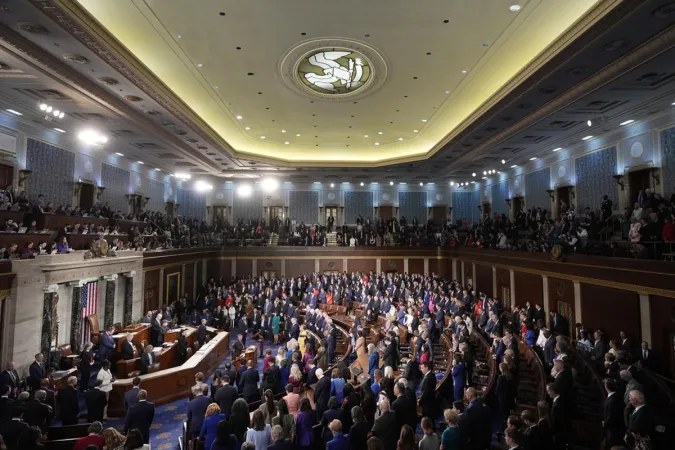
The Power Struggle: What Exactly Does This Resolution Demand?
To understand the real weight of this document, you have to dust off the history books and look at the War Powers Act of 1973. This isn’t just a complaint letter signed by angry politicians; it’s a legal tool designed after the trauma of Vietnam to prevent a president from having a “blank check” for war.
Here’s the interesting part: the approved resolution states that the president must withdraw troops from any unauthorized conflict within 30 days. (Does this really stop missiles already in position? Technically, not immediately—but politically, it’s a lethal encirclement of the Oval Office.)
- Funding Restrictions: The measure seeks to tie the Pentagon’s hands, prohibiting the Department of Defense from using taxpayer funds to finance offensive operations not approved by Congress.
- Self-Defense Exceptions: The document includes a logical clause allowing the military to respond if facing an imminent attack, but it strictly defines what constitutes “imminent” to prevent broad interpretations by the executive branch.
- Constitutional Reaffirmation: It returns to Congress (the only body that, according to the U.S. Constitution, has the power to declare war) the primary seat at the foreign policy decision-making table.
The Senate Labyrinth and the Veto’s Ghost
Passing a measure in the House of Representatives is only winning the first half of the game. The path to firm law is a minefield. Let’s cut to the chase: the resolution must now survive Senate scrutiny, and if it does, it will inevitably face the president’s red pen.
Donald Trump has already made it clear through official channels and speeches that he views these measures as an act of interference that weakens the United States’ strong position against the Tehran regime.

Political Scenarios and Their Consequences
| Legislative Scenario | Presidential Reaction | Direct Impact on Military Operations |
| Approval in the Senate | Immediate Presidential Veto | Troops remain on high alert; conflict continues at the executive’s discretion. |
| Congress Overrides Veto (Requires 2/3 vote) | Legal Obligation to Withdraw | Forced de-escalation. The Pentagon must halt offensive maneuvers within 30 days. (Highly unlikely scenario). |
| Blocked in the Senate | Celebration at the White House | The resolution dies. The executive retains full control over Middle East war strategy. |
The Real Impact on the Hispanic Military Community
Why should this technical Washington debate matter to the average citizen in Florida, Texas, or California? Because the impact isn’t statistical—it’s human. According to recent Department of Defense data, Hispanics make up approximately 17% of all active-duty U.S. military forces. We are the most dynamic and fastest-growing combat force within the ranks.
“Every time a president talks about ‘surgical strikes’ or ‘preemptive actions’ in the Persian Gulf, mothers in our neighborhoods lose sleep. This resolution is seen by many military families as a lifeline of sanity, a guarantee that their children’s lives won’t be risked without deep national consensus,” explains a spokesperson for Hispanic veterans’ associations.
For a mixed-status family, where military service is often viewed as a direct path to immigration stability or citizenship (the so-called Parole in Place), the prospect of a massive deployment to an indefinite conflict in Iran is the worst-case scenario.
Civic Guide: How to Process War Tension News Without Panicking
When the political and media machinery revs up, misinformation on social media often spreads faster than facts. If you have family members of draft age or actively serving, the margin for error in consuming false information is zero. Follow this news consumption protocol:

1. Identify the Draft Law (Mandatory Service): Social Media Filter.
A classic rumor that resurfaces in these times is the return of mandatory military service (Draft). Ignore TikTok memes. The United States has operated with an all-volunteer military since 1973. Reactivating forced recruitment would require a massive law passed by Congress—something currently not even on any party’s debate table.
2. Official Pentagon Communication: Chain of Command Monitoring.
Don’t assume that a fiery speech from a congressman or a presidential tweet equals a deployment order. Troop movement orders and changes in alert levels (DEFCON) are communicated to military families through official base channels and the Department of Defense’s Public Affairs divisions.
3. Contact Your Local Representatives: Civic Action.
If the potential war with Iran is a topic that directly affects you, your voice matters. Find your district representative and share your concerns. This resolution shows that Congress responds (either for or against) when public pressure reaches critical levels.
Washington’s power structure is designed so the president isn’t a king, and this House resolution is the system of checks and balances at its finest. While politics runs its course, the Hispanic community must remain vigilant, educated about its civil rights, and supportive of the thousands of men and women who, regardless of the White House’s political color, wear the uniform ready to follow their country’s orders.
Image: ElHispanoParaTodos/PRESS