
If you thought the relationship between North America’s northern neighbors was governed by polite diplomacy and unbreakable cooperation, this week’s trade escalation has shattered any such illusion. The truth is, when tariff disputes spill off the negotiating table and turn into direct retaliation against hundreds of consumer goods, the first to feel the real impact are not politicians in Washington or Ottawa, but the wallets of consumers and the stability of small businesses.
The backdrop of this crisis is no minor misunderstanding. After the collapse of bilateral talks to resolve agricultural tariffs and restrictions on dairy and lumber trade, the Canadian government launched a historic tariff offensive that surgically targets over 700 U.S. products, worth $27.6 billion, in response to the tariffs imposed by President Donald Trump.
According to the Canadian government, the new measures will take effect at 12:01 a.m. on September 8, 2026. The tariffs will range from 15%, 25%, to 50%, depending on the product and the level of tariff previously applied by Washington.

Canada Also Prepares $7.5 Billion in Support
In addition to the tariffs on U.S. products, Ottawa announced a $7.5 billion package to assist workers and businesses affected by the trade conflict.
The plan includes measures to improve cash flow for companies and additional support for small and medium-sized businesses. The Canadian government stated it aims to mitigate the dispute’s impact while protecting jobs and strategic sectors.
Industry Minister Mélanie Joly even urged consumers to buy national products as a way to support Canadian businesses during this new phase of the trade war.
The White House’s response was swift, accusing Canada’s administration of seeking to economically strangle U.S. productive sectors. How did we reach this breaking point, and what does this collision mean for the regional economy? Let’s break it down in depth.

The Cross-Border Clash Showdown (Snippet Bait): In response to punitive tariffs imposed by Washington, the Canadian government activated a package of trade retaliation that heavily taxes 700 products from the United States, ranging from processed foods and beverages to industrial manufactures and steel. President Donald Trump called the measure a direct attack aimed at “bankrupting” U.S. farmers and the American economy, threatening to further tighten customs barriers.
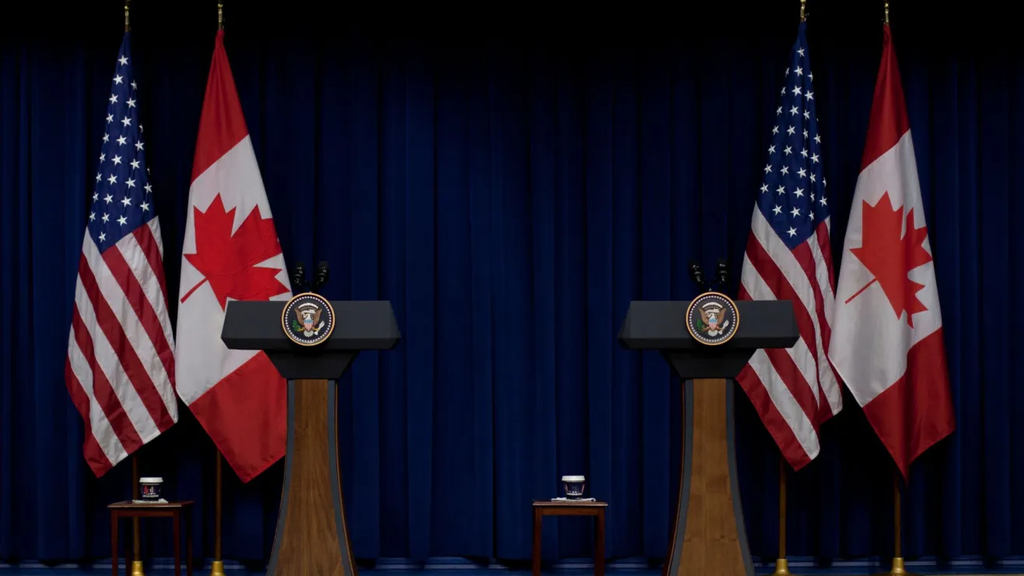
The Anatomy of Retaliation: What’s Behind the 700 Targeted Products?
To understand the strategic scope of this Canadian move, we must analyze how the taxed goods were selected and what Ottawa aims to achieve with this pressure.
1. A Surgical Erosion Strategy
Canada did not select the 700 products at random. Each taxed category was calculated to generate direct political and economic impact in key U.S. states.
- The Blow to the Agri-Food and Consumer Sector: A large portion of the tariffs falls on machinery and processed agricultural goods, meats, wines, dairy products, steel, appliances, furniture, pulp and paper, electronics, and mass consumer goods produced in states with strong electoral and agricultural weight, such as Wisconsin, Ohio, Iowa, and Florida.
- The Logic of Aggressive Reciprocity: Ottawa seeks to demonstrate that any tariff imposed on its exports of lumber, aluminum, or dairy will have an exact mirror in the U.S. market, making U.S. exports more expensive and less competitive compared to local or other nations’ producers.
2. The White House’s Rhetoric: Accusations of Economic Sabotage
President Trump’s reaction reflected the level of polarization prevailing in current trade policy.

- The Strangulation Narrative: By stating that Canada’s goal is to “bankrupt” U.S. producers, the administration seeks to unify the domestic front and justify even harsher countermeasures, including a full review of the USMCA framework.
- The Uncomfortable Truth: Economists agree that in a cross-tariff war, both sides lose. More expensive inputs inevitably lead to disrupted supply chains and higher prices for end consumers.
Table: Economic Clash X-Ray — Canada vs. United States
To precisely visualize which sectors are bearing the brunt of this trade escalation, we contrast the key conflict data:
| Conflict Variable | Canada’s Position and Actions | United States’ Position and Actions |
| Retaliation Volume | Direct tariffs applied to over 700 U.S. products. | Previous punitive tariffs of 50% on billions in Canadian goods. |
| Affected Sectors | Foods, beverages, industrial manufactures, steel, and consumer goods. | Dairy, lumber, aluminum, energy, and specific agricultural products. |
| Political/Economic Objective | Force Washington to negotiate and protect its national industry from external pressure. | Defend farmers’ interests and reverse unfair trade barriers. |
Practical Guide: How to Navigate the Uncertainty of a Binational Trade War
When governments impose massive customs barriers, economic actors and citizens must adapt quickly to protect their finances. Follow these key points:
1. Identify the Origin of Your Inputs: Supply Chain Audit for Businesses
If your business imports or exports goods between the U.S. and Canada, urgently review the origin of your raw materials and finished products. Many components that previously entered tariff-free under USMCA may now be subject to unexpected tariffs that erode your profit margins.
2. How to Protect the Family Budget: Anticipating Price Hikes in Consumer Goods
The introduction of tariffs on 700 mass consumer products will increase inventory replenishment costs in stores and supermarkets. Consider strategic advance purchases of goods critically dependent on cross-border supply chains before the full cost transfer to consumers is reflected.
3. Where to Check Regulatory Updates: Monitoring Official Trade Sources
To avoid legal or customs surprises, stay informed through official trade channels. You can check tariff updates and regulations on the International Trade Administration portal or follow global economic reports from Associated Press.
The truth is that the trade confrontation between the U.S. and Canada is rewriting the rules of the economic game on the continent. For our community, understanding the magnitude of these events is key to anticipating changes in the cost of living and the binational labor market.
Image: ElHispanoParaTodos/PRESS