

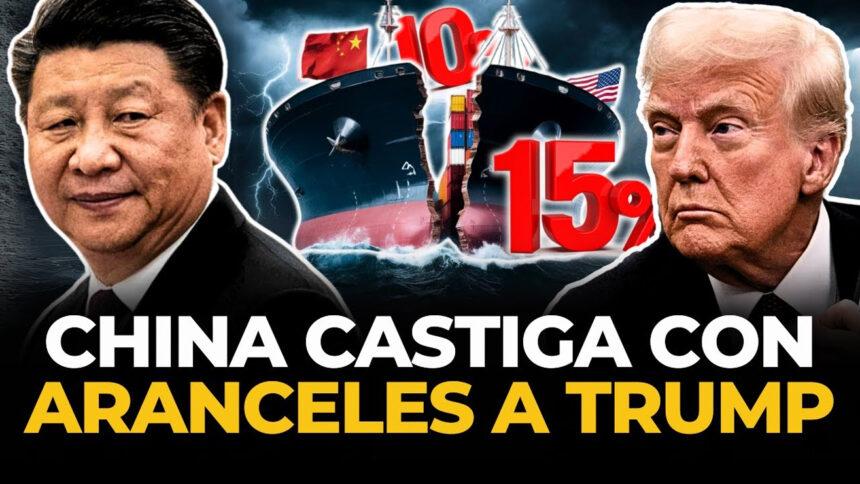
China has responded to the additional 10% tariffs imposed by Donald Trump on Chinese products with its own tariffs of 10% to 15% on various U.S. products.
Recently, China imposed 10% tariffs on products such as crude oil, agricultural equipment, and some automobiles from the United States. Additionally, it imposed a 15% tariff on U.S. coal and liquefied natural gas. This move is a direct response to the tariffs imposed by President Donald Trump on Chinese imports.

Additionally, China has announced an antitrust investigation against Google and other U.S. companies.

During the trade war between China and the United States under the Trump administration, China implemented retaliatory measures, including the imposition of 10% and 15% tariffs on a range of U.S. products. This trade conflict began in 2018 when the United States imposed tariffs on Chinese products, citing unfair trade practices and the trade deficit between the two countries.
China responded with similar tariffs, affecting products such as soybeans, pork, automobiles, and other goods imported from the United States. This escalation of trade tensions created uncertainty in global markets and impacted economic sectors in both countries.
The trade war was one of the most prominent issues during Trump’s presidency, and although a partial trade agreement (the “Phase 1” deal) was signed in 2020 to reduce tensions, many tariffs remained in place. For updated information, I recommend consulting reliable sources, as the trade situation between the two countries may evolve over time.

This escalation in the trade war between the world’s two largest economies has raised concerns about the impact on global supply chains and the world economy.
Image: 20Minutos





