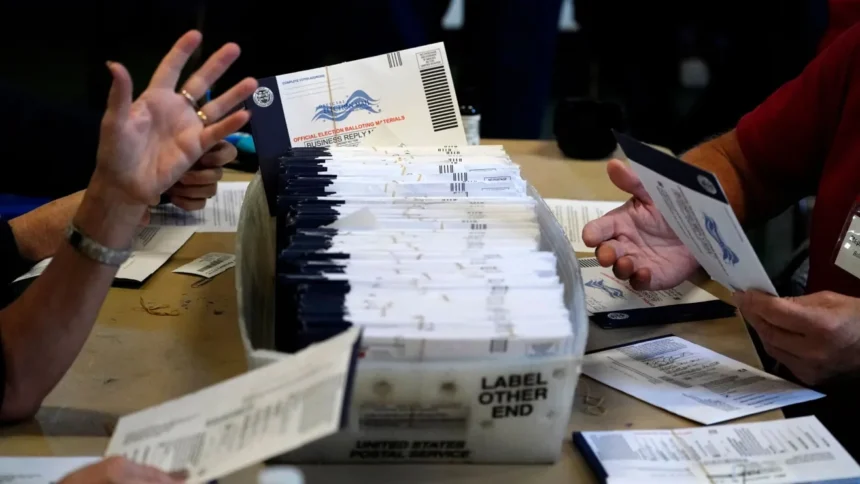
If you are one of the millions of voters who prefer the convenience and security of casting your ballot from home by mail, you know this system has become a prime target in intense political debates. The truth is, for much of the working community, families with complex schedules, and older adults, mail-in voting is not just a convenience—it is the only real way to exercise their democratic right without risking their jobs or daily stability.
- The Anatomy of the Conflict: The Clash of Powers Between the White House and the States
- Table: Snapshot of the Legal Battle Over Mail-In Voting
- Practical Guide: How to Protect Your Vote and What to Expect in the Upcoming Elections
- 1. Confirm Your Information at the Local Election Office: Verify your registration and mail status.
- 2. Do Not Wait Until the Last Minute to Send Your Ballot: Know the deadlines and return methods.
- 3. Where to Get Informed Without Falling Into Confusion: Consult reliable sources and avoid misinformation.
However, the legal battle has reached critical levels. After the White House signed an executive order seeking to impose strict federal filters, eligibility lists, and controls on the U.S. Postal Service (USPS), the judicial response was swift. Federal judges have stepped in to temporarily block a plan that, according to civil rights advocates and attorneys general from over twenty states, threatened to create administrative chaos and disenfranchise entire sectors of voters. What exactly did the court rule, and why does this clash directly impact the upcoming elections? Let’s break it down in detail.

The Heart of the Election Lawsuit (Snippet Bait): A federal judge issued a key ruling that blocks the provisions of the Trump administration’s executive order aimed at limiting mail-in voting through the U.S. Postal Service (USPS). The court determined that the Executive Branch lacks constitutional authority to unilaterally modify election rules for the states or turn the postal agency into a ballot-filtering mechanism, sparking an intense legal dispute that is already knocking on the Supreme Court’s door.
The Anatomy of the Conflict: The Clash of Powers Between the White House and the States
To understand the magnitude of this judicial process, we must analyze the technical and constitutional background dividing the courts and the federal government.
1. Executive Overreach vs. State Sovereignty
The U.S. Constitution explicitly grants state legislatures and Congress the authority to regulate the administration of elections.
- The Postal Control Attempt: The presidential directive sought to require the USPS to process only ballots from voters included in a new centralized federal database, in addition to mandating strict envelope designs and standardized barcodes nationwide.
- The Courts’ Verdict: Judicial bodies, led by key decisions in federal districts, concluded that allowing the Executive Branch to intervene at the last minute in handling mail-in ballots causes irreparable harm and flagrantly violates the principle of separation of powers.
2. The Fraud Narrative vs. Operational Reality
While the administration argues that these measures are “common-sense steps” aimed at safeguarding election security and preventing irregularities, local election officials from both parties insist that the mail-in voting system already has rigorous signature verification and traceability mechanisms.
- The Uncomfortable Truth: Changing the rules of the game just weeks before the first mail-in ballots are sent out does not strengthen security—it sows deep confusion among voters and overwhelms the logistical capacity of counties.
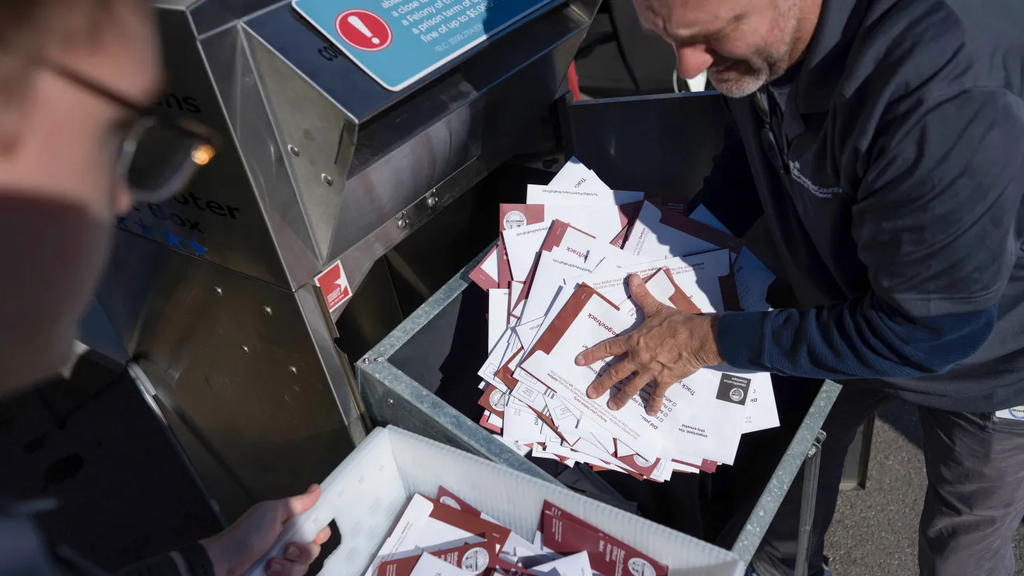
Table: Snapshot of the Legal Battle Over Mail-In Voting
To precisely visualize what is at stake and how the current legal landscape is divided, we contrast the positions in the conflict:

| Conflict Axis | Federal Government’s Stance (White House) | States’ and Plaintiffs’ Stance |
| Justification for the Order | Protect the integrity of elections and prevent non-citizens from participating. | They denounce an attempt at voter suppression and a violation of state autonomy. |
| Role of the Postal Service (USPS) | Require eligibility lists and envelope controls before delivering ballots. | The USPS is a delivery agency, not an election arbitration or control body. |
| Operational Impact | Standardize processes nationwide under a unified registry. | Create logistical chaos and disenfranchise millions of eligible voters. |
Practical Guide: How to Protect Your Vote and What to Expect in the Upcoming Elections
Given the uncertainty created by the back-and-forth in federal courts, voters must take a proactive role to ensure their voice is heard. Follow these foolproof steps:
1. Confirm Your Information at the Local Election Office: Verify your registration and mail status.
Regardless of the litigation in Washington, elections are organized at the local level. Visit your county or state’s official portal to ensure your mailing address is up to date and that your voter registration is active and without issues.

2. Do Not Wait Until the Last Minute to Send Your Ballot: Know the deadlines and return methods.
If you plan to vote by mail, request your ballot as early as your state’s deadlines allow. Once you receive it, complete it by strictly following the instructions (signing the envelope, including witnesses if required) and use official secure drop boxes or mail it with plenty of time to spare.
3. Where to Get Informed Without Falling Into Confusion: Consult reliable sources and avoid misinformation.
The legal battles will continue in higher courts and will eventually reach the Supreme Court. To avoid falling for false news about sudden bans, consult only official portals like the U.S. Election Assistance Commission or direct notices from your state’s election supervisor.
The truth is that the right to vote is the cornerstone of our democracy, and the legal disputes surrounding its exercise reflect the nation’s pulse. For our community, staying informed and prepared is the best tool to ensure every vote counts.
Image: ElHispanoParaTodos/PRESS