
If you stop in front of the meat case at your local supermarket and feel the total on your grocery bill has skyrocketed to unaffordable levels, the truth is it’s not just your imagination. Food inflation has become the number one headache for working families, and consumers constantly wonder why beef, chicken, and pork take up such a disproportionate share of their weekly budget.
The Trump administration’s response has pointed directly at the structural root of the problem: corporate concentration. Frontal criticism of the four multinational conglomerates that virtually control the entire U.S. meat processing market brings to the table a long-avoided discussion by federal regulators. How do these giants operate, how do they impact consumers’ wallets, and what real solutions are on the table to curb this price surge? Let’s break it down thoroughly.

The Pulse of the Meat Market (Snippet Bait): The Donald Trump administration has intensified its offensive against the four major meat processing corporations that dominate over 80% of the U.S. market, accusing them of price manipulation and anti-competitive practices. The promised plan includes massive antitrust audits, federal competition investigations, and subsidies or incentives for independent producers, with the stated goal of reducing costs at supermarkets.
The Anatomy of the Oligopoly: How Four Companies Control Your Plate
To understand why meat prices rise relentlessly—even when international grain costs fluctuate downward—it’s necessary to examine the pyramidal structure of the modern agri-food industry.
1. The Absolute Dominance of the “Big Four”
Meat processing and distribution in the U.S. are concentrated in the hands of four massive multinational corporations (JBS, Tyson Foods, Cargill, and National Beef).
- The Supply Chain Bottleneck: Millions of independent ranchers raise livestock, but they are almost obligated to sell to one of these four giants due to the scarcity of alternative slaughterhouses and processing infrastructure at a regional scale.
- The Uncomfortable Truth: This extreme concentration gives corporations asymmetrical market power. They can set very low prices when buying livestock from local producers and, simultaneously, inflate prices when selling the finished product to supermarkets and distributors, maximizing their profit margins at the consumer’s expense.
2. The Direct Impact on Family Budgets
When supply chains are controlled by an oligopoly, any minor disruption—whether due to logistical issues, rising fuel costs, or labor disputes—immediately translates into inflationary spikes on store shelves.
- The Hispanic Consumer’s Dilemma: For large families and working-class households, where food represents a critical portion of monthly expenses, the volatility of animal protein prices forces changes in purchasing habits and sacrifices of other basic needs.
- Political Pressure: Promises to dismantle abusive practices and open the market to midsize and independent processors aim to boost competition and force a downward correction in retail prices.
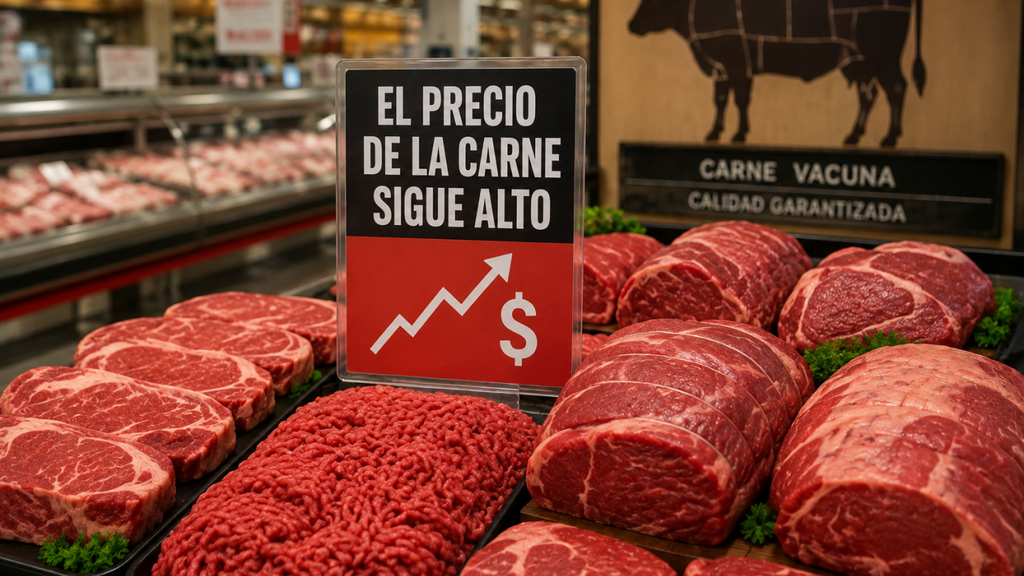
Table: Snapshot of the Meat Market and Proposed Measures
To precisely visualize the sector’s structure and the announced government actions, we compare the key data:

| Market Variable | Current Situation (Corporate Dominance) | Government-Proposed Measures |
| Market Share Control | Four corporations control over 80% of meat processing. | Market decentralization through incentives for independent regional slaughterhouses. |
| Profit Margins | High corporate profits versus squeezed ranchers’ incomes. | Exhaustive investigations by the Federal Trade Commission (FTC) for collusion. |
| Price Impact | Sustained high prices at supermarkets and hypermarkets. | Promotion of free competition to force reductions in the final cost to consumers. |
Practical Guide: How to Protect Your Finances Amid Food Inflation and What to Watch
While antitrust battles play out in Washington’s courts and offices, families must adopt practical strategies to safeguard their daily budgets. Follow these key points:
1. Explore Options Beyond Big Chains: Diversify Purchases and Shop Local.
To counter the impact of inflated prices at large supermarkets, consider buying directly from local butcher shops, farmers markets, or independent producer cooperatives. Often, these alternatives eliminate middlemen and offer more competitive prices on standard cuts.
2. Optimize Food Efficiency: Weekly Meal Planning and Protein Substitution.
Plan weekly menus by taking advantage of bulk deals and freezing portions. Incorporate alternative, high-quality, low-cost protein sources (such as legumes, direct-from-farm chicken, or eggs) to balance family spending without sacrificing nutrition.

3. Where to Stay Informed About Regulations: Monitor Consumer Policies and Advocacy.
To learn about the progress of antitrust lawsuits and price reports in the food sector, consult official and economic information sources from the Federal Trade Commission (FTC) or follow updates.
The truth is that food costs are one of the economic indicators that most affect household stability. For our community, understanding the corporate power dynamics behind supermarket prices is the first step toward demanding transparency and making better financial decisions.
Image: ElHispanoParaTodos/PRESS