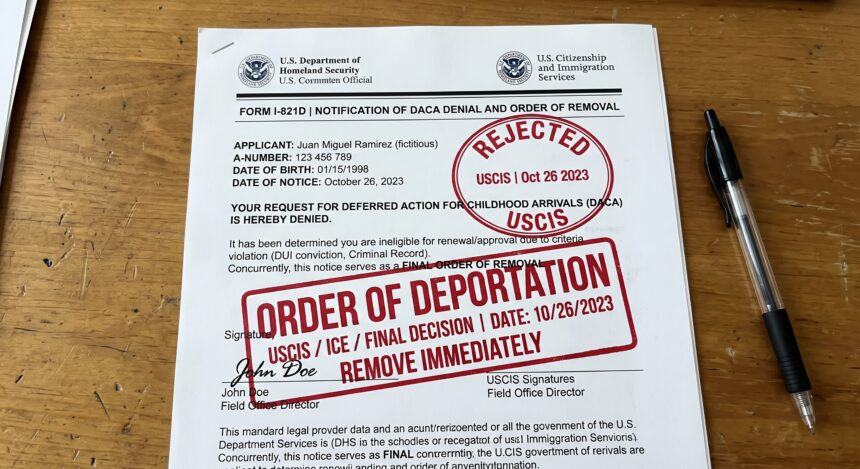
From delayed renewals to failing to notify a change of address, experts warn about procedural oversights that can nullify immigration protections.
For the hundreds of thousands of young people protected under the Deferred Action for Childhood Arrivals (DACA) program, legal stability in the United States depends on an extremely strict balance. While public debate often focuses on federal court rulings, immigration attorneys warn that minor procedural errors and everyday infractions are now among the most common causes of status loss and exposure to removal proceedings.

1. The Most Common Processing Errors
U.S. Citizenship and Immigration Services (USCIS) evaluates renewals under rigorous discretionary criteria. Among the most common technical failures are:
- Submitting the renewal outside the recommended timeframe: USCIS advises sending the renewal packet between 120 and 150 days before expiration. An unexpected processing delay can leave the applicant in a period of unauthorized stay, immediately losing work authorization.
- Forgetting to report address changes (Form AR-11): Federal law requires notifying USCIS of any address change within 10 days of moving. Failing to do so may result in missing critical notifications for biometric appointments or requests for evidence (RFE).
- Traveling abroad without approved Advance Parole: Leaving the U.S. without prior travel permission (Form I-131) automatically revokes deferred action and may trigger re-entry penalties for unauthorized presence.
- Omitting information on forms: Incorrectly declaring background details or failing to attach records of prior infractions (even if dismissed) may be interpreted as misrepresentation or immigration fraud.
2. Legal Infractions That Invalidate the Benefit
The DACA regulatory framework categorically excludes individuals convicted of a felony or a “significant misdemeanor.”
| Type of Offense | Impact on DACA |
| Driving under the influence (DUI / DWI) | Automatic disqualification in the vast majority of cases. |
| Domestic violence or firearm possession | Considered a significant misdemeanor; nullifies protection. |
| Three or more non-significant misdemeanors | Results in ineligibility to renew the program. |
| Minor traffic fines (speeding) | Generally do not affect eligibility unless they lead to contempt of court or accumulation of charges. |
Recommendations to Keep Protection Active
- Monitor the expiration date: Mark your calendar for the start of the 150-day window before your permit expires.
- Keep copies of everything: Maintain a physical and digital file with certified mailing receipts, notices of action, and copies of submitted forms.
- Consult legal counsel before acting: If arrested, issued a court summons, or needing to travel abroad, consult an immigration attorney or a DOJ-accredited community organization.
Frequently Asked Questions: How to Avoid Mistakes When Renewing DACA
When is the best time to submit my DACA renewal? U.S. Citizenship and Immigration Services (USCIS) recommends submitting the renewal application between 120 and 150 days before your current permit’s expiration date. Submitting documents too close to the expiration date may create a gap in your protection and temporarily revoke your work permit.
What happens if I move before or during my DACA process? By law, you must notify USCIS of any address change within 10 days of moving by completing Form AR-11 (which can be filled out online). Failing to update your address is a serious error, as you may miss critical notifications about evidence requests or fingerprinting appointments.

Can I travel outside the United States if I have active DACA? You cannot travel freely. To leave the country without losing your protection, you must apply for and receive approval for a travel permit known as Advance Parole (Form I-131) before leaving the U.S. Traveling without this approved permit will automatically cancel your DACA.
Does a traffic ticket affect my eligibility to renew DACA? Regular minor traffic violations, such as a speeding ticket or running a stop sign, generally do not disqualify you. However, offenses like driving under the influence of alcohol or drugs (DUI/DWI) are considered significant misdemeanors and automatically nullify protection.
What should I do if I had any contact with the police since my last renewal? You must disclose any arrest or citation on your application, even if charges were dismissed. Omitting this information is considered fraud. It is highly recommended to consult an immigration attorney before submitting your documents to assess whether the incident affects your status.