
If you thought the arsenal of U.S. immigration agents couldn’t get any more controversial, reality on the streets and in enforcement offices has taken a drastic turn. The truth is, when tensions over immigration policy enforcement reach a boiling point, every new technological tool assigned to law enforcement immediately becomes the center of a national debate over the limits of force. The recent awarding of a multimillion-dollar contract by Immigration and Customs Enforcement (ICE) to acquire thousands of bodily control devices has set off alarms among lawmakers, civil rights organizations, and immigrant communities. What exactly are these electric-shock gloves, under what criteria will they be used, and why is their arrival in the field causing such an uproar? Let’s break it down in detail.
- The anatomy of the device: How do ICE’s high-voltage gloves work?
- 1. From a conventional tactical glove to a current emitter
- 2. Concerns over opacity and risks of abuse
- Table: Breakdown of ICE’s contract and the security debate
- Practical guide: How to stay informed about immigration rights and operations
- 1. The fundamental rule when facing an ICE detention: Know your constitutional rights in public.
- 2. Difference between administrative and judicial orders: Do not open the door without a judicial order signed by a judge.
- 3. Where to report abuses and verify information: Document safely and seek legal support.
The federal contract at a glance: Immigration and Customs Enforcement (ICE) awarded a $16.7 million contract for the purchase of 6,000 pairs of gloves with electric-shock capability (known as G.L.O.V.E. devices or Generated Low Output Voltage Emitter). The agency defends the purchase as a lower-impact alternative to subdue individuals who resist during arrests or transfers, while human rights advocates denounce an alarming risk of abuse and excessive use of force in civilian operations.
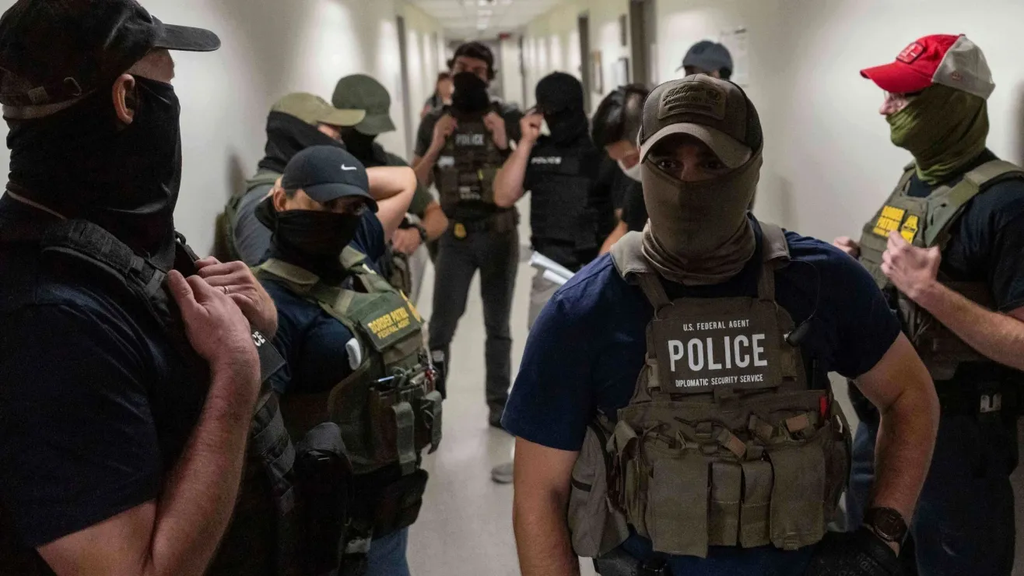
The anatomy of the device: How do ICE’s high-voltage gloves work?
To understand the controversy behind this acquisition, it’s essential to examine the technology and operational purpose behind these gloves, manufactured by Compliant Technologies.

1. From a conventional tactical glove to a current emitter
At first glance, the equipment functions like an ordinary patrol glove used by local law enforcement and correctional staff.
- The electric mode: By activating an integrated switch, the officer can deliver a painful electric shock through direct skin contact, designed to enforce compliance and overcome passive or active resistance.
- The official justification: From the Department of Homeland Security’s (DHS) perspective, equipping agents with this tool aims to reduce reliance on extreme physical force or the use of lethal firearms in high-stress situations or when officers face aggression during raids and detainee transfers.
2. Concerns over opacity and risks of abuse
Organizations like the American Civil Liberties Union (ACLU) and several Democratic lawmakers have raised alarms following the details of the no-bid contract.
- The uncomfortable truth: Equipping immigration agents with a hidden and quick mechanism to inflict physical pain opens the door to greater discretion on the streets, with few real-time public oversight mechanisms.
- The history of tensions: With over fifty reported deaths in custody since the start of the current administration and a climate of constant protests, critics warn that such tactical tools dangerously increase the vulnerability of immigrant communities.
Table: Breakdown of ICE’s contract and the security debate
To precisely visualize the points of friction surrounding this multimillion-dollar purchase, we contrast the agency’s stance with that of critics:
| Analysis Focus | Government Stance (DHS / ICE) | Critics and Human Rights Advocates’ Stance |
| Purpose of the Equipment | Provide a “de-escalation” tool for controlling resistance without resorting to lethal weapons. | Believe it facilitates immediate physical punishment and increases the risk of serious injuries. |
| Contracting Method | Direct award of $16.7 million for rapid field deployment. | Question the lack of transparency, oversight, and legislative debate prior to the purchase. |
| Scope of Application | Exclusive use under strict internal protocols in operations and detention centers. | Fear arbitrary deployment in community arrests and everyday civilian settings. |
Practical guide: How to stay informed about immigration rights and operations
As tactics and equipment used by federal immigration agencies evolve, it’s vital for families to know their basic constitutional rights in the face of any intervention. Keep these key points in mind:

1. The fundamental rule when facing an ICE detention: Know your constitutional rights in public.
Every individual present in the United States—regardless of immigration status—has rights protected by the Constitution. If ICE agents stop you on the street or at your workplace, you have the right to remain silent, to refuse to sign documents without an attorney’s advice, and to ask if you are free to leave.
2. Difference between administrative and judicial orders: Do not open the door without a judicial order signed by a judge.

ICE agents often carry administrative orders issued by the agency itself, which do not authorize them to enter your home without your consent. Ask them to slide the order under the door or show it through a window. If the document is not signed by a criminal court judge, you are not obligated to let them in.
3. Where to report abuses and verify information: Document safely and seek legal support.
If you witness an irregular operation or misuse of force, stay calm, record from a safe distance without interfering with police work, and immediately contact local community organizations or pro-immigrant coalitions. To follow these public policies, consult neutral press reports at Associated Press.
The truth is that the incorporation of new coercive technologies in security agencies is redefining the landscape of civil rights in the country. For our Hispanic community, staying informed and prepared for any operational scenario is the best defense in an increasingly complex institutional environment.
Image: ElHispanoParaTodos/PRESS