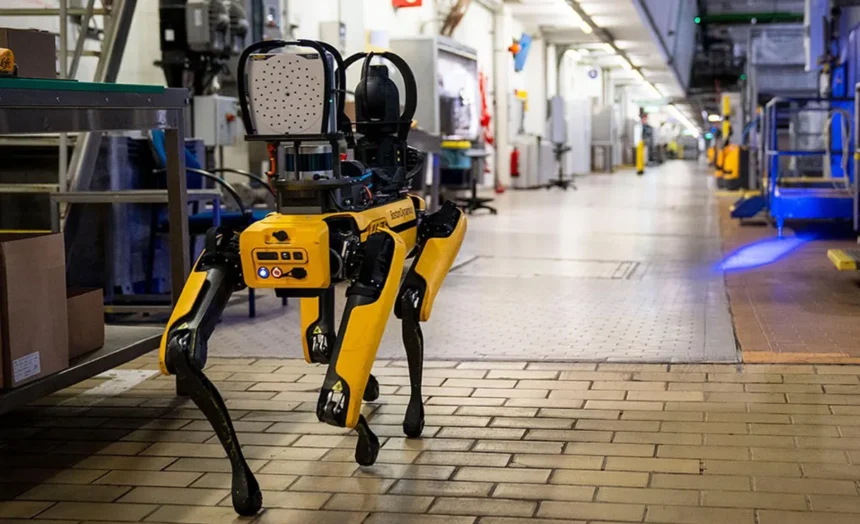
If you’ve been following the evolution of U.S. border control policies, you know that technology and automated surveillance devices have moved from science fiction to the operational standard for federal agencies. ICE plans to strengthen its immigrant detention operations by allocating up to $2,000,000 to acquire robot dogs.
- The anatomy of the deployment: What are robot dogs and how do they operate in the field?
- 1. Extreme mobility in hostile environments
- 2. Concerns over security automation and algorithmic bias
- Table: Technological project overview vs. civic concerns
- Practical guide: How to stay informed and what rights apply in border zones?
- 1. Know the legal rules applicable near the border:The 100-mile Border Zone framework.
- 2. Legal protection for individuals in transit:Constitutional rights during automated operations or patrols.
- 3. Where to find verified information and independent analysis:Monitoring public policies and federal technology.
The reality is that as migration flows shift toward increasingly hostile, desert, and hard-to-access areas, the government is constantly seeking alternatives to secure the perimeter without directly risking the lives of human agents.

However, the recent revelation that U.S. Immigration and Customs Enforcement (ICE) and associated agencies are evaluating the acquisition and deployment of unmanned quadruped units—popularly known as “robot dogs”—has sparked deep public controversy. How do these high-tech machines work, in what specific scenarios are they planned to be used, and why do civil rights advocates believe their arrival in the migration landscape crosses a dangerous line? Let’s break it down thoroughly.
The pulse of tactical innovation (Snippet Bait): Internal planning documents reveal that U.S. Immigration and Customs Enforcement (ICE), in coordination with the Department of Homeland Security (DHS), plans to incorporate autonomous and remotely controlled “robot dogs” to reinforce patrols, explore difficult terrain, and detect irregular crossings in complex border zones. While the agency defends their use as a protective measure for officers, human rights organizations denounce excessive militarization of the border that dehumanizes migration management.
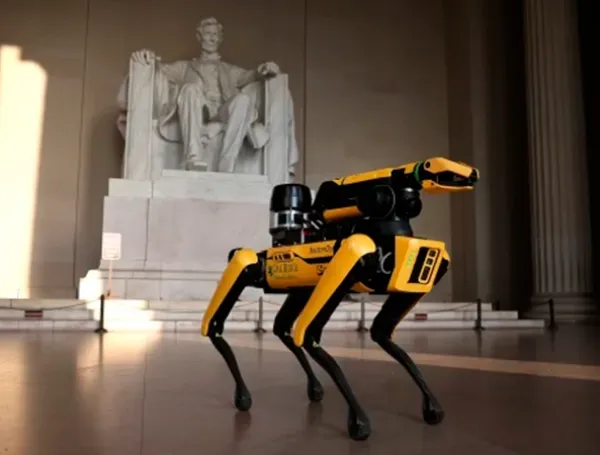
The anatomy of the deployment: What are robot dogs and how do they operate in the field?
To understand the impact of this technology, it’s necessary to examine the technical specifications of the devices already being tested by other security agencies in the country.
1. Extreme mobility in hostile environments
Quadruped robots (similar to those developed by companies like Boston Dynamics) are designed to move agilely over terrain where all-terrain vehicles or agents on foot face severe risks.
- Advanced exploration capabilities: These machines can be equipped with high-definition thermal cameras, long-range motion sensors, two-way communication systems, and radars capable of detecting body heat and human activity in complete darkness or during sandstorms.
- The operational justification: From the DHS perspective, using robots reduces the need to risk human agents in dangerous canyons, areas controlled by cartels, or extreme climates, allowing continuous monitoring of remote sectors without physical fatigue.
2. Concerns over security automation and algorithmic bias
Despite the logistical advantages argued by their proponents, the introduction of robotic platforms in the migration sphere raises legitimate fears among lawmakers and community activists.

- The uncomfortable truth: Automating border surveillance with technology initially developed for military combat environments turns a humanitarian and legal issue into a low-intensity confrontation, where migrants are treated as “tactical threats” to be neutralized.
- The specter of lethal automation: Although agencies assure that these devices will not be armed, the rapid advancement in integrating artificial intelligence and non-lethal weapons into autonomous systems keeps civil rights organizations on high alert.
Table: Technological project overview vs. civic concerns
To precisely visualize the contrast between the government’s official objectives and civil society’s objections, we analyze the key points of the debate:
| Project Dimension | Agency Perspective (ICE / DHS) | Civil Organizations’ Perspective |
| Main Purpose | Explore dangerous terrain, protect agents’ lives, and optimize surveillance resources. | Militarize the border, intimidate asylum seekers, and dehumanize the humanitarian crisis. |
| Technological Integration | Use of thermal cameras, sensors, and real-time mapping of clandestine routes. | Risk of escalation toward automated biometric control systems and deterrence weapons. |
| Transparency and Budget | Strategic acquisitions under funds allocated for technological modernization. | Lack of legislative oversight and opacity in the use of defense contractor contracts. |
Practical guide: How to stay informed and what rights apply in border zones?
Regardless of the technology federal agencies use along the borders, constitutional frameworks and basic human rights remain in effect. Keep these key points in mind:
1. Know the legal rules applicable near the border:The 100-mile Border Zone framework.
Federal law grants immigration authorities expanded powers within a 100-mile land strip from any U.S. external border. This means that checkpoints, roadblocks, and advanced surveillance operations can be deployed not only at the exact dividing line but also on highways and in communities within border states like Texas, Arizona, and California.

2. Legal protection for individuals in transit:Constitutional rights during automated operations or patrols.
Even in high-tech surveillance areas, anyone under U.S. jurisdiction retains their fundamental rights. If intercepted by agents supported by mobile or technological units, you have the right to remain silent and not answer questions about your immigration status without an attorney present.
3. Where to find verified information and independent analysis:Monitoring public policies and federal technology.
To track surveillance equipment purchases, budget allocations, and privacy-related litigation, it’s essential to consult specialized sources. You can review transparency reports from the American Civil Liberties Union (ACLU) or follow rigorous press coverage from Associated Press.
The truth is that the incorporation of artificial intelligence and robotics in migration control is redefining the social landscape of border zones. For our community, understanding how surveillance technology is evolving is crucial to assessing the respect for individual rights in this country.
Image: ElHispanoParaTodos/PRESS