
If you’ve noticed that paying the minimum balance on your credit cards has become a monthly headache or that buying a home in Florida has turned into an almost impossible mission, the truth is that it’s not your imagination. The U.S. economy is going through a period of maximum tension where promises of financial relief are fading in the face of the harsh reality of macroeconomic indicators revealed by the Fed.
- The anatomy of the problem: Why isn’t inflation falling, and what role does the Fed play?
- 1. Fighting the cost of living by raising the cost of money
- 2. The direct impact on families’ wallets
- Table: Financial Impact Breakdown — Fed Rates vs. Your Economy
- Practical guide: How to protect your personal finances from the threat of higher rates
The recent message from the central bank has been unequivocal: inflation hasn’t dropped enough to ease monetary policy. What does this mean in practice for working families’ finances, and why do interest rates threaten to climb even higher? Let’s break it down thoroughly.

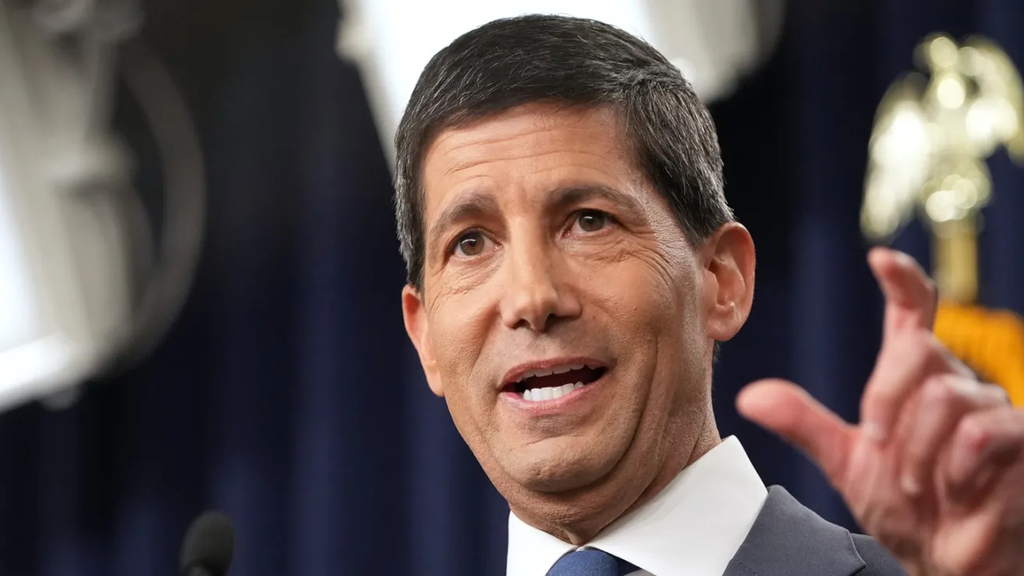
The pulse of the national economy (Snippet Bait): The chair of the Federal Reserve (Fed) formally warned that inflation remains stubbornly above the federal target of 2%, paving the way for a possible additional increase in benchmark interest rates. This technical measure will immediately raise the cost of credit card interest, auto loans, and mortgage financing, forcing consumers to drastically adjust their budgets.
The warning comes just three weeks before the Federal Open Market Committee meeting on September 15 and 16, when officials will decide the next move in monetary policy.
Inflation, as measured by the Consumer Price Index, stood at 3.4% year-over-year in July, well above the Federal Reserve’s 2% target. This trend complicates the central bank’s plans to lower interest rates.
The anatomy of the problem: Why isn’t inflation falling, and what role does the Fed play?
To understand why a decision made in a Washington office ultimately affects your bank account balance, it’s necessary to look at the mechanisms that regulate the money in circulation.
1. Fighting the cost of living by raising the cost of money
The Federal Reserve’s primary tool to cool an overheated economy is to raise or keep benchmark interest rates high (Federal Funds Rate).
- Making credit more expensive: By raising rates, commercial banks pay more to borrow, and consequently, they pass that cost on to the final consumer by making loans more expensive. The logic behind this is simple: if borrowing becomes more costly, people and businesses spend less, demand drops, and prices stabilize.
- The uncomfortable truth: Hispanic consumers and working-class families are often the hardest hit by this dynamic, as they rely more heavily on consumer credit to navigate periods of high costs for basic services and food.
2. The direct impact on families’ wallets
When interest rates rise, the cost of variable debt spikes almost immediately.
- Credit cards: The annual percentage rates (APR) of most credit cards are tied to the prime rate (Prime Rate). A quarter- or half-point increase by the Fed directly translates into higher monthly charges for those carrying balances from month to month.
- Mortgages and auto loans: Buying a vehicle or a home becomes significantly more expensive, increasing the initial monthly payment and reducing buyers’ purchasing power.
Table: Financial Impact Breakdown — Fed Rates vs. Your Economy
To precisely visualize how monetary tightening affects your personal finances, we compare the effects by sector:

| Type of Financial Product | Behavior with High Rates | Recommended Action for Consumers |
| Credit Cards | Drastic increase in interest and minimum monthly payments. | Prioritize paying off the full balance and look for 0% balance transfer offers. |
| Mortgages | Higher interest rates (freezing the home buying market). | Consider refinancing only if conditions improve substantially. |
| Savings Accounts (High-Yield) | Attractive returns on saved money. | Maximize emergency savings by taking advantage of favorable interest rates. |
Practical guide: How to protect your personal finances from the threat of higher rates
Anticipating a scenario of expensive money is key to preventing debt from becoming an uncontrollable snowball. Follow these foolproof steps:
1. Tackle credit cards first: Audit and consolidate high-interest debt.
If you’re carrying balances on credit cards with interest rates exceeding 20% or 25%, explore debt consolidation options through a fixed-rate personal loan or balance transfer cards with a temporary 0% interest rate. Stopping the growth of compound interest should be your top priority.
2. Protect liquidity against unexpected events: Build a fortified emergency fund.
With credit becoming more expensive, relying on credit cards in case of a medical or mechanical emergency is a severe financial risk. Allocate a portion of your income to a high-yield savings account (High-Yield Savings Account) to earn favorable interest while protecting your stability.

3. Where to find reliable financial projections: Monitor economic indicators and official sources.
To make informed decisions about investments, major purchases, or refinancing, stay updated on the central bank’s official statements. You can review announcements and economic analyses directly on the Board of Governors of the Federal Reserve System website or follow financial reports from Associated Press.
The truth is that today’s economy demands conservative and well-planned financial management. For our community, understanding the direction of interest rates and inflation is the most effective shield to protect years of hard work.
Image: ElHispanoParatodos/PRESS