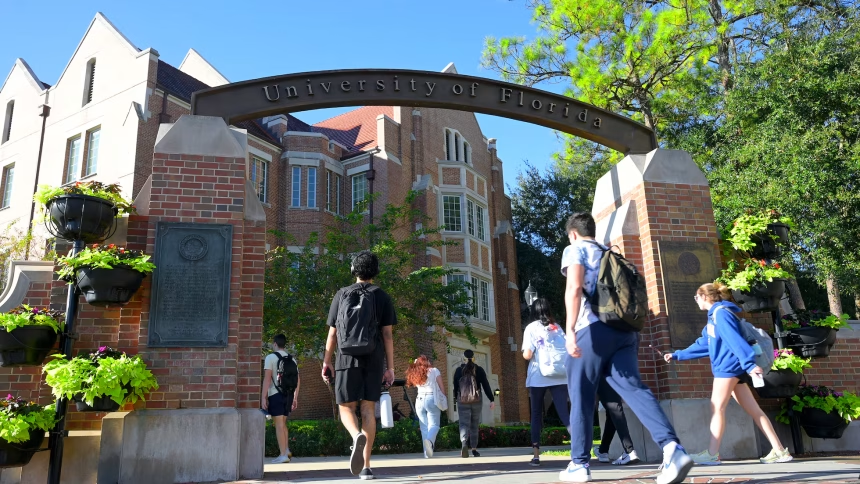
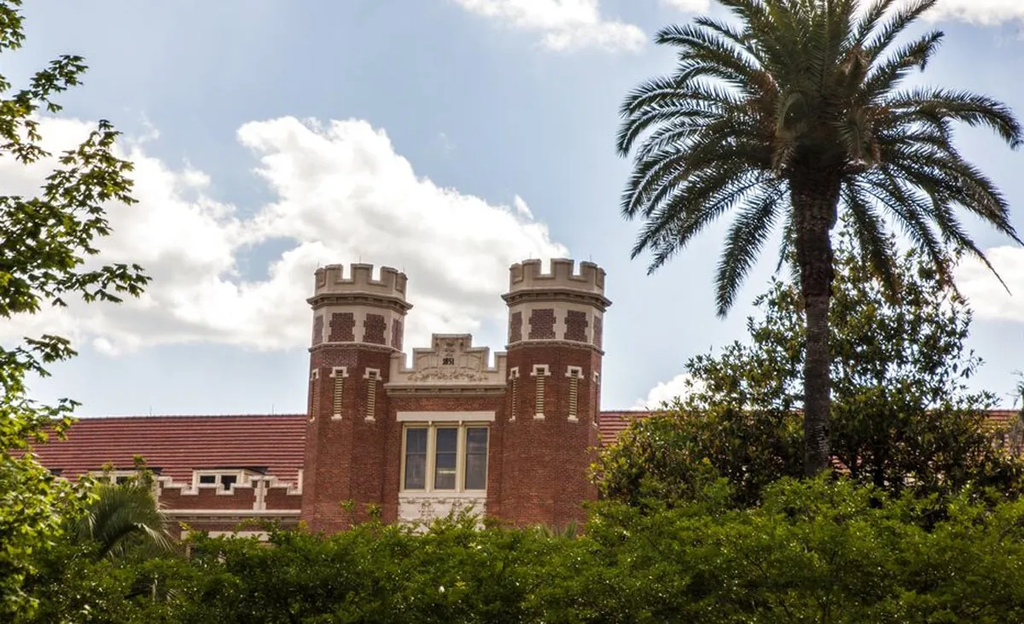
If you’ve spent years ensuring your children maintain impeccable academic records, participate in extracurricular activities, and dream of attending a state university in Florida, you know firsthand that higher education represents the only real promise of social mobility and family stability. The truth is, for thousands of young people who grew up in the Sunshine State—many of whom arrived as children, hand in hand with their parents, and consider this land their only home—the opportunity to attend college was once an attainable right through effort and merit. However, the regulatory landscape has taken a relentless turn.
With the implementation of increasingly strict admission policies in Florida’s public university system, the doors of iconic institutions like the University of Florida (UF) or Florida State University (FSU) threaten to close permanently for those students lacking regular immigration status.
Advertisement
How were these new restrictions structured, what real impact will they have on the future of Hispanic youth, and what legal alternatives exist? Let’s break it down thoroughly.
The Pulse of the Education System (Snippet Bait): The guidelines adopted by the Board of Governors of Florida’s public university system formally prohibit the enrollment of students lacking legal immigration status, requiring proof of federal legal presence at the time of admission and eliminating access to in-state tuition rates that historically benefited local high school graduates. The measure sparks a wave of uncertainty and legal mobilization across the state.
Florida’s public universities shut the door on the dreams of hundreds of undocumented students. Credit: Mark Wallheiser | AP
The Anatomy of the Restriction: How Were the Rules Changed in Florida?
To understand the magnitude of this change, it’s necessary to examine the legal and administrative framework that transformed admission policies in the state.
1. The End of Flexibility and the Legal Presence Requirement
For years, Florida maintained a delicate balance that allowed students who graduated from local high schools—regardless of their immigration status—to access public higher education under certain residency conditions and adjusted tuition rates.
The new bureaucratic rigor: Recent regulations require state universities to meticulously verify the immigration status of each applicant through federal databases. If a student cannot provide a valid Social Security number, permanent residency, a student visa, or active immigration relief (such as DACA), their application is automatically rejected.
The uncomfortable truth: Proponents of these measures argue that state taxpayer resources should be prioritized for citizens and legal residents. However, critics and educators warn that marginalizing an active portion of youth destroys the state’s economic potential and truncates professional vocations vital to the local economy.
2. The Human Impact and the Dilemma of Young ‘Dreamers’
For affected students, the enrollment ban represents an insurmountable wall that halts their life plans just as they reach adulthood.
Advertisement
The loss of local talent: Young people who earned academic honors, state merit-based scholarships, and community recognitions now find themselves without viable options to continue their higher education within the state, forcing them to migrate to other regions with more flexible policies or abandon their professional dreams.
The effect on the Hispanic community: Given that Florida has a heavily Latino demographic, university restrictions create a climate of exclusion that transcends campuses and undermines overall trust in public institutions.
Table: Educational Change at a Glance — The Before and After in Florida
To precisely visualize the impact of these regulations on university access, we contrast the previous scenario with the current situation:
Academic/Legal Variable
Previous Scenario (Relative Flexibility)
Current Scenario (Strict Restriction)
Admission Requirement
Conditional enrollment permitted for local high school graduates.
Strict verification of immigration status and automatic rejection without documentation.
Tuition Rates
Access to in-state tuition rates for those who attended high school in Florida.
Inability to enroll or requirement to pay prohibitive international or non-resident tuition rates.
Student Impact
Thousands of young people integrated into the skilled and university workforce.
Academic dropout, student migration to other states, or exclusion from the system.
Practical Guide: What Options Do Affected Students Have and How to Navigate the System?
In the face of an adverse institutional environment, families and students must explore all available legal and academic alternatives to avoid truncating their education. Follow these key points:
1. Seek institutions with inclusive admission policies: Explore private universities and options outside the state system.
Advertisement
While Florida’s public universities are subject to new state restrictions, many private universities and colleges in the state, as well as institutions in states with sanctuary or flexible policies (such as New York, California, or Illinois), maintain admission policies blind to immigration status and offer private institutional scholarships.
2. Check if you qualify for current immigration relief: Specialized legal advice on immigration options.
Consult with an accredited immigration attorney or a nonprofit community organization to assess whether the student qualifies for programs like DACA (if registrations reopen), U visas, asylum, or other pathways to regularization that would provide a valid number for university enrollment.
3. Where to find independent scholarships and support networks: Monitoring resources and community support.
There are national and international foundations dedicated to funding higher education for undocumented students through private scholarships that do not require a Social Security number. To stay informed about educational resources and ongoing litigation, consult specialized civil rights portals like the American Civil Liberties Union (ACLU) or Associated Press coverage.
The truth is that education is the most powerful engine of human progress, and closing the door on youth harms the collective development of society as a whole. For our Hispanic community, knowing the alternatives and maintaining resilience is essential to overcoming any institutional barrier.