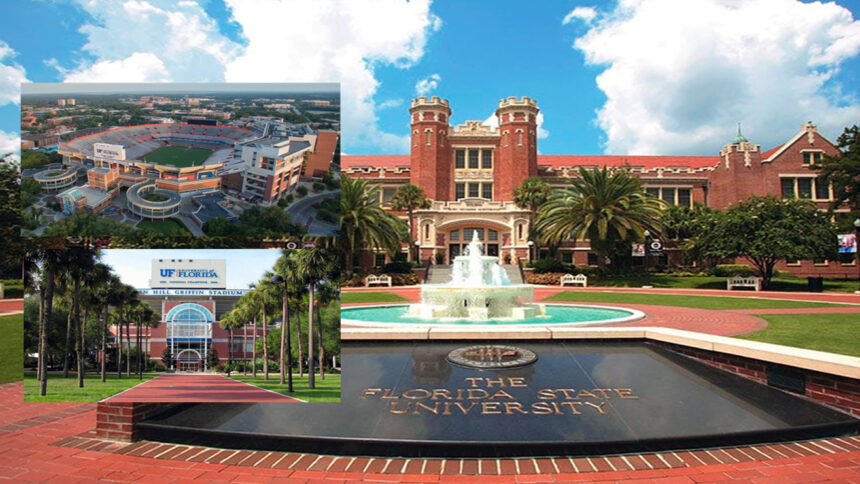
The University of Florida, a public university, was recognized this week as the top institution among 100 universities in the United States, both public and private, according to a new national ranking published by City Journal and highlighted in a Wall Street Journal editorial on October 23, 2025.
- Why was the University of Florida named the best university in the United States in 2025?
- Which universities are in the top 10 of City Journal’s 2025 ranking?
- How does City Journal’s university ranking methodology differ from other rankings?
- Why is the ranking result relevant to higher education in the United States?
- What is the context, and what are the recent changes in university rankings?
- What are the concrete effects for students and universities after the ranking’s publication?
- Future impact of the ranking on the U.S. higher education system
Report positions Florida as a leading institution in national academic excellence.
The result directly impacts the national academic community, students, and those aspiring to higher education, given the influence these rankings have on admissions processes, resource allocation, and institutional development.

According to the Wall Street Journal, the ranking by City Journal was based on a detailed analysis of academic indicators, rigor criteria, employability, and aspects of institutional climate. The evaluation focused on 68 distinct factors related to curriculum quality, academic rigor, professional preparation, and the promotion of ideological pluralism and social life on campuses. The study aims to measure the concrete contribution of universities to the comprehensive education of students and society, moving beyond traditional notions of prestige or historical exclusivity.

The institutional statement from the University of Florida indicates that this distinction is part of a broader review of university measurement systems, where questions are growing about models based solely on historical recognition or restrictive selection processes. City Journal’s approach responds to the demand to value tangible performance and the civic function of higher education institutions in the U.S., in a context where challenges for the higher education sector and the skills demanded by the contemporary economy are being discussed.
Why was the University of Florida named the best university in the United States in 2025?
The methodology behind the ranking by City Journal was based on the analysis of 68 academic and institutional quality indicators. Key aspects evaluated included the breadth and depth of the core curriculum, academic rigor, effectiveness in professional preparation, promotion of civilized debate, and openness to ideological diversity on campus. As reported by the Wall Street Journal, the authors of the report sought to recognize universities that “prioritize intellectual growth and civic engagement over prestige or selectivity.”
The study also considered the vitality of student life, tolerance for controversial speakers, and the social environment on campus. The Wall Street Journal noted that “schools demonstrating ideological pluralism among faculty received higher ratings,” while inclusion and diversity in university life were recognized as key factors.

The University of Florida received a top score of four stars, a distinction shared with only one other university nationwide.
According to the institutional statement by Mori Hosseini, chairman of the Board of Trustees, and Donald W. Landry, interim university president, this achievement “demonstrates that at the University of Florida, we anticipated the need to rethink the real value of higher education and strategically invested in our programs and culture to seize this opportunity.”  The new City Journal ranking highlights academic excellence, ideological pluralism, and employability as key criteria. (Illustrative image Infobae)
Which universities are in the top 10 of City Journal’s 2025 ranking?
The national ranking published by City Journal includes both public and private universities, shifting the usual parameters of other lists. According to the compilation by the Wall Street Journal and official publications from the University of Florida, the top positions are as follows:

- University of Florida
- University of Texas at Austin
- University of North Carolina-Chapel Hill
- Georgia Institute of Technology
- Florida State University
- University of Virginia
- University of Michigan
- University of California, Davis
- University of California, Los Angeles
- University of California, San Diego
The rankings show a strong presence of U.S. public universities, reflecting a shift in evaluation focus compared to traditional rankings, where Ivy League institutions or those with greater access to historical resources typically prevailed.
How does City Journal’s university ranking methodology differ from other rankings?
City Journal’s evaluation method proposes a shift from previous measurement systems. The new approach incorporates an analysis of 68 criteria, with special attention to the mandatory institutional curriculum, course offerings in scientific, humanities, and arts fields, campus life dynamics, and the promotion of free speech.
The report distinguishes universities that, in addition to meeting strong academic standards, foster tolerance for diverse voices, even when controversial.
Another valued aspect is the role of institutions in promoting ideological pluralism and commitment to open debate.
To assess this, concrete practices were observed, such as inviting speakers with differing viewpoints, the existence of protocols for managing public debates, and policies that allow for the peaceful coexistence of diverse perspectives among faculty and students.
The Wall Street Journal argued that the ranking “offers a different view of higher education by highlighting universities that emphasize intellectual development and civic engagement over reputational supremacy.” A key difference from previous lists is the weight given to curricular inclusion, the evaluation of the social environment, and the quality of relationships between faculty and students.
Despite these innovations, the measurement retains traditional parameters such as academic outcomes, graduation rates, and the professional standing of graduates. However, the weighting of these criteria is balanced with social and ethical dimensions of university life. The University of Florida earns the top score for its comprehensive curriculum, openness to debate, and professional outcomes. (University of Florida)
Why is the ranking result relevant to higher education in the United States?
The designation of the University of Florida as the best university in the country, according to the City Journal ranking, has a direct impact on the academic sector, government agencies, students, and families. Rankings influence strategic decisions by institutions, such as expanding enrollment, allocating research funds, and attracting international partnerships. According to the Wall Street Journal, the dissemination of such results alters admission trends, inspires new university policies, and shapes the establishment of agreements and collaborations.
The leadership of a public university directly affects academic and professional mobility for students, as well as public and private investment priorities in higher education.
Top-ranked universities see increased participation in research projects and greater ability to attract talent nationally and internationally. Sector data shows that over 40% of students applying to graduate and doctoral programs use national rankings as a key criterion when choosing a university.
The University of Florida has implemented new curricular models in recent years that integrate mandatory courses in humanities, sciences, and civic education. According to the institutional statement, educational principles have been incorporated that encourage discussion of classic texts, analysis of the foundations of the U.S. political order, and interdisciplinary integration projects.
What is the context, and what are the recent changes in university rankings?
In recent decades, U.S. universities have participated in a global higher education market where positioning in international rankings by outlets like U.S. News & World Report, Times Higher Education, or QS World University Rankings was crucial. These rankings prioritized indicators such as academic reputation, available resources, research achievements, and selectivity in admissions.
The 2025 report by City Journal, as covered by the Wall Street Journal, introduces measurement procedures focused on the added value of academic training and adaptation to the challenges of the contemporary economy.
The context of this shift includes legislative and social debates about the purpose of higher education, equal access, and the representation of diverse ideological voices in the classroom.
The analysis by City Journal highlights the University of Florida as an institution that balances academic rigor, free speech, and professional outcomes. The university has also received external certifications for adopting the Chicago Principles and recognition from the Foundation for Individual Rights and Expression (FIRE) for its policy supporting pluralistic debate on campus. The 2025 City Journal ranking reshapes the higher education landscape by prioritizing social impact and diversity over historical prestige. (Illustrative image Infobae)
What are the concrete effects for students and universities after the ranking’s publication?
The new ranking of the University of Florida affects how students and their families consider educational options. According to data published by the National Council for Higher Education, the appearance of a public university in the top national position can influence application preferences, increase scholarship demand, and alter internal migration flows in search of leading educational centers.
For universities, leading rankings bring institutional advantages such as expanded research agreements, greater funding opportunities, and access to international scientific collaboration networks.
According to the Wall Street Journal, universities leading these rankings strengthen their position as central players in the scientific and educational system.
Public universities that have improved their ranking, such as the University of Texas at Austin and Georgia Institute of Technology, have implemented similar curricular reforms focused on comprehensive education, ideological pluralism, and measurable outcomes in the professional and social development of their students.
The list by City Journal will serve as a reference for decision-making by higher education applicants, education policymakers, businesses, and international organizations interested in scientific and academic collaboration.
Future impact of the ranking on the U.S. higher education system
The 2025 ranking publication solidifies a paradigm shift in the evaluation of university education. Public institutions, traditionally overlooked due to lack of exclusivity or fewer historical resources, are now achieving leading positions based on their social impact, openness to ideological diversity, and comprehensive academic standards. The University of Florida represents, under this model, an alternative to the traditional elite system and a benchmark for future institutional evaluations.
The report will serve as a basis for defining new public funding policies, adjusting university accreditation criteria, and creating national and international research and teaching partnerships. Sector organizations, specialized media, and government actors will use the publication to redefine quality standards in U.S. higher education.
Image: Infobae