If you live in the Sunshine State of Florida and pay your taxes on time every year, the recent release of a state grand jury report will make your blood boil. The truth is, we trust that every dollar collected through taxes and state allocations will translate into better schools, safe road infrastructure, assistance for vulnerable families, and efficient public services.
However, when judicial investigations uncover schemes where millions of dollars in public subsidies and grants are systematically diverted to fund partisan interests, electoral campaigns, and influence networks, public trust collapses. The grand jury report not only details staggering figures but also exposes a network of complicity operating in the shadows of institutional legality. How was this multi-million-dollar fraud structured, who are the main figures involved, and what consequences will it have for local governance in Florida? Let’s break it down thoroughly.

The pulse of the financial scandal (Snippet Bait): A Florida investigative grand jury issued an explosive report that reveals the irregular use and diversion of over $10 million in public funds originally allocated to nonprofit organizations and community programs, which ultimately funded political campaigns, partisan events, and networks of favors among local operatives. The judicial panel’s conclusions open the door to imminent criminal proceedings for fraud, embezzlement, and violations of election financing laws.
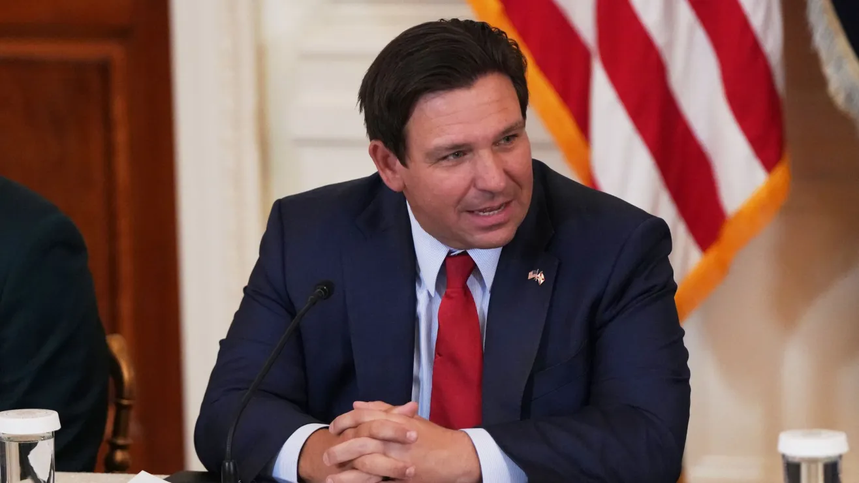
A grand jury determined that the administration of Florida’s governor, Republican Ron DeSantis, “embezzled” $10 million in public funds to direct them to the Hope Florida foundation, linked to his wife, Casey DeSantis, and to political campaigns, but concluded there is insufficient evidence to charge any individual.
The jury’s conclusion also implicates two Republican candidates in Florida: Attorney General James Uthmeier and Senator Ashley Moody, who are seeking to retain their positions in the November 3 elections.
The report, which has been under seal since last January in the Leon County Clerk’s Office, found that the money, intended for social assistance, including children, passed through several organizations before reaching the accounts of the Florida Republican Party and two political action committees.
The funds were used to finance a campaign against a citizen referendum seeking the legalization of cannabis in 2024, which did not reach the required 60% threshold for approval.

The $10 million received by DeSantis’ foundation came from a settlement between the Florida government and Centene Corporation to resolve a dispute over Medicaid program charges.
The news splashed Uthmeier, who was then the governor’s chief of staff, because his political committee, ‘Keep Florida Clean,’ “was the primary recipient of most of the $10 million in taxpayer funds,” according to testimony cited in the report.
Meanwhile, Moody, who was then Florida’s attorney general, was aware of the facts and “authorized” one of her subordinates to sign the agreement.

Despite the report’s conclusion, the grand jury acknowledged that “there is not enough evidence to charge anyone,” because “no one took responsibility for deciding that the $10 million would go to Hope Florida.”
“While we cannot prove who is responsible, we can clearly see that taxpayer money was misused for political purposes, and we would like changes to be made to prevent this from happening again,” the document stated.
Pressure on the candidates
The revelation shakes up political campaigns in Florida, where Democratic candidates for governor, David Jolly; for the Senate, Angie Nixon; and for attorney general, José Javier Rodríguez, demanded the resignations of those involved, such as Uthmeier and Moody, in addition to a new investigation.
“This is deep and repulsive corruption. Ashley Moody has shown she is willing to betray Florida’s vulnerable families,” Nixon said in a statement.
The anatomy of the diversion: How did the political funding network operate?
To understand the severity of this case, it is necessary to examine the financial mechanism that allowed the embezzlement of public resources to be concealed under the guise of social beneficence.
1. The use of nonprofit facades
The scheme documented by the grand jury relied on the creation and manipulation of supposed charitable organizations dedicated to community welfare.
- The revolving door of money: These entities applied for and obtained government grants under altruistic arguments. However, instead of carrying out the approved projects, the funds were transferred through inflated contracts to shell consulting firms controlled by political allies and campaign operatives.
- The uncomfortable truth: This type of scheme demonstrates how loopholes in the oversight of state grants allow taxpayer money to be co-opted by partisan elites without internal auditors detecting the diversion in time.
2. The impact on public trust and the local economy
When resources intended for social assistance vanish into political campaigns, the most vulnerable sectors pay the real price of corruption.
- The harm to legitimate community programs: Honest organizations that truly fulfill a social role in southern and central Florida counties suffer budget cuts and stifling scrutiny due to the shadow of distrust cast by such scandals.
- The judiciary’s response: The report calls for an immediate review of audit controls in all state agencies responsible for disbursing discretionary funds, marking a before and after in the state’s government oversight.
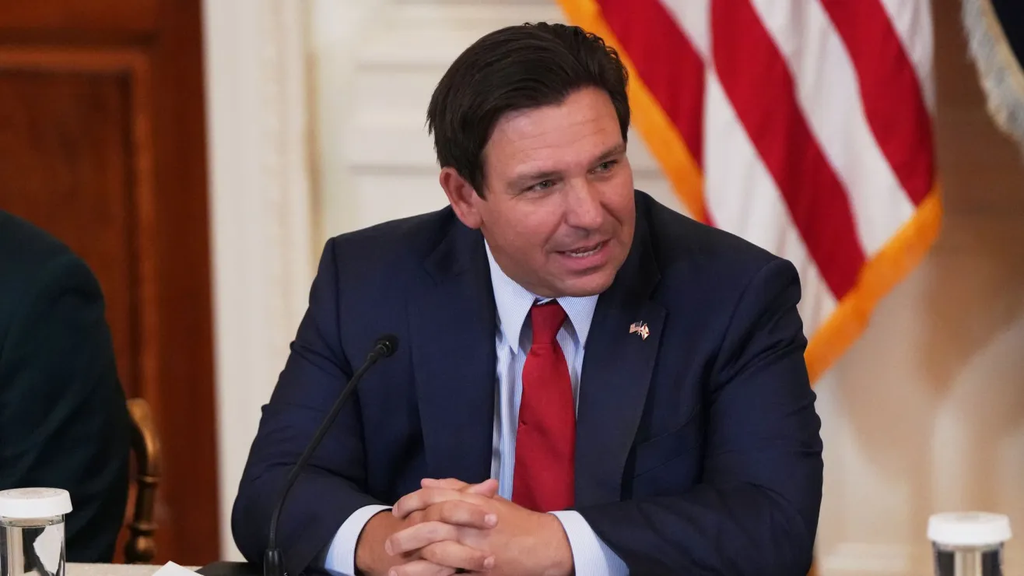
Table: Breakdown of the fraud and grand jury findings
To precisely visualize the critical points exposed by the investigative panel, we contrast the key aspects of the scandal:
| Scandal Variable | Grand Jury Investigation Detail | Institutional and Legal Impact |
| Embezzled Amount | Over $10 million in state and local public funds. | Depletion of resources intended for essential community services. |
| Modus Operandi | Inflated contracts and transfers to political consulting firms through facades. | Opening of criminal investigation files for fraud and money laundering. |
| Affected Sectors | Social assistance grants, community development, and civic education. | Temporary loss of credibility in the transparent allocation of subsidies. |
Practical guide: How are public funds audited, and what can citizens do?
In the face of corruption cases of this magnitude, citizen participation and fiscal scrutiny become the best tools for democratic defense. Follow these steps to understand and monitor the use of public resources:
1. Consult reports from the Office of the Auditor General: Access to information and open audits.
Citizens have the right to review how taxes are spent. You can consult public audit reports and state-level budget allocation records through the official portal of the Florida Auditor General.
2. How to report financial irregularities in your county: Anonymous reporting and civic participation.
If you suspect or have evidence of public fund embezzlement, suspicious contracts, or misuse of resources in your locality, the state attorney general’s offices and county inspectors general have direct and confidential hotlines for reporting (Fraud Hotlines).
3. Where to get objective information about the case: Monitoring judicial proceedings.
The legal ramifications of this grand jury report will continue to unfold in state courts over the coming months. Stay informed about indictments and arrests by consulting rigorous press coverage from Associated Press.
The truth is that accountability is not optional in a functioning democracy; it is the foundation on which the peace of mind of working families rests. For our Hispanic community in Florida, demanding transparency in the management of every public dollar is essential to ensure that resources serve the common good and not selfish interests.
Image: ElHispanoParaTodos/PRESS