Strategic patience at the White House has evaporated. In a move many feared and others anticipated, President Donald Trump has blown up any hope of an immediate peaceful transition in the Persian Gulf. Through a series of incendiary posts on Truth Social, the president has made clear that the era of white-glove negotiations with Tehran is officially over.
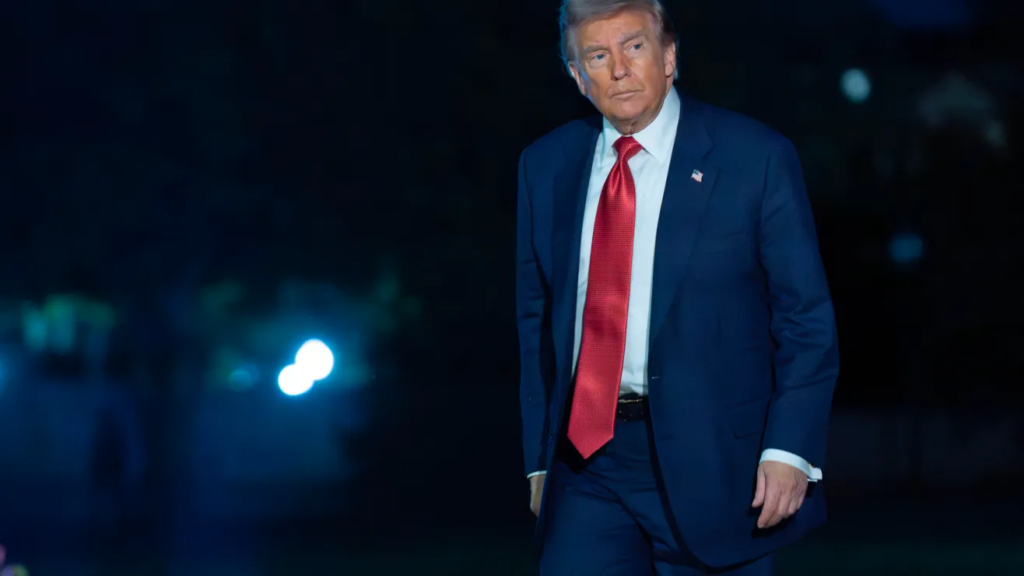
Donald Trump has formally rejected Iran’s response to the U.S. peace proposal, calling it “completely unacceptable” and declaring that the Iranian regime will “no longer laugh” at Americans after nearly 50 years of what he describes as constant aggression.

Here’s what really matters: this is not just a social media tantrum. This is the architecture of a potential military intervention justified by the failure of diplomacy.
The Weight of 47 Years: Why Trump Talks of Constant “Beating”
To understand the current level of hostility, we must look in the rearview mirror. Trump did not choose the figure of “nearly half a century” at random. He refers to the historical trauma that began with the 1979 Revolution and the hostage crisis. According to the president, since then, the United States has been the “punching bag” of a theocracy that has known how to play with the timing of Western diplomacy.
- Criticism of “Obama’s money”: Trump insists that previous administrations, specifically those of Obama and Biden, “oxygenated” the regime by lifting sanctions and unfreezing funds that, in his view, ended up financing regional terrorism.
- Biden’s paralysis: For the current president, the past few years were marked by “humiliating weakness” that allowed Iran to advance its nuclear program without real consequences.
Is this a fair reading of history? Perhaps it’s simplistic, but it’s the narrative that is resonating deeply with his voter base and setting the stage for much harsher actions.
The Uranium “Red Line”: The Point of No Return
The real core of the conflict is not insults, but uranium. Trump has been unusually specific: he will not tolerate Iran maintaining its stockpile of enriched uranium. The warning was a direct hit to Iranian leaders: “If anyone gets close to the [enrichment] site, we will know and we will blow it up.”

This stance puts the international community in an impossible position. While European countries try to salvage remnants of previous agreements, the 2026 Trump doctrine is binary: either Iran completely dismantles its nuclear capacity, or it faces the kinetic force of the world’s greatest military power.
“The April 8 truce now seems like a distant memory. We are watching the last diplomatic bridge collapse in favor of a ‘Maximum Pressure 2.0’ policy that does not rule out the use of bunker-buster bombs.”
Comparative Analysis: The Escalation of Tensions (2025 vs. 2026)
| Risk Factor | Situation in 2025 | Current Status (May 2026) | Impact on Citizens |
| Nuclear Enrichment | Monitored by the IAEA (limited) | Trump demands immediate and total cessation | Instability in global markets |
| Economic Sanctions | Flexible in certain sectors | Total “strangulation-style” blockade | Increase in oil prices |
| Diplomatic Rhetoric | Messages through third parties | Direct attacks on social media | Uncertainty and risk of war |
| Military Presence | Routine patrols in the Gulf | Deployment of aircraft carriers and threats | Possible recruitment or mobilization |
The Impact on Hispanic Wallets: Why This Is Not Just “Foreign News”
We sometimes make the mistake of thinking that what happens in Tehran stays in Tehran. Nothing could be further from the truth. If you live in Miami, Houston, or Los Angeles, this conflict will knock on your door in three main ways:
- Gasoline: A sneeze in the Strait of Hormuz (through which 20% of the world’s oil passes) means you will pay more to fill up your car’s tank next week.
- Transportation Inflation: If fuel prices rise, so does the cost of transporting food. It’s that simple. Your grocery bill is directly tied to the stability of the Middle East.
- National Security: Trump has mentioned that the southern border is vulnerable to “actors sponsored by enemy states.” Although there is no direct evidence linking Iran to the current migration flow, the narrative of an “internal threat” will intensify, affecting immigration policies.
What Comes Next? Possible Scenarios
The truth is that no one has a crystal ball, but Trump’s behavior suggests three very clear paths:

- Scenario A: Negotiated Surrender. Iran, suffocated by sanctions and fear of an imminent attack, accepts an agreement far more restrictive than the 2015 deal. Trump sells it as “the best deal in history.”
- Scenario B: Surgical Conflict. The U.S. carries out limited airstrikes against specific nuclear facilities. It’s not all-out war, but a fiery message.
- Scenario C: Truce Collapse. An escalation of “an eye for an eye” in the Persian Gulf that ends in a regional conflict involving Israel and Saudi Arabia.
Here’s the interesting part: Iran is not a passive actor. The regime has proven to be a master of asymmetric warfare. If Trump decides to “blow them up,” Tehran has cells and allies (like Hezbollah) that could respond on fronts Washington hasn’t even considered.
Image: ElHispanoParaTodos/PRESS