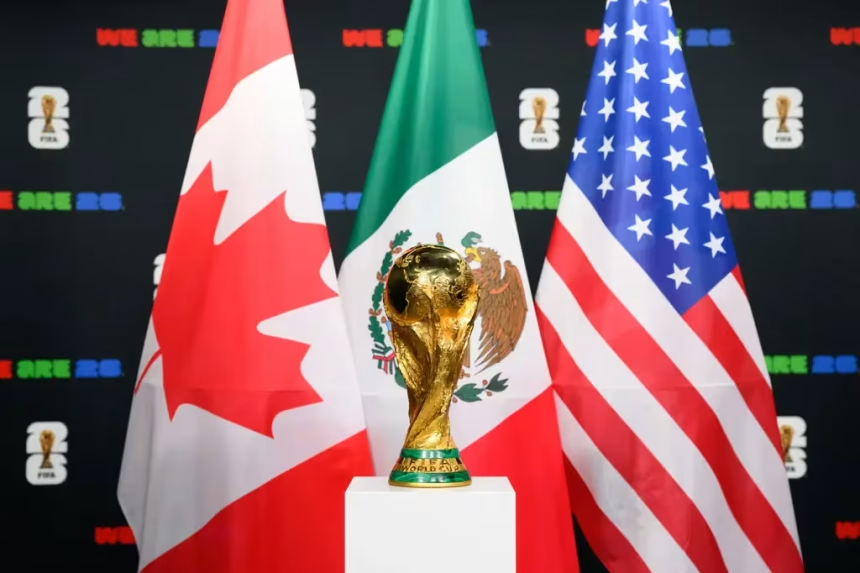
The opening matches of the three co-host nations showed that the home-field advantage imposes an immense psychological pressure that disrupts traditional tactical plans, as seen in their debuts.
- The Giant Awakens: The Tactical Exhibition of the Stars and Stripes
- The Wobbling Temple: Why Mexico Drowned in the Weight of the Azteca
- Frustration in the Maple Leaf: Canada and the Lack of International Bite
- Performance Table: Ratings for the Three Hosts in Their Debut
- Fan Guide: How to Secure Your Tickets and Avoid Scams in the Group Stage
Playing in a World Cup is every soccer player’s dream, but doing so with the roar of 80,000 local fans pushing from the stands is a double-edged sword that few manage to control. The environmental pressure doesn’t just weaken the legs of debutants; it turns the pitch into a high-tension stage where the smallest tactical mistake is paid for with national humiliation in front of billions of TV screens. For our Hispanic community, which lives this tournament with almost religious passion between tricolor flags and family barbecues, the start of this historic North American event has made it clear that home advantage no longer wins games by simple decree.

The truth is that the theory that hosts have a paved path to the Round of 16 collapsed in the first week of competition. The tournament’s scoreboard has been reshuffled in an instant after the first three opening whistles.
The Pulse of the Pitch (Snippet Bait): The 2026 World Cup debut for the three host countries left a bittersweet outcome that shakes up sports betting: while the U.S. asserted authority with a 4-1 thrashing of Paraguay in a masterful display by Christian Pulisic, Mexico struggled to salvage a last-gasp 1-1 draw at the Estadio Azteca due to severe defensive transition failures, and Canada paid the price for their lack of European sharpness in a 1-0 loss to an ultra-defensive African squad, triggering operational alarms for the tournament.
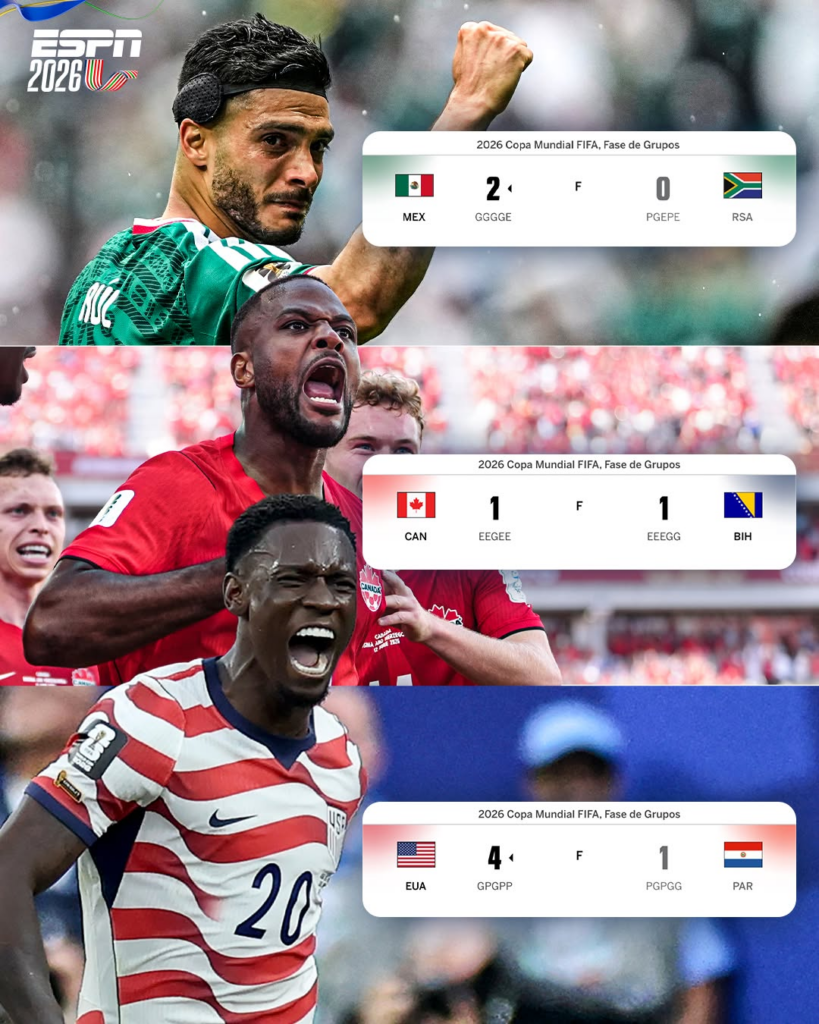
The Giant Awakens: The Tactical Exhibition of the Stars and Stripes
Let’s get to the point. What the U.S. national team did in their opener wasn’t a fluke or a last-minute stroke of luck. The strategic setup bordered on perfection. Local media had been harshly criticizing the team’s lack of scoring in recent friendlies, and the ghost of a premature home elimination loomed like a dark cloud over the federation’s offices.
Here’s the interesting part: positional flexibility was the key that completely dismantled the rigid South American scheme. Instead of keeping the wingers stuck on the flanks, the coaching staff ordered fluid interior play that destroyed Paraguay’s marking references. The decisive 4-1 final score, sealed with a brace from Pulisic and a long-range missile from Weston McKennie, not only virtually secures advancement to the next round but also validates a process rooted in diversity that deeply resonates with mixed-status families across the country. Soccer has finally graduated as a mainstream sport in the heart of our community.
The Wobbling Temple: Why Mexico Drowned in the Weight of the Azteca
If the U.S. performance was a party of efficiency, Mexico’s outing at the colossus of Santa Úrsula was an exercise in pure psychological survival. Playing at the Estadio Azteca should be an insurmountable advantage, but the excess of intensity and the anxiety to please an impatient crowd ultimately took a toll on the “Tri’s” tactical setup.

- The Midfield Short-Circuit: The Mexican team looked disjointed from the tenth minute. The gap between the defensive line and the forwards was so wide that every lost ball turned into a suicidal counterattack for the central defense.
- The Trap of Useless Possession: Mexico had 64% of the ball possession, but it was a horizontal, predictable, and rhythm-less hold.
Can they really aim for the famed “fifth game” with such a flat style of play? (Probably not, unless the bench makes urgent adjustments before the second match). The equalizing goal rescued in the 88th minute averted national tragedy but left a bitter taste in the mouths of millions of fans who expected a dominant start.
Frustration in the Maple Leaf: Canada and the Lack of International Bite
Canada represented the freshness and athletic speed of the north, but their World Cup debut showed that elite soccer punishes innocence ruthlessly. Facing an organized opponent that shut down all interior lanes for Alphonso Davies, the Canadian squad wore itself out by sending crosses into the box without finding a fixed finisher.
The 1-0 loss leaves them immediately on the ropes. The lack of experience in high-pressure scenarios caused the team to lose composure in the final fifteen minutes, falling into a pattern of systematic fouls and sterile protests that only served to run down the clock. Now, the northern squad will have to chase qualification on hostile ground with no margin for error.

Performance Table: Ratings for the Three Hosts in Their Debut
So our community can debate with solid arguments at the barbecue or in online forums, we break down the technical ratings of each team’s operational performance in their 2026 World Cup opener:
| Host Team | Official Result | Tactical Rating (1-10) | Identified Strengths | Critical Vulnerability to Fix |
| United States | 4-1 Win vs Paraguay | 9.5 | Attacking effectiveness, Pulisic’s impact, blistering pace in transitions. | Minor lapses in low defensive build-up. |
| Mexico | 1-1 Draw vs Opponent | 6.0 | Emotional push in final minutes, unwavering fan support. | Slow defensive retreat, lack of interior creativity. |
| Canada | 0-1 Loss vs Opponent | 5.5 | Speed on the wings, enviable physical deployment. | Inexperience in clock management, absence of a resolute center forward. |
Fan Guide: How to Secure Your Tickets and Avoid Scams in the Group Stage
The World Cup fever is just starting to heat up, and the frenzy to see the hosts in the knockout rounds will drive last-minute fans to desperation. Don’t let the excitement cloud your financial judgment. The margin for error against cybercrime mafias is zero. Follow this digital security protocol:
1. Buy Exclusively on FIFA-Verified Platforms: Official Channels.
Don’t fall for the temptation to buy QR codes or physical tickets near the stadiums or through informal resale groups on social media. The FBI has already issued specific alerts detailing the existence of phishing networks that clone payment interfaces. Use only the official FIFA ticket app; any other method is illegal and won’t guarantee access to the turnstiles.
2. Meet Stadium Identification Requirements: ID Verification.
Remember that for this tournament, perimeter security measures are extremely strict. In addition to your active digital ticket in the app, venues require an official photo ID (passport, state ID, or valid driver’s license) that exactly matches the registration details in your fan profile. Name inconsistencies can result in immediate access revocation.
3. Plan Your Arrival Four Hours in Advance: Arrival Logistics.
Vehicle exclusion perimeters around stadiums like the Hard Rock Stadium in Florida or MetLife in New York block regular traffic miles before the main entrances. Use the mass public transportation enabled by the cities and arrive early to clear the three rings of biometric and technological screening without delays that could leave you missing the opening whistle.
The fate of the hosts in this 2026 World Cup debut confirms an undeniable reality: the names on the jerseys and the support of local fans are great seasoning, but on the field, the only thing that speaks is tactical discipline and effectiveness in front of the net. We will continue rigorous monitoring of the team camps in Texas, California, and Florida’s Treasure Coast to update every detail of this sporting adventure that defines the pride of our region minute by minute. Don’t panic after a bad result; the road is long, and in this tournament, history is written minute by minute.
Image: ElHispanoParaTodos/PRESS