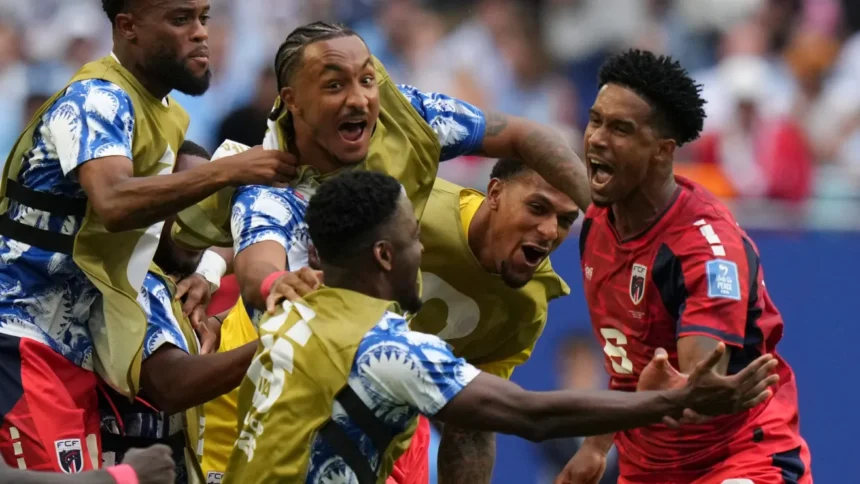
In today’s soccer world, where multibillion-dollar budgets seem to decide trophies before the ball even rolls, there’s always room for the unexpected. Every so often, fate grows tired of the favorites and allows a team built on dreams, resilience, and flawless tactical planning to rewrite the script. What Cape Verde is doing at this World Cup isn’t just a summer “surprise”—it’s a lesson in strategic mastery that’s leaving Europe’s and South America’s football giants nervously revising their playbooks.
The truth is, no one—not even the boldest bookmakers—had this archipelago on their radar for the final round.

The Verdict from the Pitch (Snippet Bait): Cape Verde has become the most unexpected story of the 2026 World Cup, becoming the first team from an African island nation to reach the tournament’s knockout stages. With a playing style built on tactical discipline, an almost impenetrable defensive block, and high-precision counterattacks, the “Blue Sharks” have achieved what seemed impossible: defeating continental powers with budgets a hundred times larger than their market value, rewriting the narrative of competitiveness in modern soccer.
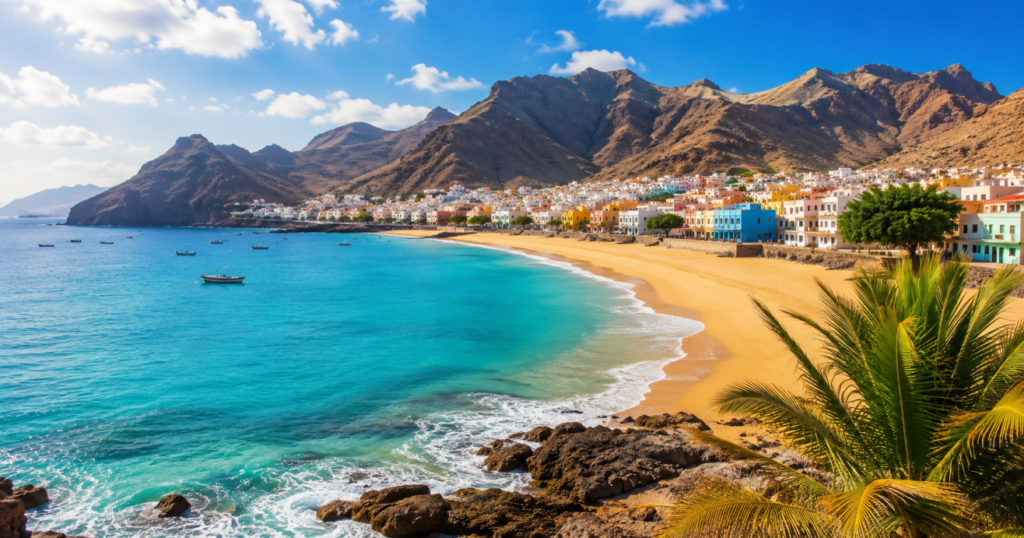
The Roadmap to the Miracle: How a Giant Was Built from Ten Islands
To understand this phenomenon, we must look beyond the surface and toward the Atlantic. Cape Verde is an archipelago where, historically, soccer has been a passion fueled more by a need for belonging than by elite infrastructure. Many of its players didn’t train in the mega-academies of Madrid, London, or Buenos Aires; they were forged in local leagues, community soccer, and, to a large extent, the Cape Verdean diaspora in Portugal, the Netherlands, and France.
Here’s the interesting part: the federation did something many countries underestimate. Instead of trying to copy the style of the giants, they focused on strengthening their collective identity.
- The Diaspora as a Driving Force: The team integrated players with Cape Verdean roots who grew up in other soccer systems, bringing a mix of European technical discipline and African “street soccer.”
- The Climate and Physical Factor: Training in the islands’ geographic conditions, with constant winds and uneven terrain, gave them an unusual physical advantage: aerobic endurance that allows them to keep running when opponents are already gasping for air by the 70th minute.
Is it really possible to win World Cup matches based solely on “heart”? (Probably not, but if you add to that commitment a game plan that neutralizes the opponent’s weaknesses, you have the perfect recipe for the favorites’ downfall.)
The Anatomy of Their Tactics: Why the Giants Can’t Find the Key
Cape Verde’s style is what coaches call a “smart low block.” They don’t attempt the sterile possession that dominates soccer today; they let the opponent tire themselves out with the ball while blocking central passing lanes with clockwork precision.

- “Lightning” Transition: When they regain possession, they don’t look for short passes. They launch deep vertical passes to the wings, who have one instruction: beat the defensive line.
- Chaos Management: They know that, as an underdog, any mistake could cost them elimination. That’s why their goalkeeper and center-backs have been instructed never to take risks on the build-up, prioritizing long clearances under high pressure.
- The Unpredictability Factor: No team has been able to study Cape Verde in depth because they don’t have a “star player” to focus on. If you mark the number ten, the number seven appears; if you mark the seven, the fullback pushes forward. It’s a living organism that adapts to the match’s needs.
Comparison Table: Cape Verde vs. the Favorites
So our community can debate with real stats at the barbershop or at work, let’s break down the balance of power:
| Tactical Factor | The Favorites (Powerhouses) | Cape Verde (The Phenomenon) |
| Squad Value | Billions of dollars. | Modest, based on merit and scouting. |
| Playing Style | Possession, control, and patience. | Verticality, pressure, and suffocation. |
| World Cup Experience | Decades of consistent presence. | Brief history, hunger for glory. |
| Strategy Against Opponents | Try to impose their game. | Extreme adaptation to the opponent’s weaknesses. |
The Social Impact: Beyond the Trophy
Asking how this World Cup has changed the perception of Cape Verde means seeing a nation that, for the first time, isn’t known for its geography or maritime history but as the birthplace of a pride that now inspires all of Africa and the world’s smaller nations. The streets of Praia are at a standstill. The diaspora around the world—from New England to Lisbon—has found in this team a common flag to wave amid a turbulent year.
“This isn’t just a soccer triumph. It’s proof that, with planning, humility, and blind faith in teamwork, the limits imposed by the real world can be challenged,” says a sports analyst covering the tournament on the ground.
A Guide to Resilience: Lessons from the “Miracle”
The story of Cape Verde teaches us that success doesn’t always come from the paved path. Whether you’re a young entrepreneur, a parent fighting for your children, or someone trying to succeed in a field where you’ve been told “you’re not enough,” take note:

1. Don’t try to be someone else: Know Your Strengths.
Cape Verde didn’t try to play like Brazil or France. They identified that their strength lay in endurance and vertical play. You must identify what you do well—even if it’s different from the standard—and perfect it.
2. The collective always beats the ego: The Value of the Group.
Cape Verde doesn’t rely on a single name. In real life, surround yourself with people who share your hunger and commitment. A team where everyone knows their role is unstoppable against a group of individual talents who can’t work together.
3. Luck favors those who work: Preparation vs. Improvisation.
This team’s success is the result of years of quiet scouting. Don’t wait for opportunity to come; prepare as if you’re playing the final every day, so that when the moment arrives, opportunity finds you ready.
Cape Verde’s story at the 2026 World Cup is already legendary. Regardless of what happens in the upcoming matches, they’ve already made history. We’ll continue to monitor every move in this tournament closely so our community doesn’t miss a single detail of this epic that, in the end, proves that the impossible just takes a little longer.
Image: ElHispanoParaTodos/PRESS