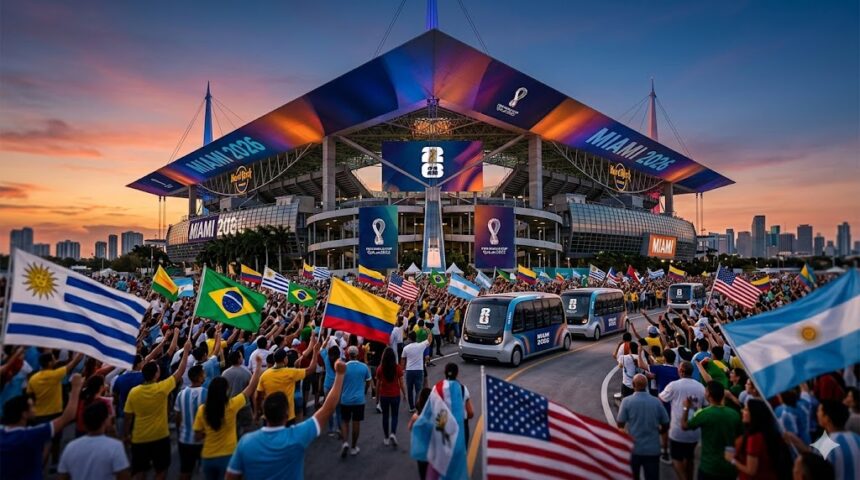
If you thought Messi’s arrival at Inter Miami was an earthquake, get ready for the tsunami ahead. We’re not talking about just another tournament; this is the most aggressive economic and social transformation in modern South Florida history.
Miami will host seven matches of the 2026 World Cup, including the quarterfinals and the prestigious third-place playoff. This “goal festival” won’t just bring the world’s best national teams; it will inject a record $1.3 billion into the local economy, far surpassing the impact of any previous Super Bowl. With nearly one million visitors expected, the “Magic City” is betting its reputation as the world’s sports capital.

The Golden Schedule: Who’s Playing at Hard Rock Stadium?
FIFA has already dropped the bombshell. The Hard Rock Stadium (renamed Miami Stadium for the tournament) will be the stage for epic battles. The most exciting news for our community is the confirmed presence of Latin American giants.
| Date | Stage | Matchup |
| June 15, 2026 | Group Stage | Saudi Arabia vs. Uruguay |
| June 21, 2026 | Group Stage | Uruguay vs. Cape Verde |
| June 24, 2026 | Group Stage | Scotland vs. Brazil |
| June 27, 2026 | Group Stage | Portugal vs. Colombia |
| July 3, 2026 | Round of 16 | To be confirmed |
| July 11, 2026 | Quarterfinals | To be confirmed |
| July 18, 2026 | Third-Place Playoff | To be confirmed |
Key Fact for Residents: Logistics will be an unprecedented challenge. Miami International Airport (MIA) is already making critical upgrades to handle between 200,000 and one million additional people during the tournament. If you live near Miami Gardens, “traffic” will take on a whole new meaning.
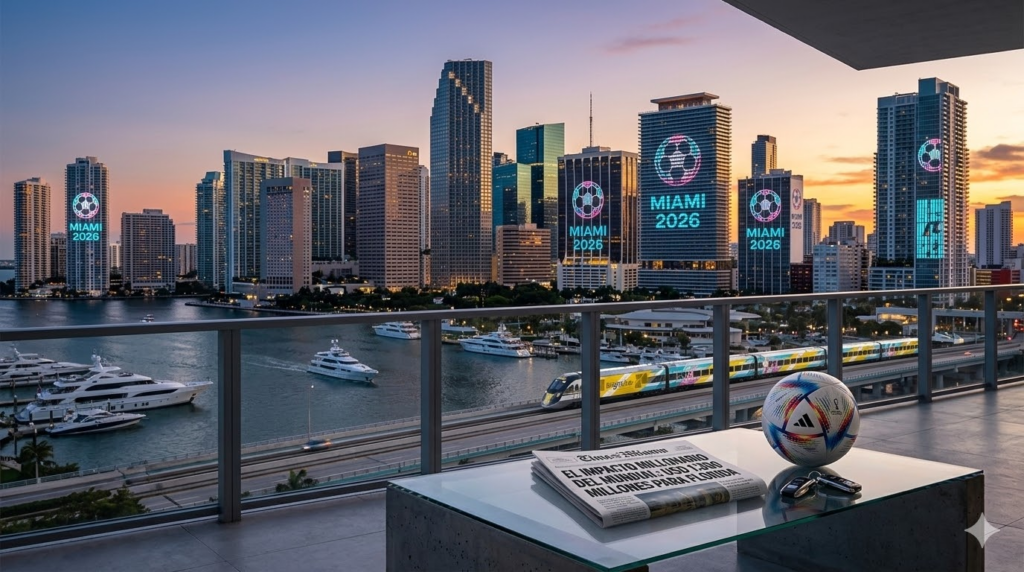
Where Does the $1.3 Billion Come From? The Anatomy of the Business
Here’s the interesting part. Many wonder if these numbers are just political smoke. The truth is that the 2026 World Cup’s business model in Miami rests on three unyielding pillars:
- Luxury Tourism and Mass Consumption: Unlike the Super Bowl, which is a weekend event, the World Cup lasts a month. The Greater Miami Convention & Visitors Bureau is targeting the “high-profile traveler” who doesn’t just come to the stadium but spends on Brickell hotels, Miami Beach dinners, and shopping at Aventura Mall.
- Legacy Infrastructure: Investments in transportation and the hotel sector (which is already reporting a 2.4% increase in average rates) will create nearly 9,100 direct and indirect jobs.
- The “Showcase Effect”: Billions of people will see Miami on their screens. This translates into future real estate investments and long-term tourism.
The Human Side: Will This Benefit Everyday Hispanics?
Let’s be realistic. While big hotels celebrate, local workers are asking: Will my rent go up even more? Will I be able to get to work with all the street closures?
Mayor Daniela Levine Cava has been emphatic that the impact must reach small businesses. From the coffee windows on Calle Ocho to the Ubers dominating our streets, demand for services will be voracious. If you own a business, now is the time to go digital: 50% of foreign fans will use apps for every step of their stay.

Pro Tips to Survive (and Win) During the 2026 World Cup
- If you’re looking for tickets: Don’t wait until the last minute. Digital interest has surged by 5000%. Use only FIFA’s official channels to avoid scams that are already spreading.
- For entrepreneurs: If you offer transportation services or short-term rentals (Airbnb), make sure to comply with new local regulations that will become stricter by June 2026.
- Mobility: Consider using Brightline or enhanced public transportation. Driving a personal car through Miami Gardens during those days will, honestly, be a logistical nightmare.
Image: ElHispanoParaTodos/PRESS