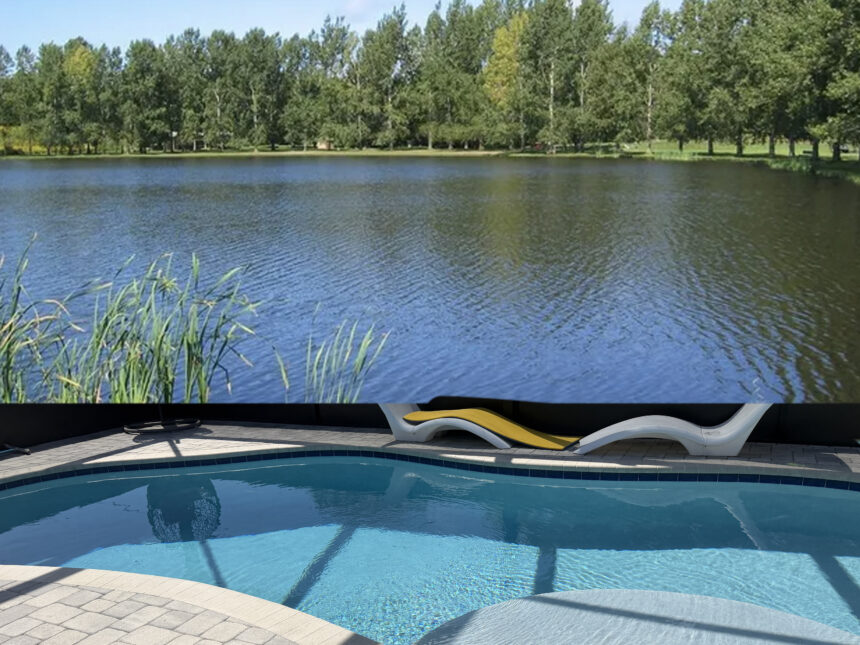
Find out why children with autism are 160 times more likely to die from drowning and how families can safeguard their safety today.
There is no more heartbreaking nightmare for a parent than turning away for a second and discovering their child is no longer there. For families with children on the autism spectrum, this fear is not paranoia—it’s a brutal statistic.

Drowning is the leading cause of accidental death in children with autism, and science has very clear (and rarely discussed) explanations for why this happens. It’s not about a lack of supervision; it’s about a specific neurological wiring that draws them to water like a magnet.
Children with autism have a 160 times greater risk of drowning than the general population. This is primarily due to “wandering” or erratic elopement (a tendency to escape safe environments), combined with a hypnotic sensory attraction to water and a neurological inability to perceive imminent danger. Ninety-one percent of wandering-related deaths in children under 14 with autism occur from drowning.
The Phenomenon of “Elopement”: Why Do They Wander?
The first thing we must understand is that a child with autism doesn’t “get lost” the way another child might. They often have a goal. The technical term is elopement (wandering or fleeing).
Unlike a neurotypical child who might panic when separated from their parents, a child with autism may be fleeing sensory overload (a loud noise, bright lights, crowds) or, conversely, seeking a specific stimulus.
Tragedy in Port St. Lucie, Florida: The Recent Case of Zam Tuang That Breaks Our Hearts
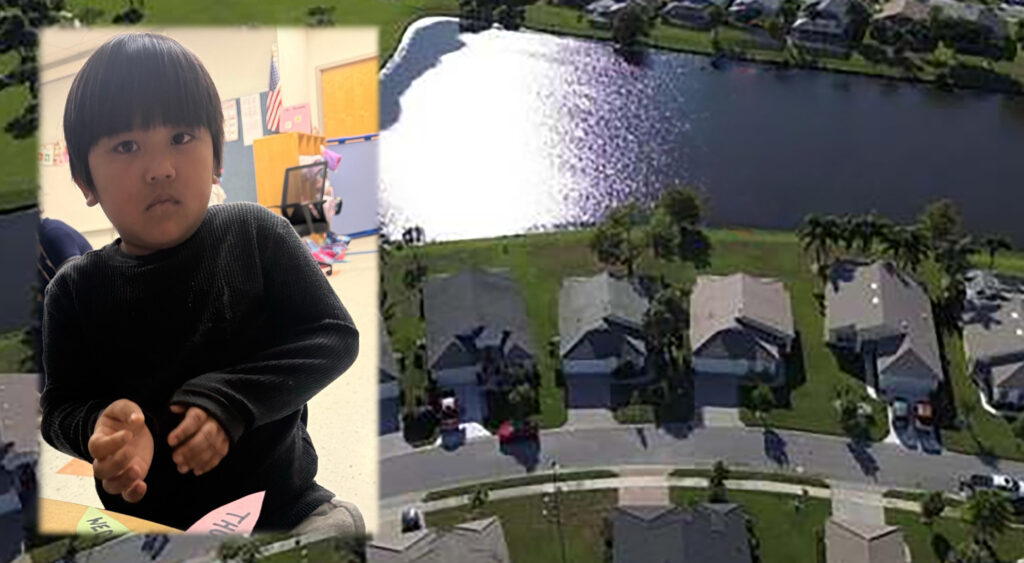
We’re not talking about abstract statistics from a decade ago. This nightmare happened yesterday in our community. On the night of March 9, 2026, the city of Port St. Lucie, Florida, became the scene of the cruelest manifestation of this invisible danger.

Let’s talk about Zam Tuang, a little boy just 5 years old diagnosed with autism.
Remember the concept of “wandering” or elopement we just mentioned?
Look at how it played out in real life. At 7:15 p.m., neighborhood security cameras captured little Zam opening the garage door of his home (one of the most common and least monitored escape routes). He walked east and simply vanished from sight.

Zam didn’t know how to swim. The timeline of this tragedy is a wake-up call for every family:
- 7:15 p.m.: The child leaves the house through the garage.
- 8:00 p.m.: After a desperate search by the family in the surrounding area (with no results), police receive the emergency call to 911.
- Full deployment: The Port St. Lucie Police Department (PSLPD) activates drones, K9 units, and massive ground searches.
- 9:45 p.m.: The discovery no one wanted to make. Zam is found in a body of water at the intersection of SW Juliet and SW Hampshire Lane.
- 11:00 p.m.: Despite relentless CPR efforts and an emergency transfer to Tradition Medical Center, little Zam is pronounced dead.
Authorities are investigating this as a tragic accident, with no signs of violence. But those who understand neurodiversity know the harsh truth: this was not a random accident—it was the manifestation of the number one risk for our children on the spectrum.
Local Police Chief Leo Niemczyk immediately scheduled a press conference to address the incident, but the damage is already done, and a family is shattered. This case screams an uncomfortable truth in our faces: traditional locks are not enough. The wandering instinct of a child with autism, combined with the proximity of a canal or pond, requires military-level security in our homes.
Where Do They Run?
The statistics are cold but necessary: the vast majority run toward bodies of water. Whether it’s a neighbor’s pool, an irrigation canal, a duck pond, or the ocean. Water offers something the everyday world doesn’t: a unique sensory experience.
The Sensory Fascination: Water as a Refuge
To understand why they end up in the water, we must understand how they perceive the world. Many children with autism experience hyposensitivity.
- Mirror and Glitter Effect: The reflection of the sun on the water is visually stimulating and rhythmic. It’s a “pure visual stimulus” that can hypnotize them.
- Hydrostatic Pressure: Water exerts uniform pressure on the entire body. For a child seeking proprioceptive stimulation (feeling their own body), water feels like a full, relaxing embrace.
- Acoustic Isolation: When submerged, the chaos of the outside world disappears. The silence of the water is the perfect refuge against auditory hypersensitivity.
Critical Risk Factors (What No One Tells You)
It’s not just about “wanting to swim.” There are executive processing failures that complicate the situation:
- Lack of danger perception: The amygdala (the brain’s fear center) may process threat signals differently. The child doesn’t see a dangerous body of water; they see a giant toy.
- Communication difficulties: If the child is nonverbal or has social communication challenges, they won’t be able to ask for help or respond when someone calls their name as they wander away.
- Attraction to the forbidden: Often, social rules (“don’t go in there”) don’t carry the same logical weight for them if the sensory reward is high.
Table: Drowning Risk vs. General Population
| Risk Factor | Neurotypical Child | Child with Autism |
| Likelihood of wandering | Low / Occasional | Very High (approx. 50%) |
| Attraction to water | Normal curiosity | Intense/fascination |
| Response to name | Immediate | Inconsistent or none |
| Awareness of danger | Developed by age 4-5 | May be nonexistent even in adolescence |
Safety Protocol: How to “Shield” Your Child
The truth is that door alarms are not enough. You need layers of protection. If you have a child on the spectrum, consider these steps mandatory:
- Adaptive swimming lessons: These aren’t regular classes. They must be specialized for autism, where the primary goal isn’t swimming style but water survival (learning to float on their back and find the edge).
- Constant identification: Medical ID bracelets, clothing tags, or even GPS devices (like Jiobit or AngelSense) that alert your phone if the child leaves a safe perimeter.
- Alert neighbors and authorities: This is vital. Knock on your neighbors’ doors. Tell them: “My child has autism, doesn’t speak, and loves water. If you see them alone near your pool, please get them out immediately and call me.”
- Physical barriers: Fences at least 5 feet tall with automatic locks. If you live near a lake or canal, contact alarms on all doors and windows in the house are non-negotiable.
“We often think it’ll ‘just be a second.’ But for a child with autism, a second is all they need to decide the backyard canal is the best place in the world.” — Reflection from a child safety specialist.
The Role of Emergency Services
It’s crucial that local police and fire departments know someone with special needs lives in your home. In many Hispanic communities in the U.S. and Latin America, there are “At-Risk Person” registries. Sign up. If your child disappears, rescuers will know to search bodies of water nearby first.
Image EL HISPANO PARA TODOS