


Moist dermatitis is an acute skin infection that occurs in dogs. It can affect all breeds; however, it primarily impacts those with long and thick coats, such as golden retrievers, Newfoundlands, or rottweilers.
Moist dermatitis, also known as “hot spots” or “acute moist dermatitis,” is a common skin condition affecting dogs.

It is characterized by red, moist, inflamed, and painful areas, typically with hair loss and intense itching.
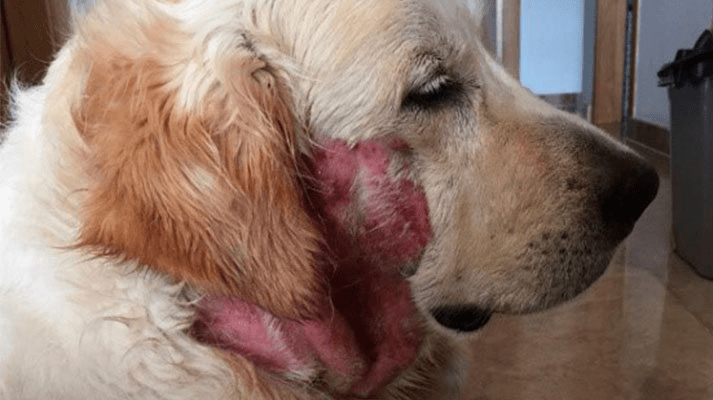
The most common causes of moist dermatitis in dogs include:
Allergies: To environmental factors such as pollen, dust, mites, or fleas, or to foods like beef, chicken, or dairy.
Infections: Bacterial or fungal, which can worsen the condition.
Parasites: Fleas, ticks, or skin mites.
Excess moisture: On the skin or coat due to frequent baths, swimming, or living in humid environments.
Stress: Anxiety or fear can trigger or worsen dermatitis.
Predisposed breeds: Some breeds, such as Golden Retrievers, Labrador Retrievers, Chow Chows, and German Shepherds, are more prone to moist dermatitis.
If you notice signs of moist dermatitis in your dog, it is important to take them to the veterinarian for a proper diagnosis and treatment.
Treatment generally includes:
Medications: Antibiotics, antifungals, or corticosteroids, depending on the underlying cause.
Medicated shampoo: To eliminate bacteria or fungi from the skin.
Dietary changes: If a food allergy is suspected.
Stress management: Reducing stress factors in the dog’s environment.
Elizabethan collar: To prevent the dog from licking or scratching the affected area.

To prevent moist dermatitis in your dog, you can:
Control allergies: Identify and avoid allergens that trigger dermatitis in your dog.
Maintain proper hygiene: Bathe your dog regularly with a gentle shampoo and dry them thoroughly.
Prevent infections: Control fleas, ticks, and other parasites with appropriate antiparasitic products.
Reduce stress: Provide your dog with a calm and enriching environment.
Dry the skin well after swimming or bathing.
Monitor your dog’s skin for early signs of dermatitis.
With proper treatment and prevention, moist dermatitis in dogs can be controlled and prevented from worsening.
Here are some additional resources you may find helpful:
American Veterinary Medical Association (AVMA): https://www.avma.org/
Merck Veterinary Manual: https://www.merckvetmanual.com/
Veterinary Clinic Madrid: https://www.anicura.es/consejos-de-salud/perro/consejos-de-salud/la-dermatitis-humeda-en-los-perros/

We hope this information is useful for caring for your dog’s health.
Remember that consulting a veterinarian is essential for an accurate diagnosis and treatment.
If you have questions related to your pet’s well-being, please write to: DrBorrego@petsvet.com www.petsvet.com
Dr. Enrique Borrego is the medical director of Animal General Hospital.
Serving our Treasure Coast community since 1990
Location: 501 SW Port Saint Lucie Blvd, Port St Lucie, FL 34953 Tel: 772-344-8835
Image: Petsvet





