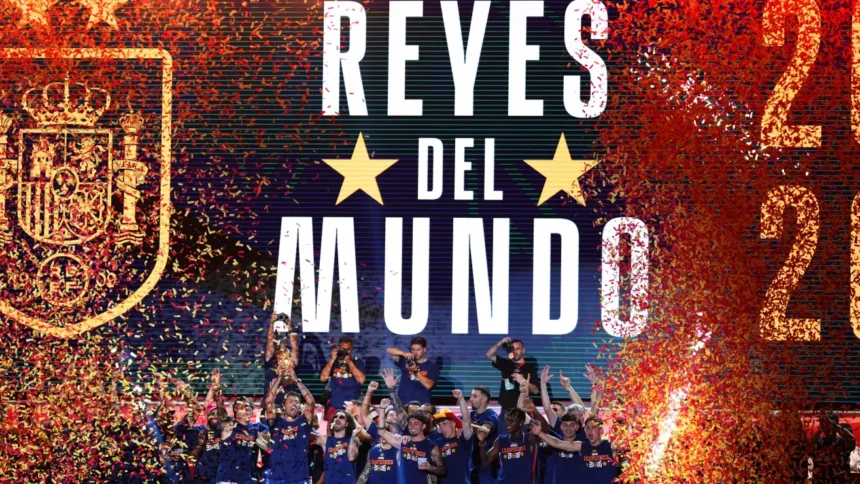
If you still believe soccer is won only with inflated budgets and individual stars, what has unfolded in the international scene over the past five years should make you rethink everything. The truth is that the dominance exerted by Spanish soccer and its red dynasty—both at the national team level across all categories and in the club realm—has no equal in the history of the sport.
- The Anatomy of the Empire: Beyond Tiki-Taka
- 1. The Inexhaustible Factory (La Masía and the Youth Academy Model)
- 2. Managing Success and Fierce Competitiveness
- Table: The Map of Conquest (The Fronts of Spanish Dominance)
- Practical Guide: What Lessons Does This Model Offer for Other Sports (and Businesses)?
We are talking about a tactical and cultural juggernaut that has swept away every trophy in its path. But how did this sporting dictatorship come to be? Is it just a matter of natural talent, or is there a perfect machine operating behind the scenes?

The Pulse of Hegemony (Snippet Bait): With an unprecedented record of 16 official international titles in the last 5 years, Spanish soccer has consolidated total control over the global stage. This milestone includes everything from senior Euro championships and youth tournaments (men’s and women’s) to the UEFA Champions League and the FIFA Club World Cup, proving that the Iberian training methodology is, today, the envy of the world.
The Anatomy of the Empire: Beyond Tiki-Taka
When the entire world tried to copy Spain’s famous possession-based style from the last decade, Spain had already evolved. The key to these 16 titles does not lie in clinging to a static tactical dogma but in a chameleonic ability to reinvent itself without losing its identity.
1. The Inexhaustible Factory (La Masía and the Youth Academy Model)
The cornerstone of this winning streak is not found in the offices of the grand stadiums but on the training fields where children as young as eight are developed.
- The Cognitive Approach: In Spain, training is not just about running and kicking; it’s about thinking faster than the opponent. Decision-making under pressure is the core subject in the developmental curriculum.
- The Silent Revolution of Women’s Soccer: A significant portion of these 16 titles bears the unmistakable stamp of our world and European champions, reflecting how investment and structure in women’s soccer have gone from being a promise to becoming a global hegemonic power.
2. Managing Success and Fierce Competitiveness
Maintaining the hunger for glory after having already won everything is the toughest challenge for any athlete. The competitive mentality that permeates LaLiga—both in the top division and in its youth development—has created a culture where complacency is forbidden.

Table: The Map of Conquest (The Fronts of Spanish Dominance)
To grasp the magnitude of these 16 titles, let’s break down how the glory is distributed over the past five years:

| Sector of Conquest | Key Tournaments Included | Global Impact |
| Senior National Teams | Euro 2024, Nations League | Undisputed tactical superiority in Europe. |
| Youth and Developmental Soccer | UEFA European Under-19, Under-21, FIFA U-17 World Cup | Guarantee of unlimited generational succession. |
| Women’s Soccer | Women’s World Cup, Women’s Champions League | Absolute global leadership in technique and competitiveness. |
| Elite Clubs | UEFA Champions League, UEFA Super Cup | Institutional hegemony in the UEFA ecosystem. |
Practical Guide: What Lessons Does This Model Offer for Other Sports (and Businesses)?
You don’t need to be the head coach of the national team to apply the principles that took Spain to the top. Sustained success follows universal laws of management.
1. Long-Term Kills Short-Term: Invest in the Foundation.
Today’s successes are the result of decisions made fifteen years ago behind the scenes of modest clubs and federations. If your personal or business project seeks immediate results without nurturing the foundation, collapse is inevitable.
2. Comfort Is the Enemy: Evolve Without Fear of Change.
Spain didn’t win 16 titles playing exactly the same way as in 2010. They adapted to the physical intensity of modern soccer, integrating quick transitions and athletic power without sacrificing exquisite ball control. Adapt your processes, or the market will devour you.

3. Potential Has No Gender: Equal Opportunity.
The monumental rise of Spanish women’s soccer demonstrates that opening high-performance spaces where there was once neglect exponentially multiplies the success of a nation or brand. Diversity of talent is a brutal competitive advantage.
The truth is that watching teams and national sides under this umbrella of success generates a mix of admiration and awe. This is not a historical fluke but the triumph of planning over chance. While the rest of the world tries to decipher the secret, Spain keeps winning. We will continue to closely observe this golden era to understand just how far the undisputed soccer powerhouse of our time can go.
Image: ElHispanoParaTodos/PRESS