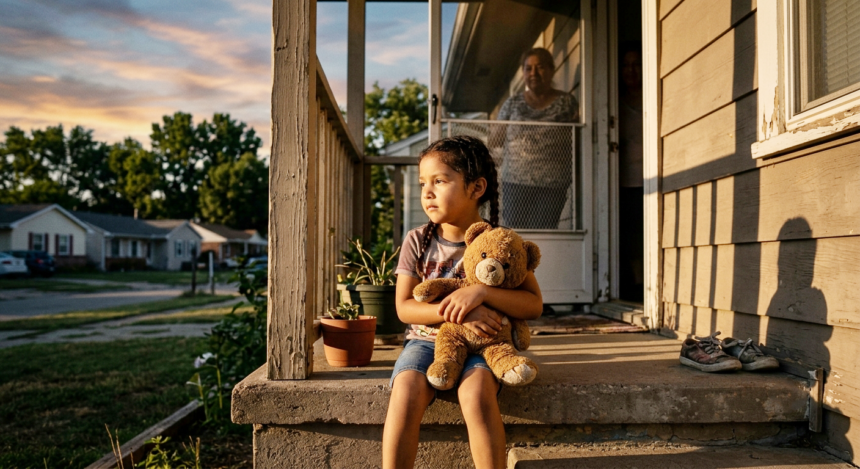
Immigration detentions of parents trigger anxiety and toxic stress in children. Learn about the silent symptoms and how to protect your children’s minds.
For a child, the entire world rests on their parents’ shoulders. But what happens when that foundation is ripped away before their eyes? The fear that a family member won’t return home after work has stopped being an occasional nightmare and become a daily reality for thousands of families.

The highest price isn’t being paid by adults. It’s being paid by the youngest among us.
Immigration detentions of parents trigger a state of “toxic stress” in children, permanently altering their brain development. Minors separated from their families due to deportation proceedings show alarming rates of post-traumatic stress disorder (PTSD), severe anxiety, childhood depression, and behavioral regressions.
The truth is that news coverage tends to focus on laws, politicians, and borders. But almost no one is talking about the psychological tsunami currently flooding Hispanic schools and homes.
Let’s get to the point. This is what’s really happening to our children’s minds and what you should do if your family (or someone you know) is living under this shadow.

The Domino Effect: Beyond the Initial Tears
When a parent is detained by immigration authorities (or even when there’s a constant fear it might happen), a child doesn’t just experience sadness. Their brain goes into survival mode.
Child psychology calls this toxic stress. Unlike normal stress (such as nerves before a test), toxic stress occurs when a child’s body is flooded with cortisol and adrenaline for weeks, months, or years without the protection of a secure adult.
The constant terror of family separation isn’t just a “concern.” It’s an active trauma that reconfigures the architecture of a child’s brain, affecting their ability to learn, trust, and regulate emotions in the long term.
(Is it fair for a seven-year-old to have to deal with adult problems? Absolutely not. But ignoring it only makes things worse.)

Silent Symptoms: What to Look for at Home
Often, children don’t know how to say, “I’m depressed” or “I have chronic anxiety.” They show it in ways adults often misinterpret as “bad behavior” or mere tantrums.
Here’s the interesting part: symptoms vary drastically by age.
| Age Range | Manifestations of Trauma Due to Separation Risk | Red Flag Signs (Seek Help) |
| 0 – 5 years | Regressions (bedwetting, thumb-sucking), excessive clinginess, fear of the dark. | Loss of acquired language, total apathy, inability to calm down. |
| 6 – 11 years | Stomachaches/headaches with no medical cause, extreme drop in grades, aggression. | Severe social isolation, school phobia, irrational fear of police or uniforms. |
| 12 – 17 years | Defiant attitude, hypervigilance, taking on adult roles (compulsively caring for siblings). | Substance use, self-harm, talk about the pointlessness of planning for the future. |
The Painful Numbers (That No One Is Telling You)
If you think this is an isolated problem, the statistics say otherwise. Recent studies backed by the American Academy of Pediatrics have documented that children in communities with high rates of immigration raids and detentions show:
- A 50% increase in chronic sleep problems.
- A steep decline in academic performance, especially in math and reading, due to the physiological inability to concentrate.
- Eating disorders developed as an unconscious mechanism to “control” something in an environment where they feel they’ve lost everything.
Public schools in high-density Hispanic areas are reporting a massive increase in panic attacks during recess. A simple loud noise, like a large truck engine, can trigger panic in children who associate that sound with ICE raids.
How to Shield Your Children’s Minds in Times of Crisis
We can’t control immigration policies overnight, but we can build an emotional refuge at home. If you’re a parent, aunt, uncle, or educator, these are the vital steps to soften the blow:
1. Break the taboo and talk with the truth (age-appropriate) Silence terrifies more than reality. Children are emotional radars; they know something is wrong. If you don’t explain it, their imagination will create worse scenarios. Tell them: “There are complicated rules in this country, and we’re working to fix it, but my main job will always be to protect you.”
2. Create a visible “Safety Plan” Anxiety stems from uncertainty. Knowing there’s a plan reduces toxic stress.
- Who will pick them up from school if mom/dad can’t?
- What number should they call? (Make sure they not only know it but have practiced it.)
3. Validate their anger, don’t suppress it It’s normal for them to be furious. The world is failing them. When they have outbursts of anger, instead of punishing the emotion, redirect it. “I understand you’re angry. I feel rage sometimes too. Let’s breathe together.”
4. Find the “Tribe” (Community support networks) No one survives isolation. Reach out to local pro-immigrant organizations, churches, or community centers. Many offer free or low-cost psychological care under strict confidentiality policies (they don’t share data with authorities).
Our next generation’s mental health isn’t a luxury; it’s the most important trench we must defend. Because in the end, the true failure of any system is making a child live with the fear that their parents’ love is illegal.