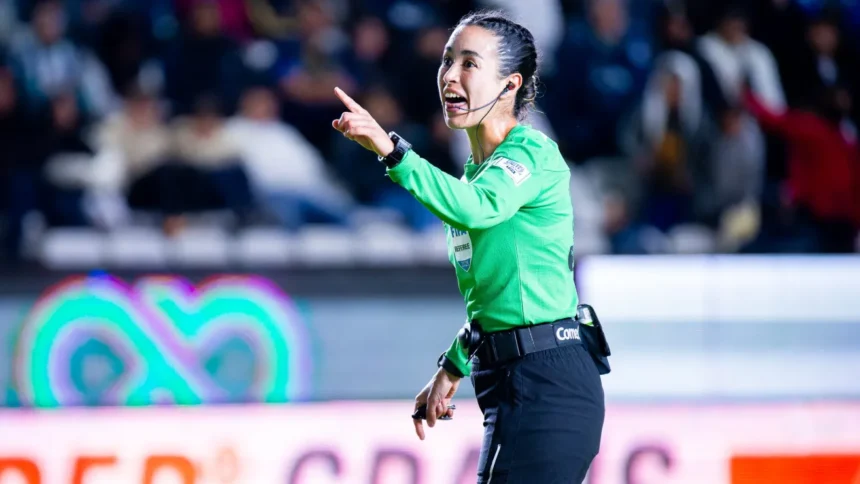
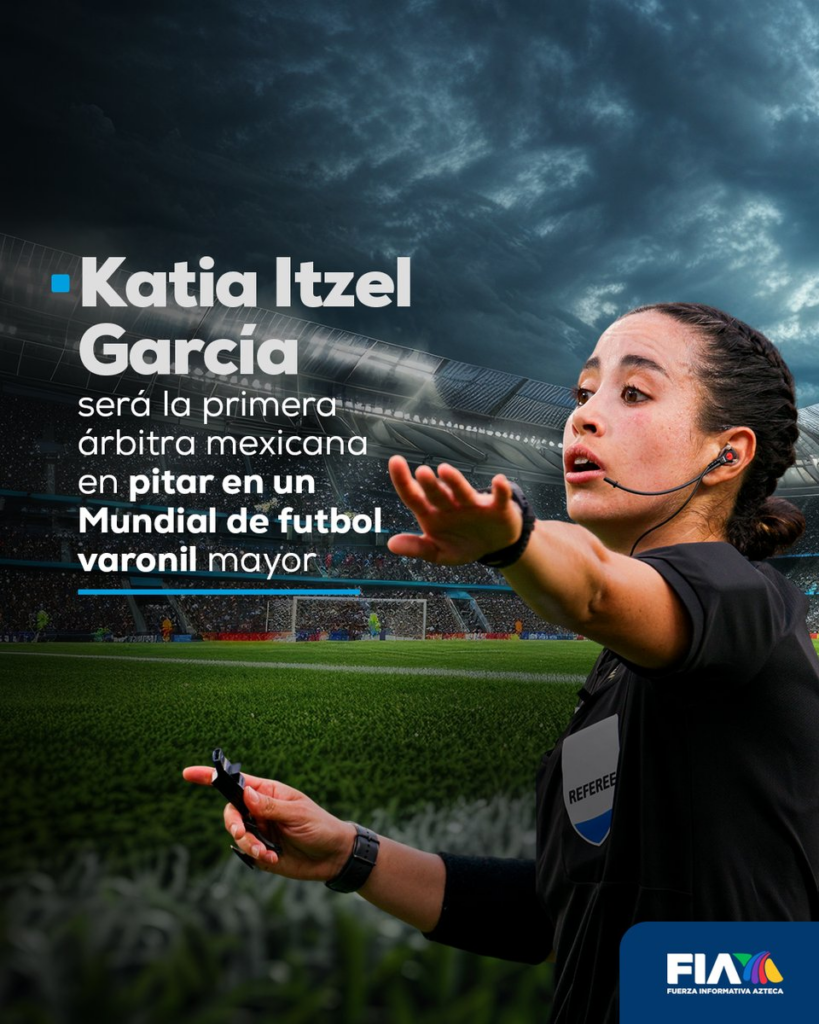
Soccer has stopped being a “men’s game,” but the path to proving it has been an obstacle course few manage to complete. When the whistle blows at the 2026 World Cup, we won’t just hear the start of a match; we’ll hear the echo of years of struggle embodied in one figure: Katia Itzel García. The Mexican referee isn’t there because of a gender quota—she’s there because her authority on the field is simply unquestionable.
Quick Answer (Snippet Bait): Katia Itzel García Mendoza is a professional Mexican referee, internationally recognized with the FIFA badge, who has made history by becoming the first woman in decades to officiate a men’s Liga MX match. Her appointment to the 2026 World Cup cements her as the top female refereeing figure in CONCACAF and one of the most influential figures in current Latin American sports.
The origin of an iron-clad referee: From the classroom to the pitch
Katia’s story didn’t begin in the center of an 80,000-seat stadium. She was born in Mexico City and, before becoming the figure everyone sees on TV, she was a dedicated student. She graduated in Political Science and Public Administration from UNAM—a degree that, though seemingly far from the soccer ball, gave her the leadership and conflict management skills she now uses to control 22 players with their pulses racing.

The truth is, refereeing wasn’t a “Plan B” for her. It was a calling that took shape in the amateur ranks in 2015. She wasn’t seeking fame; she was seeking sports justice. That blend of academic intellect and physical rigor is what sets her apart. She doesn’t just call a foul; she manages the game’s ecosystem.
The day Mexican soccer changed forever
March 9, 2024, was marked in the history books. Katia Itzel García was appointed to officiate the match between Pachuca and Querétaro. It had been 20 years since a woman had served as the head referee in Mexico’s top men’s league (since Virginia Tovar in 2004).
Was she nervous? Probably. But what we saw was a masterclass in control.
- Personality: She didn’t let heated complaints disrupt her rhythm.
- Precision: Her decisions were backed by impeccable technical judgment.
- Impact: She proved that the rules don’t distinguish by gender—only by ability.
Comparison: The road to the 2026 World Cup
| Historic Milestone | Year | Relevance for the World Cup |
| Debut in Liga MX Femenil | 2017 | Established her technical foundation. |
| Earned FIFA badge | 2019 | Opened doors to international tournaments. |
| U-17 World Cup Final | 2022 | Demonstrated elite-level performance to FIFA. |
| Return of women to Liga MX | 2024 | Broke the stigma in local men’s soccer. |
| 2026 World Cup | 2026 | Definitive global recognition. |
Why her presence at the 2026 World Cup is vital for the Hispanic community
Here’s the interesting part: Katia’s impact goes beyond the field. For the Latino community, and especially for girls in Mexico and the United States, seeing a Mexican woman command the world’s biggest sporting event sends a powerful message.

- Real Representation: She’s not a guest; she’s an authority at an event taking place “at home” (Mexico, the U.S., and Canada).
- Debunking Weakness: In a historically male-dominated sport, her ability to sanction global stars redefines respect.
- Professionalization: Katia is proof that refereeing is a high-performance career, requiring physical tests that match the most rigorous male standards.
“Refereeing is like life: you have seconds to decide, and even though VAR helps, in the end, it’s your character that maintains order.”
The technical challenges she’ll face in 2026
It won’t all be a red carpet. The 2026 World Cup will be the first with 48 teams, meaning more pressure, more scrutiny, and even more meticulous use of VAR. Katia has undergone intensive training in soccer technology, making her a “hybrid referee”: classic in her authority but modern in her technological support.
What does FIFA evaluate to keep her in the elite?
- Aerobic Endurance: She must pass the same speed and recovery tests as elite male referees.
- Game Reading: Anticipating plays to always be within 10 meters of the ball.
- Crisis Management: Knowing when to use cards to cool down a match that’s getting out of control.
Conclusion: More than a whistle, a revolution
Katia Itzel García isn’t just “the referee at the World Cup.” She’s the face of a new era where merit triumphs over prejudice. When we see her walk out of the tunnel in 2026, she’ll be carrying the aspirations of thousands of women who now know they can be the protagonists—even if they’re not the ones kicking the ball.
Image: ElHispanoParaTodos/PRESS