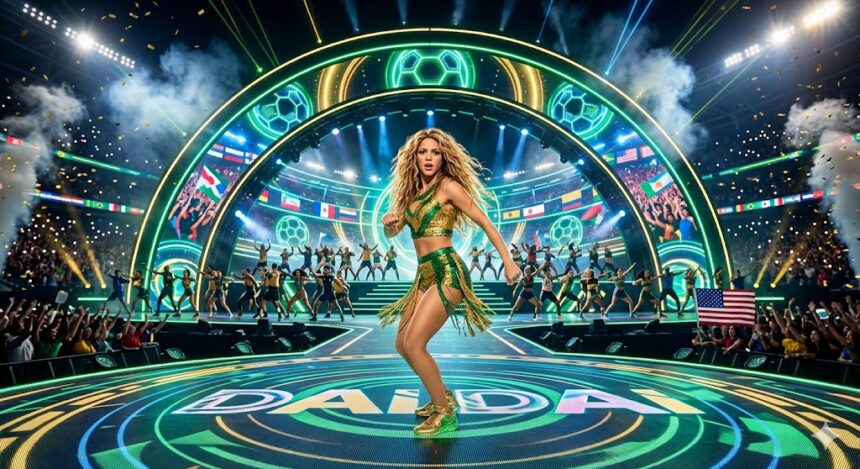
The undisputed queen of World Cups has reclaimed her throne. When FIFA announced that the Colombian artist would once again be the leading voice of the planet’s most important soccer tournament, skepticism from some mixed with the euphoria of her millions of fans. Today, with the global release of the music video, all doubts have been completely erased. Shakira hasn’t just returned to the soccer arena; she has set a new standard for rhythm, cultural identity, and global marketing that already has the entire world trying to mimic her moves.
- The Immediate Impact: Why ‘Dai Dai’ Is Already a Global Phenomenon
- Breakdown of the Video: Rhythm, Choreography, and the Evolution of Dance
- The Evolution of Shakira’s World Cup Dance Moves
- The ‘Dai Dai Twist’: The Move That’s Already Flooding Social Media
- Symbolism and Hidden Easter Eggs in the Music Video
- Anatomy of a Hit: How to Learn the Choreography Without Dying in the Attempt
The official video for ‘Dai Dai’, the 2026 World Cup anthem, has just premiered on all digital platforms, and the visual impact has been immediate. This is not just another clip with flags and soccer players running in slow motion; it’s a high-budget production that fuses cutting-edge technology with the organic and hyperbolic signature Shakira brings to her sports anthems.

Below, we break down every detail of this production: from the hidden symbolism in its choreography to the cultural impact that promises to surpass the historic milestones of ‘Waka Waka’ and ‘La La La.’
The Immediate Impact: Why ‘Dai Dai’ Is Already a Global Phenomenon
The truth is that World Cup music has faced a severe identity crisis over the past decade. Between generic beats and forced collaborations, fans missed the magic of the tournament’s golden years. Shakira understood this disconnect perfectly. The official video for ‘Dai Dai’ succeeds because it recaptures the festive and tribal essence of soccer, blending Latin percussion and Afrobeat with a futuristic aesthetic tailored to the 2026 tri-host nations (the United States, Mexico, and Canada).
The visual hook is immediate: the first ten seconds of the footage show the Colombian artist emerging from a digital replica of the Azteca Stadium illuminated with neon lights, moving her hips to a rhythm that mixes Arabic dance with Colombian Caribbean folklore. From that moment, the viewer’s mental scroll is completely captivated.
Breakdown of the Video: Rhythm, Choreography, and the Evolution of Dance
If anything has defined Shakira’s World Cup eras, it’s her ability to create dance moves that become pop culture staples. With ‘Dai Dai,’ the formula has evolved in an impressive way.

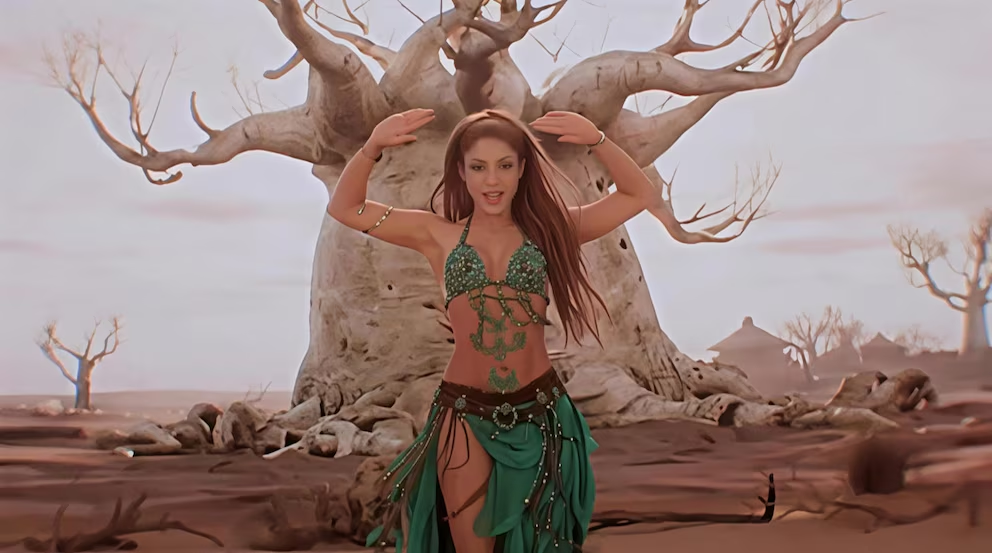
The Evolution of Shakira’s World Cup Dance Moves
To grasp the impact of what we’ve just seen, it’s necessary to review how the artist has transformed the visual identity of soccer over the past two decades:
| Tournament and Year | Official Song / Theme | Key Visual Element | Audience Impact |
| Germany 2006 | Hips Don’t Lie (Bamboo Version) | Classic hip movement and colorful carnival dresses. | Global consolidation in the Anglo and sports markets. |
| South Africa 2010 | Waka Waka (This Time for Africa) | Community choreography with interlocked hands and African rhythms. | The most-watched soccer music video in history. |
| Brazil 2014 | La La La (Brazil 2014) | Urban aesthetic, presence of soccer stars, and Brazilian percussion. | Massive success in clubs and stadiums for its tribal rhythm. |
| World Cup 2026 | Dai Dai | Afro-contemporary fusion, holographic effects, and a viral hip twist. | Number one trend on TikTok and Instagram in less than three hours. |
The ‘Dai Dai Twist’: The Move That’s Already Flooding Social Media
Here’s what’s fascinating about the video: the climax of the production occurs at the 2:15 mark, when the music undergoes a clean percussion break. Shakira, surrounded by a battalion of dancers from diverse nationalities, executes a transition of pelvic movements and torso twists that defy gravity.
It’s not an easy dance, but it’s designed with perfect symmetry to become the ultimate challenge of the year. The precision of the camera cuts and the use of costumes in vibrant gold and green tones enhance every vibration of her silhouette, proving that, in terms of physical condition and stage magnetism, the Colombian artist is still in a league of her own.

Symbolism and Hidden Easter Eggs in the Music Video
A production of this magnitude leaves nothing to chance. The sharpest analysts and fans have already begun dissecting the messages Shakira hid in the three-and-a-half-minute clip:
- Homage to the Three Host Nations: In several sequences, the stage floor transforms digitally through projections representing the geographic diversity of the tournament: from the skyscrapers of New York, through the desert landscapes of northern Mexico, to the temperate forests of Canada.
- Generational Inclusion: Unlike other videos featuring only professional models, this time we see children from neighborhoods across Latin America playing street soccer, connecting FIFA’s million-dollar glamour with the raw reality of the beautiful game.
- The Return of the Warrior Braid: The video’s styling directly evokes the Shakira of the late ’90s. The use of long braids and metallic makeup is a direct nod to her rock roots and ancestral belly dance, fused with 2026’s urban fashion.
“Soccer and music share the same power: they erase borders in a single stroke. With ‘Dai Dai,’ I wanted the world not just to hear the Cup, but to feel it in their feet,” the artist commented in a brief behind-the-scenes clip posted on her official stories.
Anatomy of a Hit: How to Learn the Choreography Without Dying in the Attempt
If you’re already thinking about recording your own video for social media, Shakira’s choreography team left some visual clues to master the rhythm. Let’s get straight to the key steps:
1. The Afrobeat Foot Link: Acclimation Phase.
Don’t start by moving your shoulders. The secret of ‘Dai Dai’ lies in the constant bounce of the knees (groove). Keep your center of gravity low and shift your weight from side to side following the main drumbeat.
2. Lateral Hip Isolation: The Signature Move.
During the chorus, the choreography requires a quick hip movement in an inverted figure-eight. The human key here is to keep the upper torso completely still while the midsection executes the speed transition.
3. The Whiplash of Hands and Head: Visual Effect.
At the song’s climax, the video shows a synchronized movement where the arms draw waves in the air before a sharp head snap. It requires excellent coordination to avoid losing overall balance.
Is it a difficult challenge? Absolutely. Will that stop the millions of users already flooding platforms with their attempts? Of course not. The cultural impact is already unlocked, and the World Cup’s commercial machinery has found its perfect fuel.
Image: ElHispanoParaTodos/PRESS