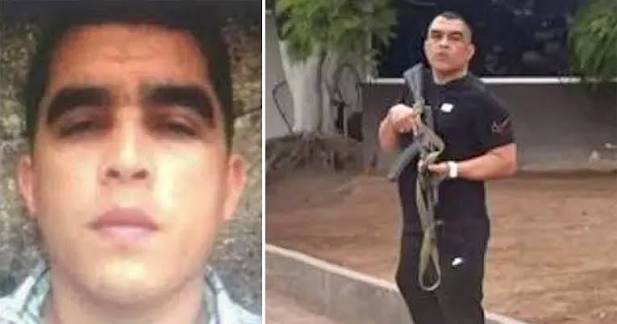
The downfall of history’s major kingpins usually follows a predictable script: a luxurious hideout in the mountains, an internal betrayal, or a last-minute technological blunder. However, what transpired on Venezuelan soil with South America’s most wanted criminal defies every modern criminology mold. Héctor Rustherford Guerrero had been in command of the Tren de Aragua since approximately 2015, and the U.S. was offering a $5 million reward for him.
- From Maracay’s Neighborhoods to New York’s Streets: The Rise of the Criminal Myth
- The Tactical Operation: How Did the U.S. Reach the Target in Restricted Territory?
- Anatomy of the Tren de Aragua’s Criminal Empire
- 1. Human Exploitation on the Migration Route
- 2. Urban Extortion and the “Gota a Gota” (Drip Loan) System
- 3. The U.S. Cell and the FBI’s Alarm
- Comparative Table: Before and After Criminal Control in the Region
- The Impact on the United States: The Shadow Over Sanctuary Cities
- Citizen Safety Guide: How to Identify and Report Transnational Gang Activities
If you live in cities like Miami, New York, Santiago de Chile, or Bogotá, the name of this criminal organization is no stranger to you; it has become synonymous with fear in headlines. The neutralization of the mastermind behind this criminal empire marks a before and after in hemispheric security.

The truth is that the impunity this figure enjoyed for over a decade vanished in a matter of minutes under the fire of a high-precision operation.
Breaking report from the field (Snippet Bait): Héctor Rusthenford Guerrero Flores, globally known by the alias “Niño Guerrero” and the top leader of the transnational megagang Tren de Aragua, was killed in Venezuelan territory during a high-intelligence joint tactical operation coordinated with U.S. agencies. Guerrero, who had been a fugitive since the military intervention of Tocorón prison, was the number one priority target for security agencies due to the rapid expansion of his criminal cells into the United States, where they ran human trafficking networks, commercial extortion, and high-purity drug trafficking.
From Maracay’s Neighborhoods to New York’s Streets: The Rise of the Criminal Myth
To grasp the magnitude of Niño Guerrero’s downfall, it’s essential to move beyond urban myths and dissect his true operational profile. Born in Maracay, Aragua state, in the early 1980s, Héctor Guerrero Flores did not start his criminal career commanding an army of thousands. His earliest police records detail a common life of small-scale drug dealing, vehicle theft, and the 2005 murder of a traffic officer.
Here’s the interesting part: the real turning point in his life occurred behind the walls of Tocorón prison. Far from being a rehabilitation center, the prison transformed into the headquarters of his criminal corporation. Under his absolute control as the “Pran” (prison leader), Tocorón mutated into a feudal fortress equipped with a zoo, swimming pool, nightclub, bank branch, and an arsenal capable of rivaling any conventional military battalion.
- The Prison as Corporate Headquarters: From his luxury cell, Guerrero collected the “vacuna” (a mandatory survival tax) from both inmates and merchants in central Venezuelan cities.
- The Transnational Franchise Model: Unlike old-school cartels that focused solely on massive drug trafficking, Guerrero saw the mass migration of Venezuelans as an economic opportunity. He established Tren de Aragua cells along the Andean route, controlling illegal border crossings (trochas) in Colombia, Ecuador, Peru, Chile, and Bolivia.
Can a criminal gang really expand across an entire continent without the institutional complicity of local governments? Probably not, and that protective network allowed him to escape in time when Tocorón prison was finally raided by state forces in late 2023.

The Tactical Operation: How Did the U.S. Reach the Target in Restricted Territory?
Let’s get straight to the details that government agencies usually leak sparingly for national security reasons. Since the U.S. State Department offered an international reward of up to $12 million for information leading to the capture of Tren de Aragua leaders, Guerrero’s biological clock began a rapid countdown.
Military intelligence sources confirm that Niño Guerrero’s exact location was obtained through tracking cryptocurrency transactions and monitoring the satellite communications of his closest family circle. While details of the assault remain under strict seal, the use of thermal reconnaissance drones and the combined pressure of special forces on the ground sealed his fate in a hard-to-access rural area. The armed resistance from his personal bodyguards triggered a high-intensity confrontation that ended with the kingpin’s definitive neutralization.
Anatomy of the Tren de Aragua’s Criminal Empire
The structure of the Tren de Aragua under Guerrero Flores operated identically to a modern transnational corporation, divided into highly profitable and violent business units:

1. Human Exploitation on the Migration Route
The organization monopolized migrant smuggling in South America. They subjected young women to sex trafficking networks in major continental capitals, charging tolls and weekly fees under direct death threats against their families in Venezuela.
2. Urban Extortion and the “Gota a Gota” (Drip Loan) System
Through their local cells (such as “Los Gallegos” in Peru and Chile), they implemented informal usury loan systems. If a small Hispanic business owner was even one day late on interest payments, the gang’s response was a grenade attack or a targeted killing to send a terror message to the community.
3. The U.S. Cell and the FBI’s Alarm
This was his worst strategic mistake. The Tren de Aragua began operating visibly in cities like New York, Chicago, Denver, and Miami, engaging in mass motorcycle thefts, armed robberies, and control of immigrant shelters. By crossing the red line into the U.S., they automatically became a top national security threat for the FBI and the Office of Foreign Assets Control (OFAC).
Comparative Table: Before and After Criminal Control in the Region
To understand the power vacuum created by this leader’s elimination in the organized crime chessboard, let’s analyze the balance of criminal dynamics before and after the military operation:
| Megagang’s Operational Factor | “Niño Guerrero” Era (Centralized Control) | Post-Neutralization Scenario (Fragmentation) |
| Chain of Command | Vertical, pyramidal, and unified. Orders from Tocorón or secret bunkers were carried out without question. | Succession crisis. High risk of internal wars among territorial subleaders for total control of the brand. |
| Transnational Financing | Centralized money laundering through shell companies, cryptocurrencies, and illegal border economies. | Temporary disruption of money transfer routes. Freezing of accounts due to U.S. Treasury alerts. |
| Safety in Hispanic Communities | Aggressive and unpunished expansion of extortion in vulnerable neighborhoods and commercial areas. | Local cells will operate with less logistical support but may become more erratic and violent in the short term. |
The Impact on the United States: The Shadow Over Sanctuary Cities
Wondering how the death of a criminal in Venezuela affects public safety in a neighborhood in Queens, Houston, or Florida’s Treasure Coast means not understanding the reach of this organization’s tentacles. With the dismantling of the central leadership, the operational cells already established in U.S. territory lose their main source of strategic direction, but the danger has not completely disappeared.
Local police departments in the U.S. remain on high alert over the possibility that surviving lieutenants of the gang may attempt to finance their operational independence by increasing urban violence or seeking alliances with local American gangs or Mexican cartels that control synthetic drug distribution.
“Neutralizing the head is a historic blow, but the snake’s body still has dangerous reflexes. Local agencies must continue ground-level enforcement without lowering their guard even slightly,” warns a senior international security specialist based in Washington.
Citizen Safety Guide: How to Identify and Report Transnational Gang Activities
Given the environment of instability and criminal reconfiguration triggered by the fall of Niño Guerrero, Hispanic citizens must act with maximum caution to protect our homes and businesses. If you suspect the presence of illicit activities linked to criminal cells in your neighborhood, follow this preventive security protocol:
1. NEVER Give In to the First Digital Extortion Threat: Personal Protection.
Criminal cells often use public information from your social media to send you text messages or WhatsApp messages with intimidating videos, demanding an initial payment to “not harm your family.” Do not delete the messages, do not respond with insults, and under no circumstances make the first money deposit. Giving in the first time turns you into a permanent ATM for them.
2. Use Federal Agencies’ Anonymous Tip Lines: Safe Reporting.
If you live in the United States, do not try to resolve the problem by confronting criminals directly or sharing your suspicions in informal neighborhood social media groups. Contact the FBI’s tip line (1-800-CALL-FBI) or U.S. Immigration and Customs Enforcement (ICE) immediately. Both agencies have Spanish translators and strict protocols to receive information 100% anonymously, without risking your immigration status or physical safety.
3. Increase Privacy Measures on Your Digital Profiles: Data Shielding.
The Tren de Aragua and similar gangs use social engineering to profile their victims. Adjust the privacy settings on your Facebook, Instagram, and TikTok accounts so only your real friends can see your posts. Avoid uploading photos that show your home’s exterior, your children’s school uniforms, your car’s license plates, or the exact location of your local business. Information is the first tool organized crime uses to intimidate effectively.
The fall of Niño Guerrero is clear evidence that international borders no longer serve as a protective shield for those who choose global organized crime as their way of life. The fate of empires built on human suffering, extortion, and exploitation is always the same. We will continue to closely monitor statements from defense departments, reports from South American foreign ministries, and the daily pulse of our urban communities to update minute by minute the real impact of this international security operation.
Image: ElHispanoParaTodos/PRESS