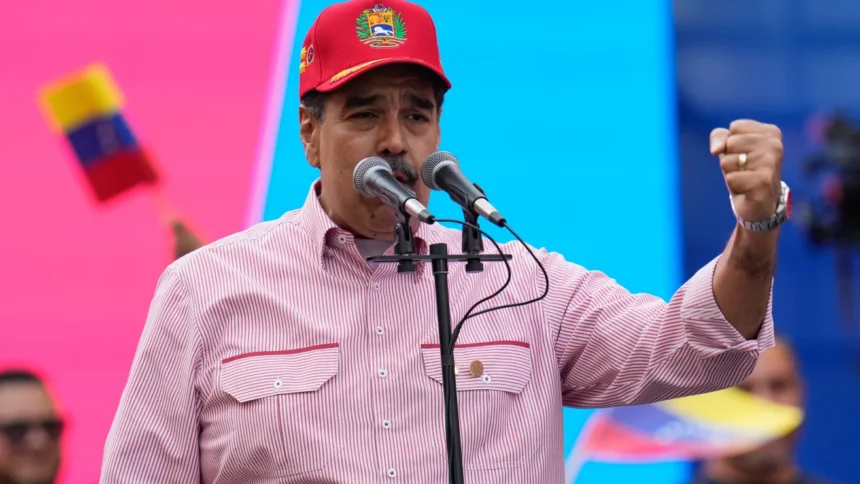
The US Department of Justice has removed most references to the Cartel of the Suns in the new indictment against the captured Venezuelan president, Nicolás Maduro, no longer identifying him as the leader of the drug trafficking organization, now characterized in the document as a “clientelism system.”
A US grand jury indictment in 2020 alleged that Maduro “helped manage and ultimately led the Cartel of the Suns as he rose to power in Venezuela”, arguments repeated by then-President Donald Trump as justification for the anti-drug campaign underway in the Caribbean.

Washington has also accused the leadership of the Cartel of the Suns of supporting organizations like Tren de Aragua and the Sinaloa Cartel as part of a conspiracy to send drugs into US territory.
However, in the new indictment modified by prosecutors hours after the dramatic capture of Maduro and his wife, Cilia Flores, in Caracas by US forces, the language of the previous text is softened, and references to the alleged cartel as a real organization are removed, though the allegations against Maduro for drug trafficking remain.
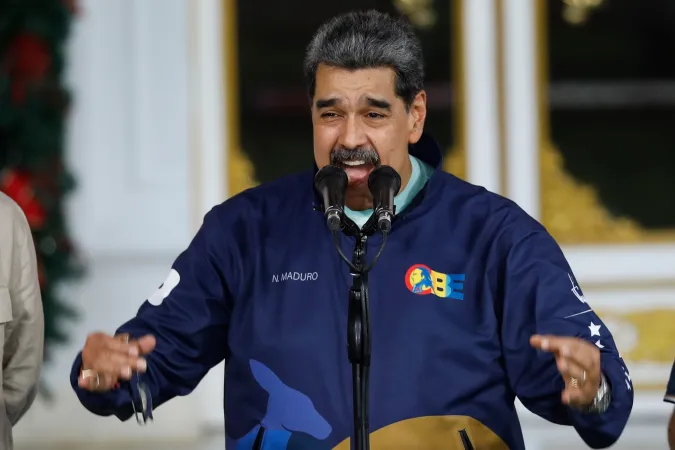
The revised document states that Maduro “participates in, perpetuates, and protects a culture of corruption in which powerful Venezuelan elites enrich themselves through drug trafficking and the protection of their drug trafficking partners.”
It also mentions that these profits flow to corrupt officials who “operate within a clientelism system led by those at the top, known as the Cartel of the Suns.”

This is one of only two mentions in the updated text of the alleged group, whose name comes from the sun-shaped insignias worn by Venezuelan generals. In contrast, the 2020 indictment referenced the term dozens of times.
This contrasts with public statements by Trump, who said this Saturday that the military operation to capture Maduro is part of a broader offensive that includes, among other goals, dismantling the so-called Cartel of the Suns.
The United States officially designated the Cartel of the Suns as a Foreign Terrorist Organization (FTO) in 2025, after previously labeling it a Specially Designated Global Terrorist (SDGT) group.

This decision was supported by governments such as those of Argentina, Ecuador, Paraguay, and Peru, while Venezuela and Cuba have rejected the accusation, calling it a “CIA invention” or a “Washington fetish.”
Analysts and experts in the South American country have questioned the real existence of this network as an organized drug trafficking group. The first allegations about its existence date back to 2004, when journalist Mauro Marcano accused officers of the National Guard of participating in drug trafficking.
Maduro and Flores appeared in US court in New York for the first time this Monday, where they were taken after being captured in a dawn raid on Saturday in an operation ordered by Trump.
The Venezuelan leader pleaded not guilty to charges of narcoterrorism and weapons possession and claimed he is “a prisoner of war.” EFE
Image: Opinion