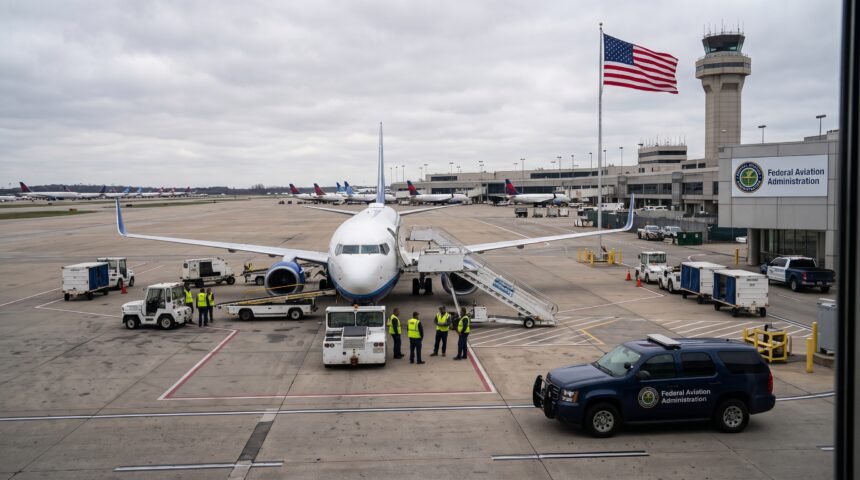
The Federal Aviation Administration (FAA) ordered a halt to all departures in the United States due to failures in air traffic control centers. Learn the reasons, duration, and impact on domestic and international flights.
- The Federal Aviation Administration (FAA) ordered a halt to all departures in the United States due to failures in air traffic control centers. Learn the reasons, duration, and impact on domestic and international flights.
- What Are the Reasons for the Suspension?
- How Long Will the Measure Remain in Effect?
- How Are Domestic and International Flights Affected?
The Federal Aviation Administration (FAA) issued an unusual nationwide ground stop order this Friday, November 13, 2026, halting all departures at U.S. airports. The emergency measure responds to a widespread failure in air traffic control communication systems and remains in effect indefinitely while technical teams investigate the incident.

Through an official alert published on the National Airspace System Status portal, the Air Traffic Control System Command Center (ATCSCC) instructed all air operators to keep aircraft on the ground until further notice. This is only the second time since the September 11, 2001 attacks that the U.S. aviation authority has ordered a nationwide flight halt, following the NOTAM system outage in January 2023.
What Are the Reasons for the Suspension?
According to the FAA’s technical notice and official statements from the Department of Transportation, the measure is due to the following factors:
- Failure in Air Route Traffic Control Centers: U.S. Secretary of Transportation Sean Duffy confirmed in an official statement that the order was issued after a communications problem was detected affecting all 22 Air Route Traffic Control Centers (ARTCC) in the country, facilities responsible for managing flights operating above 18,000 feet in altitude.
- Safety Concerns and Frequency Failures: In its formal notification, the FAA stated that the halt was ordered due to «extraordinary circumstances and safety reasons» after reports of radio frequency interruptions and radar capability failures.
- Prior Incident in Chicago: Minutes before extending the order nationwide, the agency had issued a local departure suspension at Chicago’s two main airports—O’Hare International and Midway International—due to equipment failures and air traffic control communication issues.
How Long Will the Measure Remain in Effect?
The suspension is indefinite («until further notice») and has no official reopening timeline. Both the FAA and Secretary Sean Duffy reported that agency engineers and technicians are already investigating the cause of the failure to safely restore the system, and updates will be issued as repair work progresses.
How Are Domestic and International Flights Affected?
The FAA directive establishes differentiated protocols based on the origin and status of each flight operation:

| Type of Operation | Current Status | Operational Impact for Passengers and Airlines |
| Domestic Flights (within the U.S.) | Grounded | No commercial or private flights are authorized to depart from U.S. airports until further notice. Massive delays are reported at terminals and boarding areas. |
| Outbound International Flights (from the U.S.) | Grounded | The order covers all outbound traffic without exception, so flights bound for foreign destinations remain held at U.S. airports of origin. |
| Inbound International Flights (to the U.S.) | Case-by-Case Management | Aircraft already en route to the U.S. from abroad are managed individually by air traffic controllers to ensure safe landings or possible diversions. |
Airlines advise passengers with scheduled itineraries during the day to check the status of their flights directly through each company’s digital channels before heading to the airports, as the buildup of grounded aircraft will cause cascading delays and rescheduling even after the restriction is lifted.