US immigration authorities have requested landlords and property managers to provide personal data of their tenants, including lease agreements, rental applications, forwarding addresses, identification documents, and other personal information.
This measure has raised legal concerns among experts, as the requests lack a judge’s signature and could violate the Fair Housing Act, which prohibits discrimination based on race, color, or national origin.

According to information obtained by The Associated Press, the demands have been made through administrative subpoenas signed by officials from the Fraud Detection and National Security Directorate of US Citizenship and Immigration Services (USCIS).
The documents request details not only of the primary tenant but also of other individuals residing at the same address.
Eric Teusink, a real estate attorney in the Atlanta area, told NBC News that several of his clients have received subpoenas in recent weeks demanding complete files on their tenants. “A rental application may include employment history, marital status, and family ties,” Teusink noted.
According to the attorney, the requests have caused confusion among landlords, who are accustomed to receiving judicial subpoenas for other reasons, such as providing surveillance footage or cooperating with police investigations. However, in those cases, the documents do include a judge’s signature.

After consulting with immigration attorneys, Teusink concluded that “compliance is optional.
As long as they are not signed by a judge, these letters are essentially a request for information from a government official.” He added, “It seemed like they were on a fishing expedition.”
Stacy Seicshnaydre, a law professor at Tulane University specializing in housing legislation, warns of the risks of landlords assuming they must comply without question. “The danger here is overreach. Just because a landlord receives a subpoena doesn’t mean it’s a legitimate request,” she stated.

For her part, Lindsay Nash, a law professor at Yeshiva University in New York, emphasized that many people who receive such subpoenas “think they appear official and that some of the language is threatening, so they respond, even when, from what I can see, some of these subpoenas have been overly broad.”
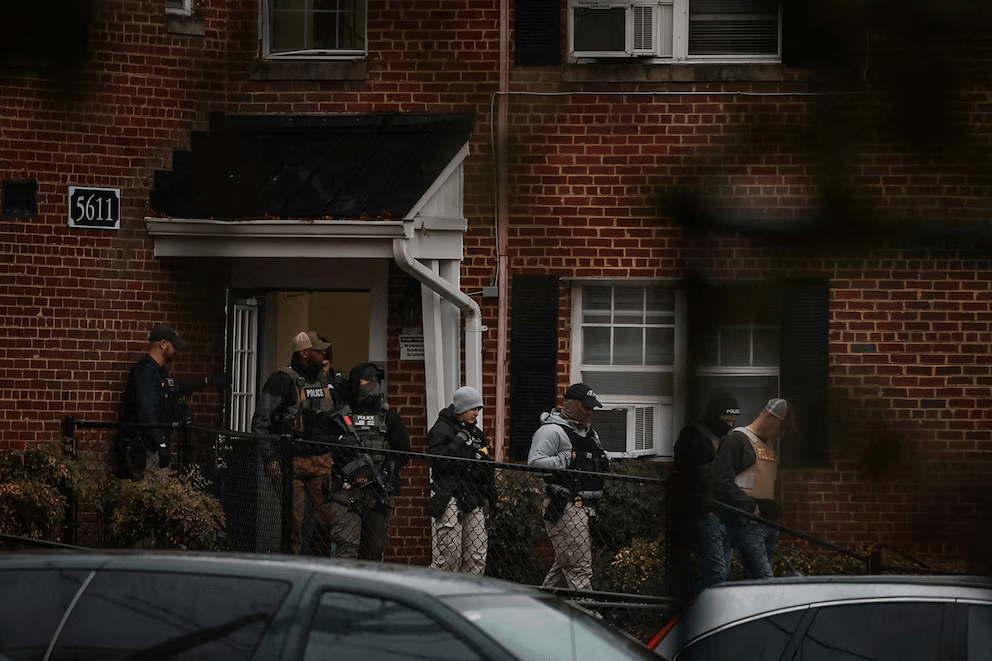
Controversial Practice and Official Response
The use of administrative subpoenas by USCIS and ICE is not new. Historically, these demands have primarily targeted state and local law enforcement agencies, not residential landlords.
From the Department of Homeland Security (DHS), spokesperson Tricia McLaughlin defended the use of subpoenas on landlords but did not confirm the existence of a large-scale operation.
McLaughlin stated, “It is false to say that ICE subpoenas can simply be ignored. ICE is authorized to obtain records or testimony through specific administrative authorities. Failure to comply can result in serious legal penalties. The media needs to stop spreading these lies.”
However, experts like Nash explain that to turn these subpoenas into legal obligations, ICE would first need to file a lawsuit in federal court and obtain a judge’s signature—a necessary step to compel compliance and allow the recipient to formally challenge the request.
Impact and Landlord Response
Anthony Luna, executive director of Coastline Equity, a company managing around a thousand residential units in the Los Angeles area, said that amid rumors about the subpoenas, several local property managers have stated they do not plan to provide the requested information unless a court order is presented.
“If they’re really looking for criminals, why don’t they go through court documents? Why do they need files from housing providers?” Luna questioned in an interview with NBC News.
In Boston, attorney Jordana Roubicek Greenman recounted that a landlord received a confusing call from an ICE agent requesting tenant data. Her advice was clear: “I told my client not to return the call.”
In this context, immigrant rights organizations are emphasizing “Know Your Rights” campaigns, which recommend refusing to provide information or grant access to a residence without a judge-signed warrant.
Image: Infobae