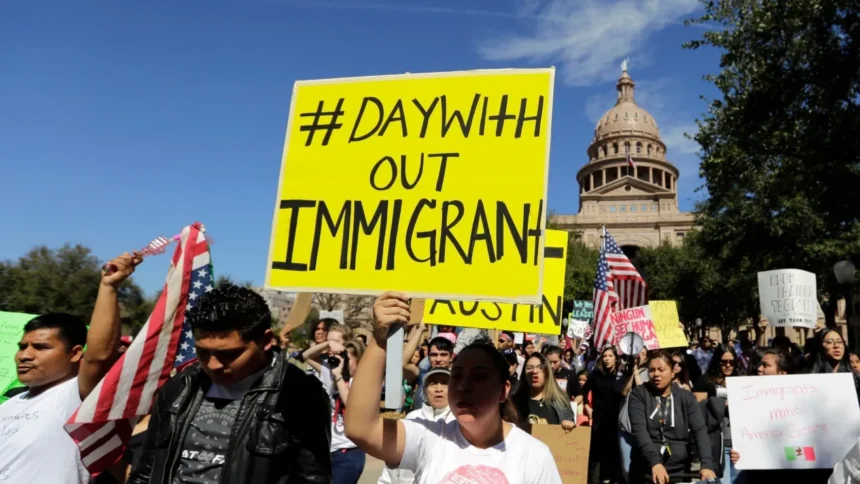
If you live in a community where immigrant labor supports the foundations of construction, gastronomy, agriculture, and essential services, you know perfectly well that the local economy would come to a complete standstill within hours if these workers decided to stay away. The truth is, faced with the growing pressure of raids and deportation policies driven by U.S. Immigration and Customs Enforcement (ICE), affected communities have decided to trade traditional signs for a much more powerful pressure tool: the weight of economic silence. The call for a “day without immigrants” in Connecticut is not just a symbolic demonstration; it is a coordinated shutdown strategy under the slogan “don’t work, don’t buy,” aiming to demonstrate with cold numbers the irreplaceable value of undocumented immigrants and foreign residents in the state’s financial fabric.
- The anatomy of economic protest: Why consumption and labor are the best weapons
- 1. The invisible weight of the labor and industrial engine
- 2. The consumer boycott as a political message
- Chart: Impact breakdown — Economic protest vs. ICE policies
- Practical guide: How to participate safely and protect your rights during mobilizations
- 1. Learn about your employer’s absence policies: Know your labor rights and contractual protections.
- 2. The fundamental rule of silence and identification: Know your constitutional rights when facing ICE on the street.
- 3. Where to seek support and stay informed without falling for rumors: Community organization and legal advice.
How is this protest organized, what real impact does it have on local businesses, and why does this type of mobilization redefine immigrant resistance in the U.S.? Let’s break it down in depth.

The pulse of community protest (Snippet Bait): Community organizations and local leaders in Connecticut called for a massive “day without immigrants” under the premise of halting work and commercial spending (“don’t work, don’t buy”) as a direct response to the intensification of ICE operations. The protest seeks to highlight the structural dependence of the state’s economy on immigrant labor, paralyzing restaurants, construction sites, and retail businesses to demand a halt to mass deportations.
The anatomy of economic protest: Why consumption and labor are the best weapons
To understand the tactical background of this mobilization, it’s necessary to analyze how the U.S. economy depends on consumption flows and a workforce often overlooked in legislative debates.
1. The invisible weight of the labor and industrial engine
The northeastern states, and Connecticut in particular, have entire productive sectors that critically depend on foreign-born workers.
- The local supply chain shutdown: When thousands of employees decide not to show up for work in the hospitality industry, regional agriculture, landscaping, and small businesses, business owners face immediate losses that cannot be concealed.
- The uncomfortable truth: Critics of ICE policies argue that mass raids destroy local economic stability. By emptying workplaces, the protest demonstrates with facts what political speeches often ignore: without immigrant workers, the region’s economic wheel simply stops turning.
2. The consumer boycott as a political message
The “don’t buy” slogan adds an additional dimension to the financial impact of the protest day.
- The blow to shopping centers and retailers: By abstaining from making purchases, paying for non-essential services, or consuming at large chains during the strike day, organizers aim to pressure the corporate sector and state legislators to in turn push federal authorities to moderate deportation actions.
- The dilemma of community safety: For participating families, joining a strike of this magnitude carries evident labor risks, but the fear of arbitrary raids has outweighed the fear of employer retaliation in many districts.
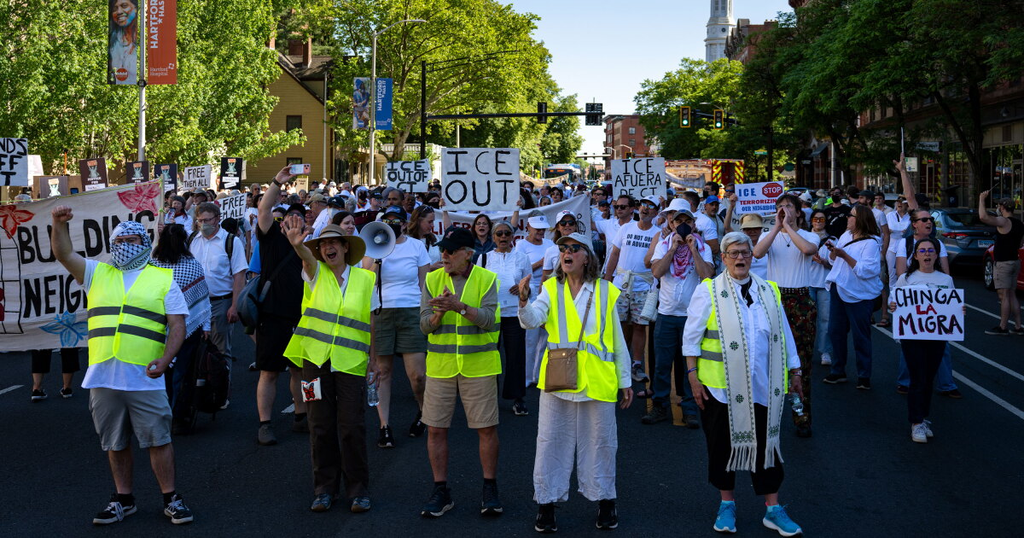
Chart: Impact breakdown — Economic protest vs. ICE policies
To precisely visualize what the movement seeks and how it impacts the local landscape, we contrast the dimensions of the strike:

| Impact Axis | Protest Dynamics (“Day Without Immigrants”) | Institutional Response (ICE / Federal Government) |
| Economic Strategy | Mass labor absence and boycott of retail commercial spending. | Continuation of targeted operations and compliance with detention mandates. |
| Affected Sectors | Restaurants, construction, agriculture, and cleaning services in Connecticut. | Operational pressure due to temporary staff shortages in some service areas. |
| Political Goal | Highlight economic dependence and demand a halt to ICE raids. | Reaffirm federal authority in enforcing current immigration laws. |
Practical guide: How to participate safely and protect your rights during mobilizations
If you are part of the community in Connecticut or in other states considering similar strikes and mobilizations, it is essential to know the legal protections and labor risks involved. Follow these key points:
1. Learn about your employer’s absence policies: Know your labor rights and contractual protections.
An unofficial strike can have consequences under your state’s labor laws if not properly coordinated. Review your employee handbook regarding justified absences and accumulated vacation days to assess the impact on your job.

2. The fundamental rule of silence and identification: Know your constitutional rights when facing ICE on the street.
Whether you participate in a march or decide to stay home, remember that if approached by ICE agents in public, you have the right to remain silent, not to hand over false documents, and to ask if you are under arrest or free to leave.
3. Where to seek support and stay informed without falling for rumors: Community organization and legal advice.
Stay in close contact with local pro-immigrant organizations and community coalitions that offer support networks and fact-checking of rumors about alleged mass raids. To follow these news stories, consult neutral sources like Associated Press.
The truth is that economic protests show that the voice of immigrant communities goes beyond the ballot box and is directly reflected in the vitality of the daily market. For our community, understanding the scope of these mobilizations strengthens unity and the defense of civil rights across the country.
Image: ElHispanoParaTodos/PRESS