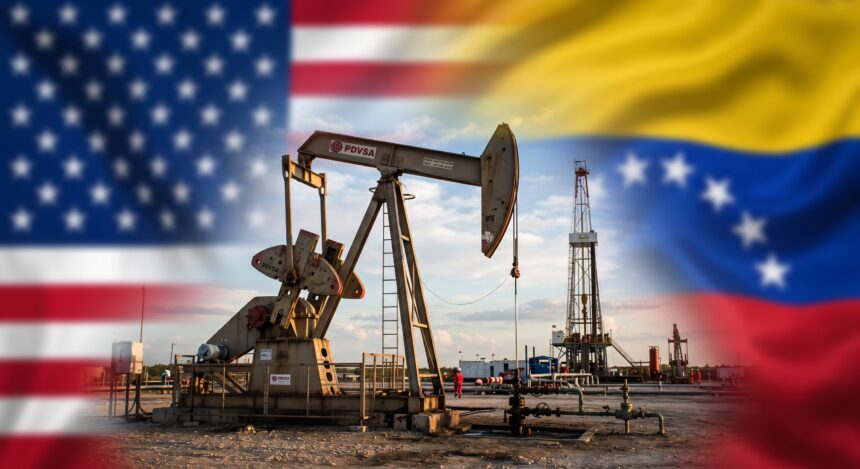
The recent agreement granting U.S. companies commercial management of one-fifth of Venezuela’s oil reserves has sent shockwaves through financial markets.
Beyond diplomacy, this pact represents a fundamental reconfiguration of the global oil supply chain and an aggressive corporate capital move by players like Chevron and North American Blue Energy Partners.

Impact on Global Crude Prices
The formal and sustained entry of new Venezuelan oil barrels into the market has direct implications for international pricing:
- Refinery Optimization and WTI Prices: Refineries in the U.S. Gulf Coast are designed to process heavy and extra-heavy crude. By securing this continuous and nearby supply, logistical costs are reduced compared to transoceanic imports. This improves refining margins (crack spreads) and helps contain gasoline prices in the U.S. market, stabilizing WTI.
- Frictions with OPEC+ Quotas: The reactivation of Venezuelan oil production introduces a new supply variable. Since this production is largely operated by U.S. capital and licenses, it effectively bypasses the strategic cuts dictated by OPEC, putting downward pressure on global prices in the medium term.
- Elimination of Market Distortions: By being able to market its oil legally without the “risk discount” previously offered to unconventional buyers, heavy crude is once again priced transparently, adjusting the balance between real supply and demand.
Financial Balance: Risks and Returns
From a market perspective, the alliance presents a shared but asymmetrical risk structure:
| Financial Indicator | Impact for the United States (Investors) | Impact for Venezuela (State) |
| Cash Flow and Debt | High expected return; part of the production is directly allocated to repaying overdue corporate debts. | Immediate liquidity is essential, but net revenues are limited by payment commitments. |
| Capital Investment (CapEx) | They assume the high risk of injecting capital to rebuild the collapsed infrastructure of PDVSA. | Avoids their own capital expenditure, relying 100% on Foreign Direct Investment (FDI). |
| Asset Control | They secure a long-term strategic asset that protects them from volatility in the Middle East. | Generates revenue but cedes commercial control and remains subject to U.S. Treasury regulations. |
In terms of profitability, U.S. capital assumes the infrastructure risk but monopolizes commercialization and secures solid returns. Venezuela revives its industry but at the cost of compromising its future earnings.