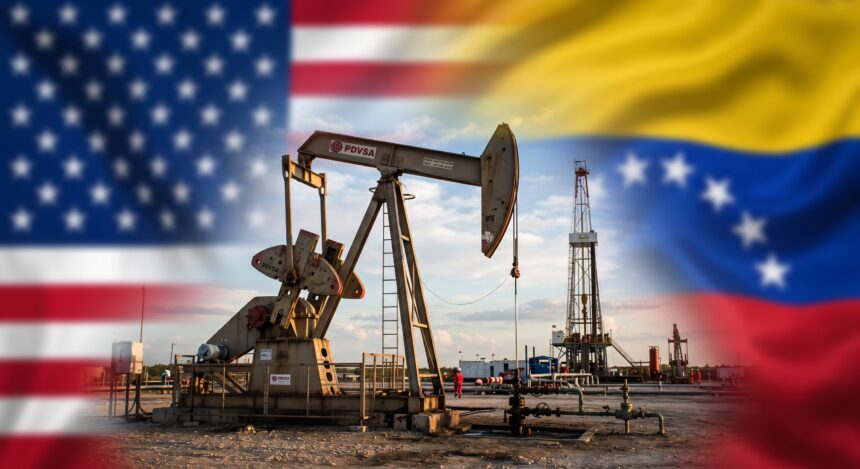
In a significant geopolitical shift, the United States has outlined an ambitious strategy to consolidate the Western Hemisphere as the primary hub for hydrocarbon supply, displacing the historic dominance of the Middle East.
- In a significant geopolitical shift, the United States has outlined an ambitious strategy to consolidate the Western Hemisphere as the primary hub for hydrocarbon supply, displacing the historic dominance of the Middle East.
- Geopolitical and Economic Implications
- Benefits of the Decision
- Probability of Success and Estimated Timelines
During the G20 ministerial summit on “energy abundance” held in Houston, U.S. Secretary of the Interior Doug Burgum highlighted Venezuela as a central piece of this new global oil and energy map.

Burgum stressed that the strategy focuses not only on heavy crude—ideal for U.S. Gulf Coast refineries—but also on the potential of Venezuelan coal. According to the senior official, the reactivation of the South American nation’s coal sector will have a dual purpose: meeting export demand and fueling internal electricity generation, a fundamental step toward rebuilding the country’s deteriorated national grid.
Geopolitical and Economic Implications
This decision marks a turning point in international energy relations:
- Market reconfiguration: By betting on Venezuela, Washington seeks to reduce its vulnerability to geopolitical tensions in the Middle East, ensuring a closer and more controllable supply chain in the Americas.
- Easing of sanctions: The Office of Foreign Assets Control (OFAC) has already begun to pave the way, issuing recent modifications that clarify that U.S. companies can do business with state-owned coal producers in Venezuela.
- Foreign direct investment: The plan requires an injection of capital and technology from U.S. multinationals to recover extraction infrastructure that has suffered years of disinvestment.
Benefits of the Decision
The strategic alliance poses clear advantages for both nations:
- For the United States: It will allow for the replenishment of the Strategic Petroleum Reserve at a lower cost, stabilize fuel prices in the domestic market, and leverage the installed capacity of its refineries, originally designed to process Venezuelan extra-heavy crude.
- For Venezuela: It represents a historic opportunity to revitalize its main industry. The U.S. goal is to raise the South American country’s crude production to 1.5 million barrels per day. Additionally, allocating part of the coal production to internal electricity generation promises to alleviate chronic blackouts and lay the foundation for economic recovery.
Probability of Success and Estimated Timelines
The probability of this vision fully materializing is moderately high, driven by the clear political will of Washington and the economic necessity of Caracas. However, it faces considerable logistical and infrastructural challenges.

- Short Term (1 to 2 years): It is highly likely to see an increase in coal exports and an initial rebound in oil production thanks to the arrival of refurbished U.S. equipment and the reactivation of licenses.
- Medium and Long Term (3 to 5+ years): Reaching the ambitious goal of 1.5 million barrels of oil per day and rebuilding the national electrical grid through coal plants will take more time. It will depend on maintaining stability in bilateral agreements and the execution of large-scale infrastructure projects in Venezuela.