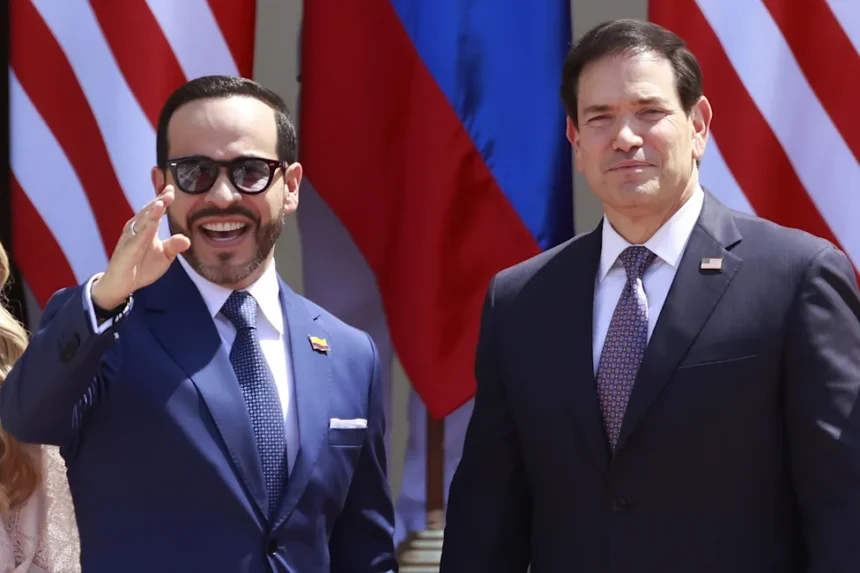
Marking the beginning of a new diplomatic era between Washington and Bogotá, US Secretary of State Marco Rubio arrived in Barranquilla this Tuesday, September 8, 2026, for his first official meeting with Colombia’s newly inaugurated President, Abelardo de la Espriella.
The visit, part of Rubio’s Latin American tour to advance the priorities of Donald Trump’s administration in the region, aims to solidify Colombia as a key strategic ally. The robust summit agenda focused on trade, mineral exploitation, the war on drugs, and the situation in Venezuela.

Trade Agreements and the Strategic “Rare Earths” Pact
One of the summit’s most notable achievements is progress toward a bilateral agreement on critical minerals and “rare earths.” The United States seeks to secure reserves of strategic minerals—such as tungsten, vital for the aerospace, satellite, and defense industries—to strengthen its national security.
How does this benefit Colombia? For the Andean nation, this pact represents a historic economic opportunity. Becoming a priority supplier of these coveted minerals gives Colombia a significant global competitive advantage, attracting the foreign direct investment needed to develop the energy and mining capacity this industry demands.
In parallel, President De la Espriella formally requested that the US government suspend or reduce the 12.5% tariffs currently imposed on a large portion of Colombian exports. While Washington has not announced an immediate reduction, the meeting elevated this negotiation to the highest political level, seeking crucial relief for Colombian businesses to boost reciprocal trade.
Security, Drug Trafficking, and a Historic Aid Package
The “tough-on-crime” policy, a shared vision between the US administration and De la Espriella’s government, was the central focus of security discussions. Rubio reaffirmed Washington’s commitment to supporting Colombia in eradicating illicit crops and delivering decisive blows to armed groups and drug trafficking cartels.

As backing for these policies—and to assist in the country’s reconstruction following the recent earthquake that struck Colombia in August—the US has proposed a $1 billion aid package, which is subject to review and approval by the US Congress.
The Venezuela Factor and Border Security
The situation in Venezuela was an unavoidable topic during the meeting. While migration is handled diplomatically, it remains one of the US government’s top priorities in the region and is directly tied to the crisis in the neighboring country.
Rubio and De la Espriella addressed border security, counterterrorism cooperation, and the direct impact of Venezuela’s crisis on regional stability. The US views Colombia as a vital bulwark and an indispensable partner in monitoring and managing the significant security and migration challenges stemming from instability in Venezuela.

The summit concluded by reaffirming that the relationship between the two countries is entering a phase of pragmatism and close ideological alignment. Colombian Foreign Minister Omar Bula summarized the day by stating that both governments’ approach of acting as sovereign nations will ensure this “new era of bilateral relations is as beneficial as possible for both peoples.”
Image Yahoo.com