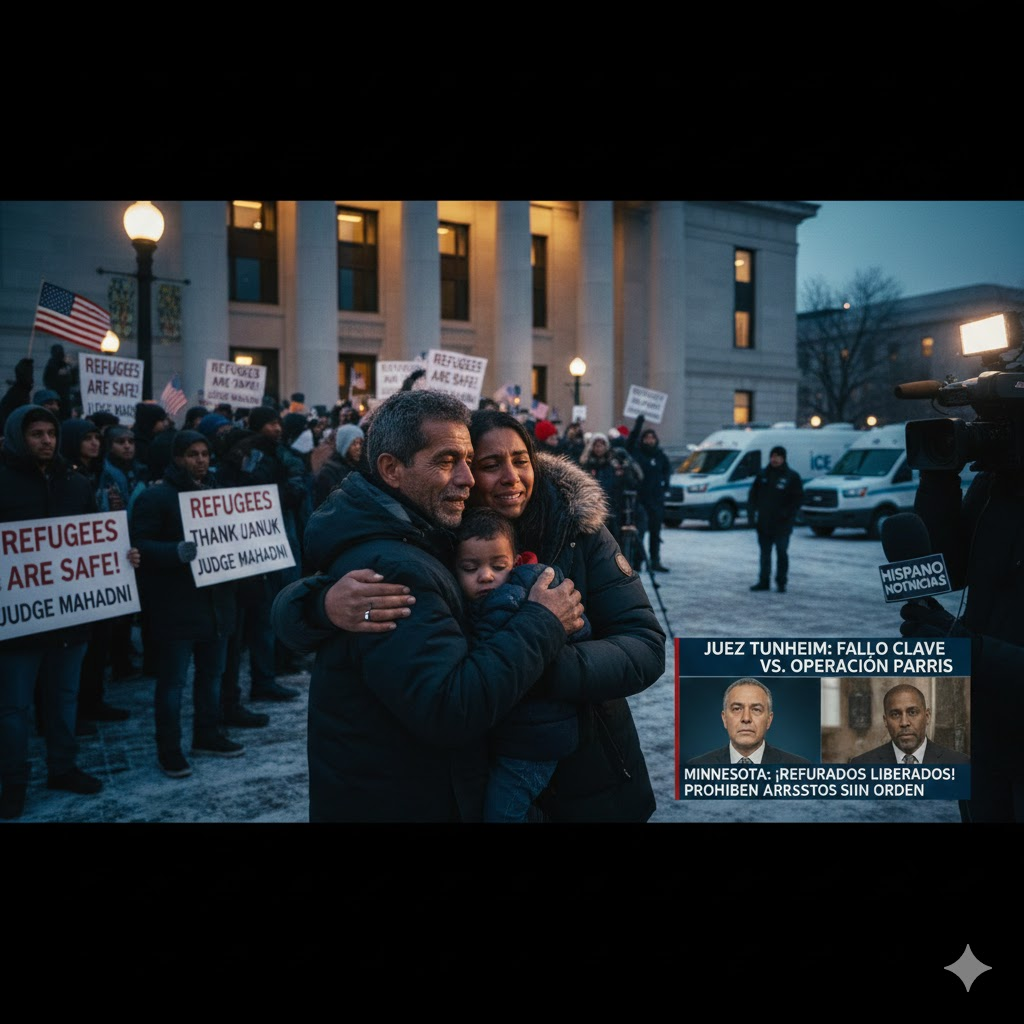
Peace seems to have returned—at least through a legal thread—to the streets of Minneapolis and St. Paul. In a ruling that has left the federal administration reeling, District Judge John Tunheim issued a firm order: ICE must immediately halt the arrest and detention of legally resettled refugees in Minnesota.
But this is not just an administrative procedure. It is a direct response to the “climate of terror” (the judge’s own words) created by Operation PARRIS, an initiative by the Department of Homeland Security (DHS) that has put thousands of working families, particularly from the Somali and Latino communities, in the crosshairs of federal agents.
Advertisement
Key Fact: The court order requires the immediate release of any refugee detained under this program in Minnesota and the return of those who were transferred to detention centers in Texas within a maximum of five days.
Judge Blocks ICE Arrests in Minnesota. Credit: ElHispanoParaTodos/PRESS
What Is Operation PARRIS, and Why Does a Judge Consider It “Illegal”?
In early January 2026, the government launched a massive program to “re-link” and reexamine the legal status of approximately 5,600 refugees in the state. The official justification was national security; the reality on the streets was very different: plainclothes agents pulling people from their homes or intercepting them on their way to the grocery store.
The truth is that the system is overwhelmed by the government’s own delays in processing permanent residencies (“Green Cards”). Judge Tunheim was clear: a refugee has the right to live in peace and not be arrested without a judicial warrant, especially after passing the world’s strictest security screenings before entering the country.
Table: Summary of the Court Ruling (January 2026)
Ordered Measure
Legal Scope
Impact for Readers
Arrest Block
Prohibits detentions without a prior judicial warrant.
You cannot be taken just for a “re-check” of your status.
Immediate Release
Applies to detainees in Minnesota and those transferred to Texas.
If you have a family member detained under PARRIS, they must be released now.
Right to Work
Reaffirms the validity of current permits.
You can continue working legally while waiting for your appointment.
Use of Force
Restricts aggressive tactics by ICE agents.
Greater protection against harassment in public places.
The “Minnesota Effect”: Timeline of an Escalating Crisis
How did we get here? This was not an isolated decision. The ruling is the culmination of weeks of protests and tragedies that have placed Minnesota at the center of the U.S. immigration debate.
The Death of Alex Pretti: The killing of this nurse by ICE agents during a raid sparked outrage. The community did not ask for patience—they demanded justice.
Sanctuary Cities vs. Federal Government: Minneapolis and St. Paul refused to cooperate, leading the Trump Administration to deploy thousands of additional agents in the so-called “Operation Metro Surge.”
The Class-Action Lawsuit: Organizations like The Advocates for Human Rights and the International Refugee Assistance Project (IRAP) argued that arresting people who have followed all the rules violates the Refugee Act of 1980.
What Should You Do If You Are a Refugee in Minnesota?
If you are in this group (especially if you arrived between 2021 and 2025 and still do not have a Green Card), here are some key tips:
Advertisement
Carry your documents: Although the judge blocked the arrests, having a copy of your refugee status and work permit (EAD) on hand is vital.
Know your rights: If ICE agents knock on your door, remember that you are not obligated to open unless they show a judicial warrant signed by a judge (not just an administrative deportation order).
Contact your attorney: If you were part of Operation PARRIS and are released, make sure to update your address with USCIS to avoid missing any formal notices, which must now be sent by mail—not through arrest.
The White House Reaction: “Judicial Sabotage”
As expected, Washington’s response was swift. Stephen Miller, a key immigration advisor, called the order “sabotage of democracy.” This means the Department of Justice will likely appeal the decision in the coming hours.
Do we really need this level of hostility toward people who were legally invited to live here? Probably not, but in today’s political landscape, the courts are the last line of defense.