

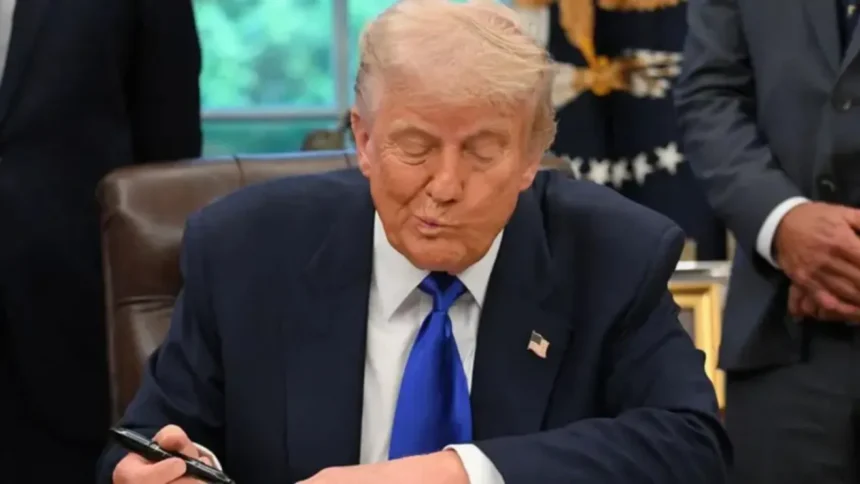
A U.S. federal court ruled that President Donald Trump exceeded his authority by imposing global tariffs two months ago, representing a major setback for a key aspect of the president’s economic policies.
The U.S. Court of International Trade ruled that an emergency law invoked by the White House does not grant unilateral authority to impose tariffs on nearly all countries.

The three-judge panel based in Manhattan determined that the U.S. Constitution grants Congress exclusive powers to regulate commerce with other nations, and that this is not superseded by the president’s authority to safeguard the economy.
Minutes after the ruling was announced, the Trump administration filed an appeal.
“It is not the role of unelected judges to decide how to properly address a national emergency,” White House Deputy Press Secretary Kush Desai said in a statement.
“President Trump pledged to put America first, and the Administration is committed to using every resource of the executive branch to address this crisis and restore American greatness,” he added.
The lawsuit in this case, filed by the Liberty Justice Center, a nonpartisan organization, on behalf of five small businesses that import products from countries affected by the tariffs, was the first major legal challenge against Trump’s so-called “Liberation Day” tariffs.

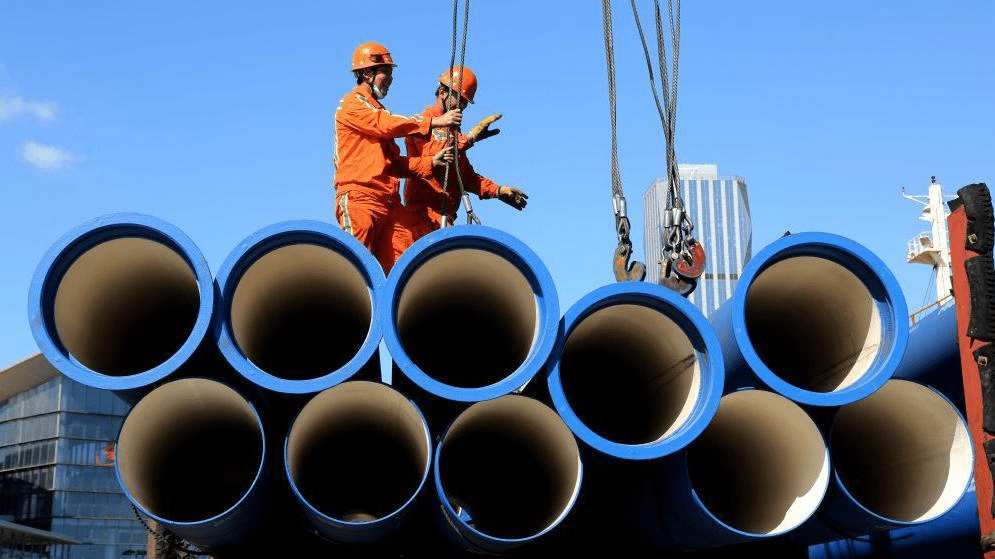
Exceed the president’s authority
In the ruling announced this Wednesday, a three-judge panel stated that the International Emergency Economic Powers Act (IEEPA), a 1977 law that Trump cited to justify the global tariffs, does not grant him the authority to impose them so broadly.
“The Global and Retaliatory Tariff Orders exceed any authority granted to the President by the IEEPA to regulate imports through tariffs. The Traffic Tariffs fail because they do not address the threats outlined in those orders,” they wrote.
Global financial markets have been unstable since Trump announced the far-reaching tariffs on April 2, as some measures were reversed or reduced while the White House negotiated with foreign governments.

The court’s ruling also blocks the tariffs Trump imposed earlier this year on China, Mexico, and Canada.
However, it does not affect the 25% tariffs on cars, auto parts, steel, or aluminum, which were subject to Section 232 of the Trade Expansion Act, a different law from the one Trump invoked for his broader trade taxes.
The case is one of seven legal challenges against the Trump administration’s trade policies, along with lawsuits filed by 13 U.S. states and other groups of small businesses.
Image: Opinion





