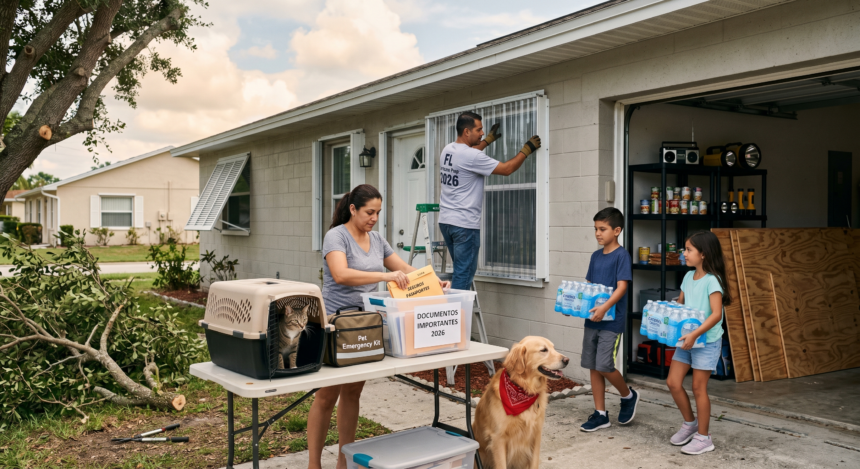
The hurricane season is already here. While forecasts suggest slightly below-average activity, experts are clear: “Just one storm can make it an active season for you.”
By: EL HISPANO PARA TODOS Updated: June 2026

With the arrival of the 2026 hurricane season, prevention is the key to keeping your family safe. Don’t wait for a tropical storm alert or warning to be issued; early preparation ensures you have the necessary supplies before store shelves empty.
The 2026 Atlantic hurricane season officially began on June 1 and will run through November 30. This year, the National Oceanic and Atmospheric Administration (NOAA) forecasts between 8 and 14 named storms, of which up to 6 could become hurricanes.
However, emergency management authorities reiterate the golden rule: don’t rely on the numbers. Historically, devastating hurricanes have made landfall in years with low activity. Early prevention is the only guaranteed tool to safeguard your life and property.
Below, we present the definitive guide to preparing your home, family, and pets before the next storm appears on the radar.

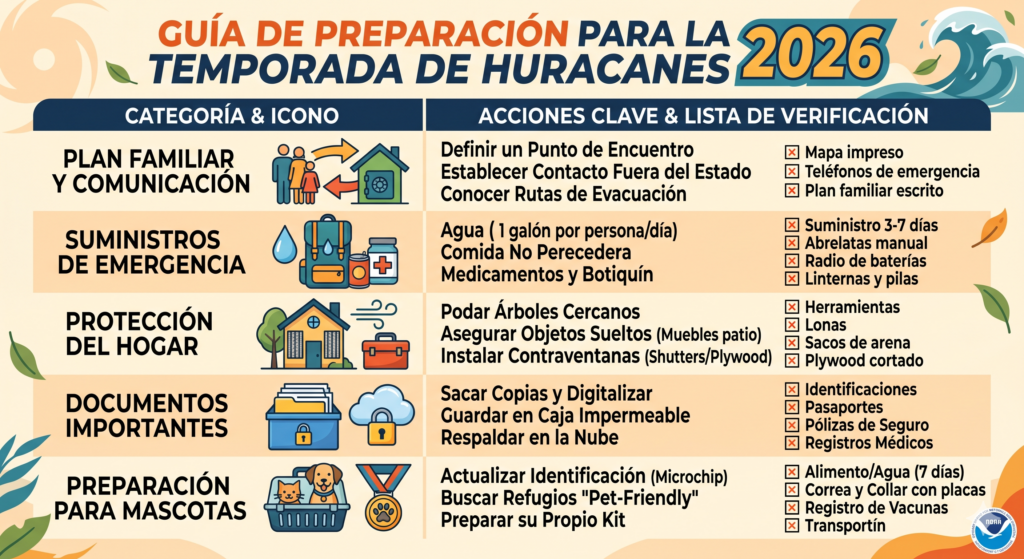
1. The Family Plan: Communication and Routes
The chaos of an evacuation is not the time to make decisions. Sit down with your family this week and define an action plan:
- Know your evacuation zone: Check with your local government to see if your home is in a flood-prone or mandatory evacuation area.
- Meeting points: Establish a safe location where your family should gather if separated.
- Out-of-state emergency contact: Choose a family member or friend who lives outside your state to serve as the central communication point. After a disaster, long-distance calls are sometimes easier to make than local ones.
2. The Supply Kit: Food and Health
After a hurricane passes, basic services like water and electricity may take days (or weeks) to be restored. Your stockpile should cover at least 3 to 7 days for each family member.
- Water: One gallon of water per person, per day (for drinking and sanitation).
- Food: Non-perishable food that doesn’t require refrigeration or cooking (canned goods, protein bars, dried fruit). Don’t forget a manual can opener!
- First aid and medications: Always keep an extra supply of your family’s prescription medications, pain relievers, bandages, and personal hygiene products.
- Power: Flashlights, spare batteries, portable phone chargers (power banks), and a hand-crank or battery-powered radio that tunes into NOAA.
3. Home Protection: Secure Your Property
Strong winds and flying debris are the main threats to your home’s structure.

- Roof and tree inspection: Trim dry branches or those too close to your roof. Clean gutters to prevent water buildup.
- Window protection: If you don’t have hurricane shutters, purchase plywood panels in advance. Don’t rely on tape; it won’t prevent glass from breaking.
- Outdoor items: At the first sign of a storm, store patio furniture, potted plants, grills, and any objects that could become projectiles.
4. Important Documents: Your Life in a Box
If you lose your home, recovering your identity and filing insurance claims will be a priority.
- Waterproof box: Store copies of IDs, passports, birth certificates, property deeds, medical records, and insurance policies in a sealed, waterproof bag or box.
- Digital backup: Take photos of all these documents and upload them to a secure cloud or save them on a USB drive.
- Video inventory: Record a short video walking through your home and showing your belongings and appliances. This will greatly simplify the insurance claim process.
5. The Furry Family Member: Plan for Pets
If it’s not safe for you, it’s not safe for them. Never leave a pet tied up or abandoned at home during a hurricane.
- Their own kit: Include at least a week’s worth of water and food for your pet, bowls, waste bags, and any medications they need.
- Identification: Make sure they wear a collar with an up-to-date ID tag and, preferably, a microchip.
- Shelters and hotels: Not all public shelters accept animals. Research today which shelters or hotels along your evacuation route are pet-friendly. Bring a printed copy of their vaccination records.
A final reminder from authorities: Preparation should not cause panic, but empowerment. Being ready today allows us to be calm tomorrow. Stay informed through the National Hurricane Center (NHC) and your local authorities.