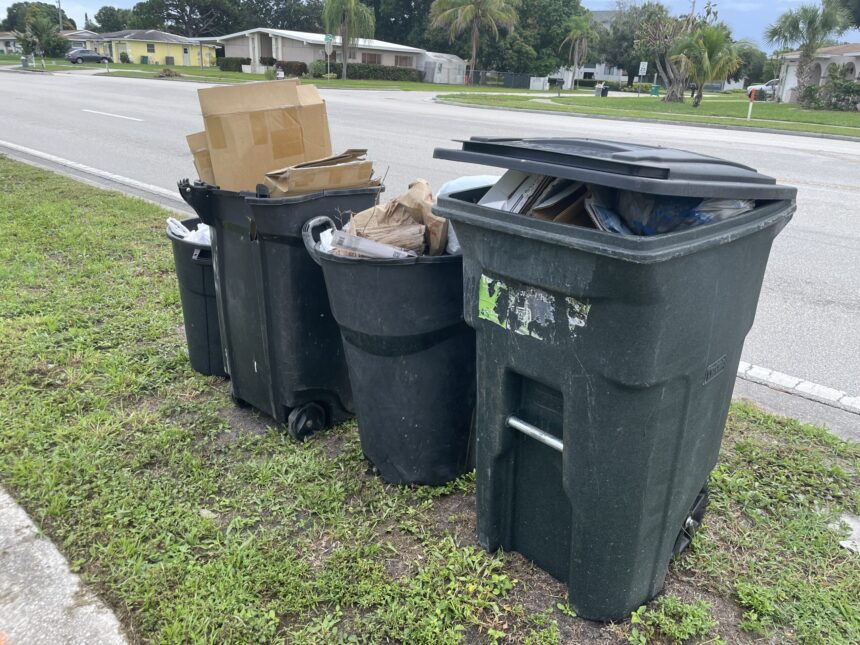
After months of complaints, piles of uncollected trash, and a legal battle that culminated in a historic settlement, the Port St. Lucie City Council has decided how it will return to residents the more than $24 million obtained in its lawsuit against the former waste collection company, Waste Pro of Florida.
The decision is official: the funds will not be distributed as individual checks by mail but will be applied directly as a credit on the annual property tax bill (tax roll).

Below, we break down how this process will work and what it means for your wallet.
How will the funds be distributed?
The council opted for the tax roll mechanism as the fastest, most economical, and least bureaucratic route. Issuing thousands of individual checks would have cost hundreds of thousands of dollars in administrative expenses, reducing the total amount available to residents.
- Direct credit on the bill: The financial relief will appear as a specific deduction on the “Solid Waste Assessment” line of your property tax bill this year.
- Staggered distribution: Waste Pro will pay the settlement in installments (a large initial payment already made, followed by smaller payments in 2027 and 2028). Therefore, the tax credits may be distributed or adjusted based on when these funds enter the city’s coffers.
What can current residents expect?
For the vast majority of property owners in Port St. Lucie, the process will be automatic and reflected on the tax bill arriving at the end of the year. However, not everyone will receive the same amount.
The council determined that the credit will be proportional to the time the property owner suffered from poor service.

- Long-term residents: If you were a property owner and paid the waste collection fee during the peak of the crisis with Waste Pro (especially between 2019 and 2022, when the city received over 10,000 complaints), you will receive the largest portion of the credit.
- New residents: Those who recently purchased properties and did not have to deal with weeks of accumulated trash under the old contract will see a much smaller credit (or none, depending on the exact cutoff dates set by the city), as they currently enjoy regular service from the new company, FCC Environmental Services.
What about residents who suffered through the problem and moved away?
This is the most controversial part of the settlement. Due to the nature of the chosen distribution system (the tax roll), the credit is tied to the property, not the person.
- If you sold your home and moved outside Port St. Lucie: Unfortunately, you will not receive this refund. Since you do not have an active property in the city’s tax roll for the current year, the system has no automatic mechanism to send you the credit. The benefit will pass to the current property owner.
- If you moved but bought another home within the city: You will receive a credit on your new property, though the amount will depend on how the property appraiser’s office and the city cross-reference your history as a solid waste taxpayer.
For many former residents who endured months of the sanitation crisis, this decision may feel unfair. However, city officials have argued that tracking down former property owners and issuing individualized payments would have been an almost impossible logistical challenge and prohibitively expensive.