Port St. Lucie’s city council will put the return of twice-weekly trash collection to a vote in November. Learn about the cost, timeline, and how it affects you.
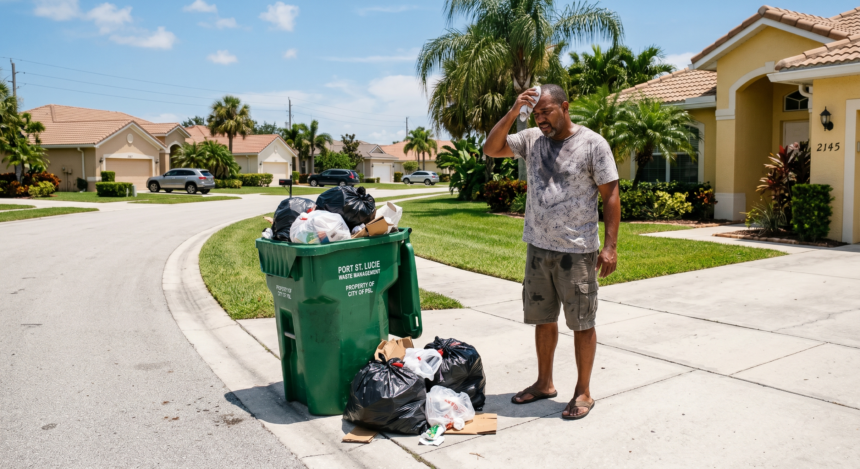
Florida’s extreme heat, suffocating humidity, and a green trash bin waiting seven long days under the sun.

Let’s be honest: the current waste collection system in our city has become a biological nightmare for thousands of families. Taking out the trash—once a routine chore—has turned into an act of bravery (and breath-holding).
But there’s light at the end of the tunnel. Or rather, an extra truck on the horizon.
The Quick Answer (What You Need to Know Now)
Port St. Lucie’s City Council approved the first reading of a measure for the November 3 ballot this Monday. It’s a “straw vote” (non-binding) where residents will be asked directly if they want to restore twice-weekly trash collection. The catch: this could increase homeowners’ waste assessment by at least $131 annually by 2028.
Here’s the interesting part. This isn’t a magical decision that will happen overnight. Restoring the system we had years ago requires massive logistics, taxpayer money, and, above all, patience. Let’s cut to the chase and break down how we reached this critical point and what it really means for your wallet.

From Waste Pro to One-Day Chaos: A Little History
To understand the current trash drama, we need to look in the rearview mirror.
Longtime Port St. Lucie residents will remember when twice-weekly trash pickup was the norm. Waste Pro was responsible for keeping our streets clean. However, the pandemic changed the rules of the game. A massive shortage of drivers (CDL), supply chain disruptions, and internal issues led to a service collapse.
Missed routes, weeks without collection, and a flood of resident complaints ended in a bitter lawsuit between the city and Waste Pro.

As an emergency solution and restructuring, in 2022, the city signed a contract with a new provider: FCC Environmental Services. The deal stabilized the crisis but came with a painful sacrifice: collection was reduced to once a week. And in Florida’s tropical climate, seven days is too long for organic waste.
“We have worms, flies, and we stink,” said Emily Ridgely, a city resident, bluntly summarizing the feelings of thousands of neighbors.
Another neighbor, Irene Pena, didn’t hesitate to compare both realities: “The insects, the worms, the smell, the flies—everything was better before. Now, it’s a nightmare.”
The Hidden Logistics: Why It Can’t Change Overnight
Many residents wonder: “If the council approves it, why can’t they send the trucks out next month?”
The harsh reality is that shifting a growing city’s waste infrastructure is like trying to turn a cargo ship in a narrow river. If voters say “YES” in November and the council approves the measure, the city faces a considerable logistical hurdle.
According to city staff, implementing the new schedule would take FCC Environmental Services between 9 and 15 months.
Why the delay? Here’s the exact breakdown:
- Fleet purchase: 17 additional collection trucks are required. These specialized vehicles aren’t bought at a traditional dealership; they’re custom-made and subject to global supply chain delays.
- Route reengineering: Currently, the city is divided into five service areas. To accommodate the double route, the map would have to be collapsed into just three operational areas.
- Expansion of workdays: The new plan would require adding Saturdays as a regular collection day to cover all zones without overloading weekday traffic.
Comparison: The Current System vs. The Proposed Future
| Aspect | Current Model (1 day/week) | Proposed Model (2 days/week) |
| Estimated Extra Cost | $0 (Maintaining base contract) | +$131 annually (Impact by 2028) |
| Trash Wait Time | 7 full days | 3 or 4 days max |
| Service Zones | 5 distributed areas | 3 concentrated areas |
| Operational Days | Monday to Friday | Monday to Saturday |
The “Straw Ballot”: Your Voice, But No Legal Obligation
It’s crucial to understand what you’re voting on. The question you’ll see on the November 3 general ballot (if it passes its second reading on July 13) is a straw ballot.
This means it is non-binding.
In plain terms? The election result doesn’t legally require the city to change the contract. It acts as a massive, official “temperature check.” If the overwhelming majority of Hispanics and Port St. Lucie residents vote in favor of the change and accept the $131 increase, the City Council will take that popular mandate as a green light to approve the restructuring and seek funding.
If people vote against it because the economic impact in 2028 seems too high amid inflation, the council will shelve the idea, and we’ll continue dealing with full bins once a week.
What Happens Now? (And How to Survive Until 2025)
The fate of your trash isn’t set in stone on the ballot yet. For you to make the decision in November, the city council must approve a second reading on July 13.
If you’re a concerned resident, that’s the key date to attend city hall or contact your local representative.
Meanwhile, knowing that even if approved, new trucks won’t roll out until late 2025, here are some neighborhood survival tactics to deal with the heat and weekly collection:
- Double-bag organics: Meat scraps, seafood, or diapers should go in reinforced or double bags to prevent liquid leaks that attract flies.
- Freeze the worst odors: It sounds extreme, but freezing raw food scraps (like chicken bones) until the night before collection eliminates 90% of worms.
- Monthly bleach wash: Don’t let leachate (the gross liquid from trash) dry at the bottom of the bin. A quick hose-down and a splash of bleach every month makes a difference.
The debate is on. Are you willing to pay over $100 extra per year to regain your olfactory peace, or would you rather adjust your budget and endure Florida’s heat for one more year? The decision will soon be in your hands.