
Florida’s historic three-day mandatory waiting period for firearm purchases faces a definitive challenge, as the state government itself has aligned with plaintiffs to strike down the law.
Below is a breakdown of the key aspects of this measure, its background, and the opposing viewpoints.

1. The Core of the Controversy: The Lawsuit and the State’s Stance
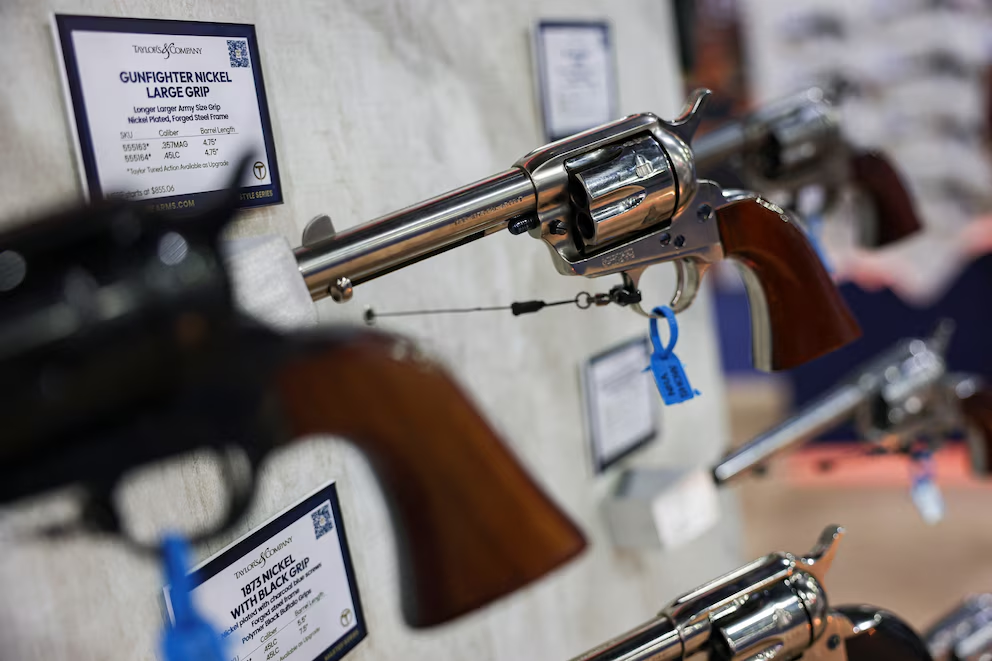
The current law requires most buyers to wait a minimum of three days (excluding weekends and holidays) before taking possession of a firearm from a retail store. However, a federal lawsuit backed by the National Rifle Association (NRA), gun shops, and individual buyers argues that this requirement is unconstitutional.
The major development lies in Florida’s institutional response:
- The Attorney General concedes: Florida’s Attorney General, James Uthmeier (representing the state), filed a proposed settlement in federal court to side with the plaintiffs. The official argued that the waiting period is “arbitrary” and violates the Second Amendment.
- Near-immediate purchase: The official justification states that with modern verification systems, background checks take minutes or a few hours, so holding the firearm for three days is no longer technically justified under new U.S. Supreme Court standards (particularly following the Bruen decision).
- Background checks remain: The state clarified that eliminating the waiting period does not remove the criminal background check requirement. Every buyer will still be required to pass the security screening before receiving the firearm; what is being removed is the subsequent waiting period.
2. Origin and Evolution of the Three-Day Wait
This time restriction is not a typical legislative measure; it originated directly from a citizen mandate and was later strengthened due to local tragedies:
- Approval in 1990: The waiting period was originally established through a state constitutional amendment voted on by Florida citizens, achieving a massive 84% approval. At the time, it applied only to handguns.
- Expansion after the Parkland tragedy (2018): Following the mass shooting at Marjory Stoneman Douglas High School, Florida’s legislature expanded the three-day restriction to also cover long guns (such as AR-15 semiautomatic rifles) and raised the minimum purchase age to 21.
Current exceptions that bypass this waiting period include possessing a concealed weapons license, trading in one firearm for another (trade-in), or completing a certified 16-hour hunter safety course.

3. Clashing Positions
The state executive’s move to dismantle the regulation has polarized Florida’s political debate:
Argument for eliminating the wait: Supporters of repeal argue that “cooling-off” periods do not align with the country’s historical tradition and unfairly penalize law-abiding citizens seeking immediate self-protection.
Argument against eliminating the wait: Groups against gun violence (such as Brady) and leaders of Florida’s Democratic Party called the Attorney General’s action a “dereliction of duty.” They argue that the time barrier is a vital buffer that saves lives, providing a breathing space to prevent impulsive acts of violence, homicides, and suicides during emotional crises.
If the settlement is approved by the federal judge assigned to the case, Florida will become one of the states with the fewest restrictions on firearm commerce in the country.
For further context, you can watch the report on the Gun Law Alert in Florida. This video provides a detailed analysis of the prior deregulation and easing of carry laws pushed by the state administration.

Image: ElHispanoParaTodos/PRESS