NOAA has released its forecast for the 2026 Atlantic hurricane season. Learn how many storms are expected and how residents of South Florida and the Treasure Coast should prepare.
2026 Hurricane Season: NOAA Forecasts Below-Average Year, But Warns ‘It Only Takes One’
A few days before the official start of the Atlantic hurricane season (which runs from June 1 to November 30), the National Oceanic and Atmospheric Administration (NOAA) has issued its official forecast for 2026.

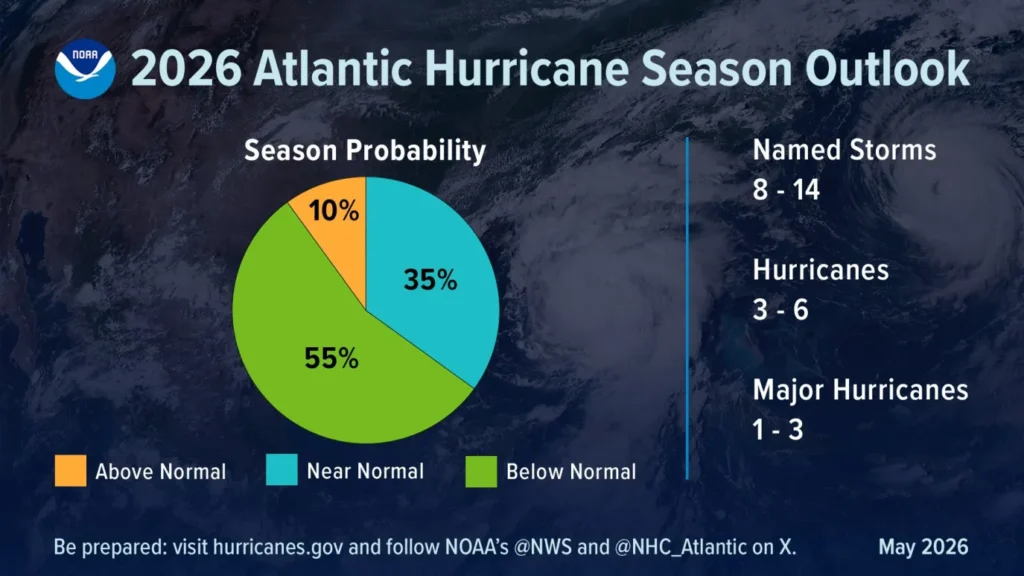
This year, the agency projects a 55% probability of a below-average season, a scenario driven primarily by the development of the El Niño phenomenon. However, authorities urge coastal residents not to let their guard down.
The Numbers in the 2026 Forecast
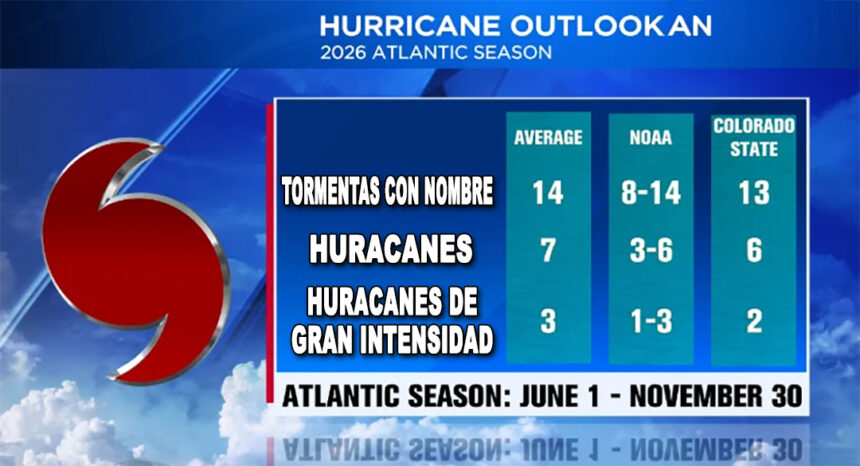
NOAA estimates that this year’s activity will be below the historical average (typically 14 storms, 7 hurricanes, and 3 major hurricanes). For 2026, meteorologists project:
| Category | 2026 Forecast | Definition |
| Named Storms | 8 to 14 | Sustained winds of 39 mph or higher. |
| Hurricanes | 3 to 6 | Winds of 74 mph or higher. |
| Major Hurricanes | 1 to 3 | Categories 3, 4, or 5 (winds of 111 mph or higher). |
Why Is Less Activity Expected?
The key factor for this quieter season is the development of the El Niño climate pattern. This phenomenon typically increases wind shear (sudden changes in wind direction and speed in the atmosphere) over the Atlantic, which “tears apart” storms and prevents them from organizing and strengthening.
However, Atlantic Ocean temperatures remain slightly warmer than normal, providing enough fuel for dangerous systems to form.

How Will South Florida Be Affected?
The fact that fewer storms are forecast does not reduce the risk for vulnerable areas like South Florida. As NOAA Administrator Neil Jacobs warned: “While we expect a below-average season in the Atlantic, it is very important to understand that it only takes one hurricane to have a devastating season.”
Historically, catastrophic Category 5 hurricanes have made landfall during seasons considered “quiet.” For South Florida and fast-growing regions like the Treasure Coast (including Port St. Lucie, Fort Pierce, and Stuart), the implications are clear:
- Risk of storm surge and flooding: Even a tropical storm that does not reach major hurricane strength can produce extreme rainfall events that overwhelm local drainage infrastructure and canals.
- Property preparation: Homeowners should take advantage of this forecast to secure their properties before June. This includes reviewing flood insurance policies, reinforcing roofs, trimming trees near power lines, and ensuring that impact protections (shutters or panels) are ready.
- Emergency kits: Especially in households with dietary restrictions, elderly individuals, or pets, it is vital to have supplies for at least 72 hours, as a single direct hit can disrupt basic services for days.
NOAA’s forecast does not predict where storms will make landfall. Vigilance and early preparation remain the best defense against the upcoming season.