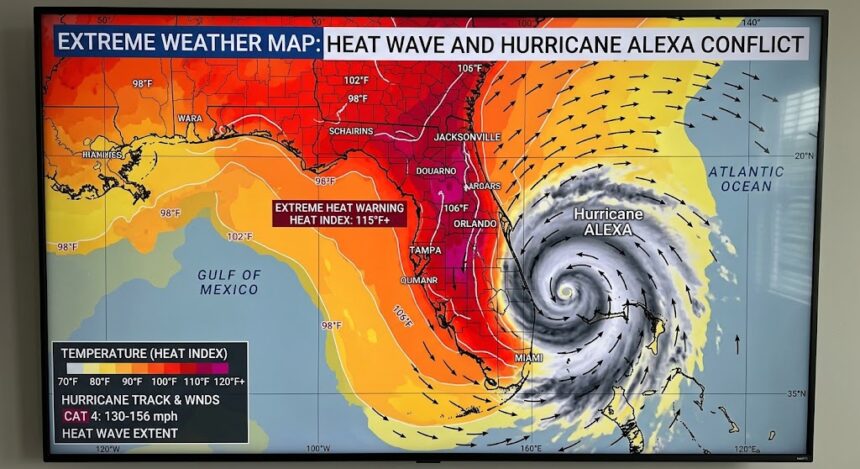
Summer 2026 is testing the resilience of South Florida residents. As the National Weather Service issues warnings for heat indexes exceeding 105°F (40°C) in areas like Palm Beach and the Treasure Coast, the region must simultaneously contend with the peak of hurricane season.
This combination demands a much higher level of preparedness: a prolonged blackout after a severe storm, without air conditioning during a heat wave, can quickly turn into a medical emergency.

The risks of the heat index
The “heat index” is what the body actually feels when air temperature combines with the high humidity characteristic of our coast. When this index exceeds 103°F, the body’s cooling mechanisms (like sweating) become less effective.
The most serious risks include heat exhaustion (characterized by heavy sweating, weakness, and a rapid pulse) and heat stroke, a life-threatening emergency where the skin becomes hot and dry, and the person may lose consciousness.
Use this tool to calculate the real risk and prioritize your preparations:
Heat Index & Emergency Prep
Extreme Caution

Sunstroke, heat cramps possible.
Preparation ChecklistWater (1 gallon per person/day)Non-perishable food (3-day supply)Flashlight & extra batteriesBattery-powered NOAA Weather RadioFirst Aid KitElectrolyte replacement drinks
How to prepare for the double threat
Being ready on the Treasure Coast and Palm Beach means preparing for the impact of wind and water, but also for the stifling reality of the days following without electricity.

1. Store extra water for hydration: Calculate 1 gallon per person, per day.
During a post-hurricane blackout in the middle of a heat wave, the need for drinking water skyrockets. Secure at least enough water for 7 to 10 days, and consider electrolyte drinks to replenish minerals lost through excessive sweating.
2. Secure alternative cooling methods: Options that don’t require the power grid.
Purchase fans that run on long-lasting rechargeable batteries or solar power. Keep special cooling towels or clean cloths that you can wet and place on the neck and wrists.
3. Plan for your pets’ safety: Protecting the most vulnerable at home.
Dogs and cats are extremely susceptible to heat stroke, as they only sweat through the pads of their paws and pant to cool down. Never leave them in a parked vehicle or in the yard under full sun. For your emergency kit, include extra water bottles specifically for them, cooling pads, and make sure to have their vaccination records on hand in case they need to evacuate to a shelter.
4. Know your air-conditioned evacuation zones: Familiarize yourself with the routes.
Check the updated maps for Palm Beach County and the Treasure Coast counties (Martin, St. Lucie, Indian River). Identify public shelters or designated cooling centers in case staying at home becomes dangerous due to high temperatures.
The key to survival: Check on your neighbors. Older adults and people with pre-existing medical conditions are the first to suffer during an emergency that combines extreme heat and power outages.