With the official start of summer also comes the Atlantic hurricane season. This year, attention isn’t just on beaches and theme parks but on how the weather could impact the planet’s biggest sporting event, the World Cup.
The summer of 2026 is no ordinary one in the United States. With the country co-hosting the FIFA World Cup, millions of tourists and fans are arriving on U.S. soil. However, June also marks the official start of the Atlantic hurricane season, a weather variable that always keeps Florida under close watch.

Should you cancel your plans to visit Disney, enjoy Miami’s beaches, or attend a World Cup match? The short answer is no, but planning and information are key. Here’s what to expect in the coming months.
The 2026 forecast for Florida
The hurricane season, which officially began on June 1 and runs through November 30, brings the typical weather challenges for the “Sunshine State.”
This year’s weather forecasts indicate an active season. However, it’s important to remember that the peak of hurricane activity historically occurs between mid-August and October, toward the end of the school summer break and long after the World Cup concludes (which takes place in June and July).
Still, during June and July, the formation of quick tropical storms and the typical afternoon downpours in Florida are very common. While these are not usually devastating, they can disrupt outdoor plans.

Can World Cup matches be canceled?
Florida plays a key role in this 2026 World Cup, with Miami (Hard Rock Stadium) as one of the star venues. Many fans are wondering if a hurricane could suspend a match.
Here’s what you need to know:
- Low probability of major hurricanes: Since the tournament takes place between June and July, the statistical probability of a major hurricane directly hitting Florida during those dates is low.
- Delays due to thunderstorms: The real “enemy” of the World Cup isn’t hurricanes but summer thunderstorms. Safety regulations require halting outdoor events if lightning strikes within a close radius of the stadium. This could cause temporary delays in matches but rarely outright cancellations.
- Fan Fests at risk: Outdoor celebration zones for fans (Fan Fests) are much more vulnerable to weather. If there are tropical storm or strong wind alerts, these events could be canceled for safety.
Impact on your summer vacation (Disney, Universal, and beaches)
If your plan is to visit theme parks in Orlando or Florida’s coasts, the general rules for surviving a Florida summer still apply:

- Parks don’t close for rain: Disney World and Universal Studios are designed to operate in the rain. Only outdoor mechanical attractions temporarily shut down if there’s electrical activity in the area.
- Exceptional closures: Theme parks and airports only close if there’s an imminent hurricane impact alert, which they announce several days in advance.
4 key tips to safeguard your 2026 trip
If you’re traveling to Florida this summer, whether in your national team’s jersey or with Mickey Mouse ears, follow these recommendations:
- Buy travel insurance: It’s the golden rule. Make sure your policy covers “trip interruptions due to severe weather or hurricanes.” This will save you if your flight is canceled.
- Flexibility in your itinerary: Leave room in your schedule. If you plan to go to the beach on Tuesday and there’s a storm alert, have a backup indoor plan (like museums or shopping malls) and move the beach to Wednesday.
- Download the right apps: Have the official weather app on your phone (like the National Hurricane Center or The Weather Channel) and enable notifications for your area.
- Pack the right gear: Rain ponchos, water-resistant shoes, and protective covers for your phone are must-haves in your suitcase this summer.
The hurricane season doesn’t have to ruin your summer or the World Cup festivities. With good insurance, up-to-date information, and a little patience for sudden rain, your trip to Florida will be a success.
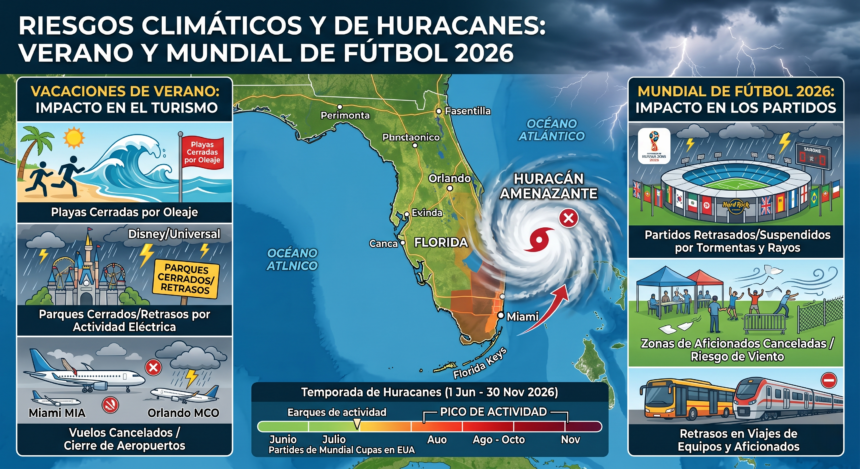
Impact on tourism: The risk of beach closures due to waves, delays at theme parks from thunderstorms, and possible flight cancellations.
Impact on the World Cup: The danger of match suspensions due to electrical activity, cancellation of “Fan Zones” due to strong winds, and disruptions in the transportation of teams and fans.
Geographic context: A map showing the potential risk along Florida’s coasts and the Atlantic.
Hurricane season timeline: A scale placing the World Cup matches (June and July) at the start of the hurricane season, noting that peak activity typically occurs between August and October.