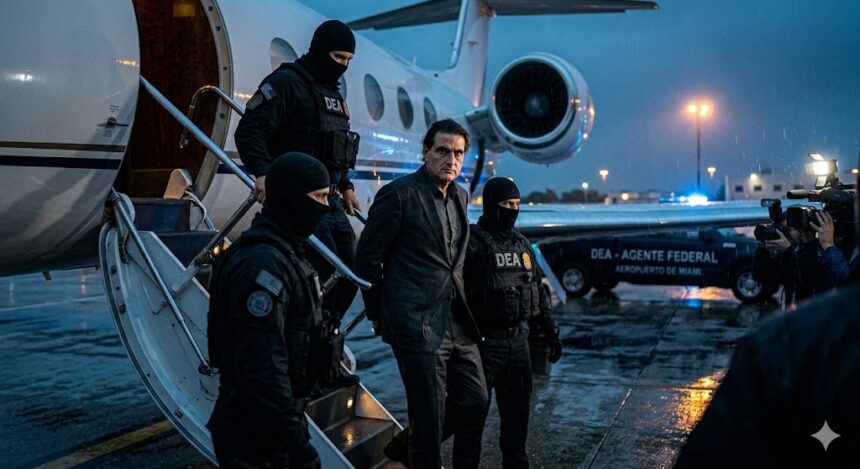
The plot reads like an international espionage series on Netflix, but every dollar, every private jet, and every prison cell is painfully real. The forced landing of Colombian-Venezuelan businessman Alex Saab at Opa-locka Airport in Miami-Dade, escorted by DEA agents, marks the darkest and most unexpected chapter in a financial saga that has kept Washington and Caracas on edge. The news has left half the world stunned: the Venezuelan government itself (now led interim by Delcy Rodríguez after Nicolás Maduro’s capture by joint forces) decided to deport him and hand him over to U.S. justice in May 2026. Yes, the same man the Chavista regime defended as an “indomitable diplomatic hero” ended up as the ultimate bargaining chip.
To grasp the magnitude of this political earthquake, we must answer the question flooding search engines: Who is Alex Saab? In simple terms, Saab was no ordinary bureaucrat; he was the shadow architect of finances at the Miraflores Palace, the man tasked with evading international sanctions and the alleged frontman for Nicolás Maduro, pulling the strings of a multibillion-dollar empire built on the food needs of an entire nation.

The key fact: After being released by the Joe Biden administration in December 2023 in a controversial prisoner swap, Donald Trump’s return to the White House and the collapse of Maduro’s inner circle in 2026 changed the rules of the game. Today, Saab is back in an orange jumpsuit in Florida, facing serious charges of money laundering and conspiracy.
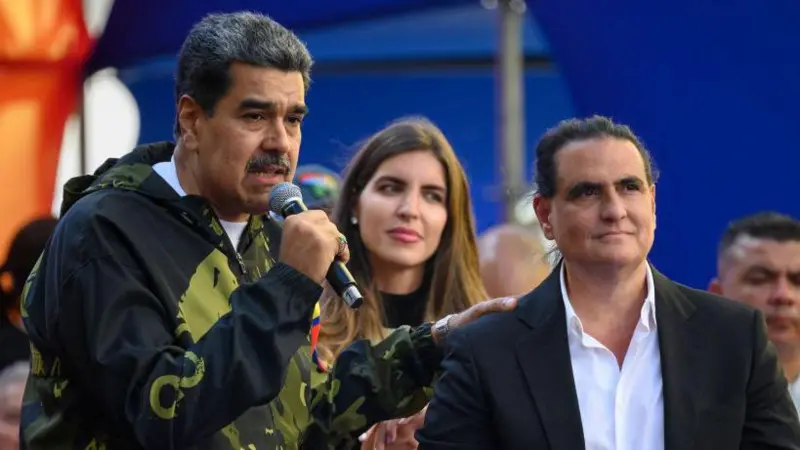
From Keychain Salesman to Shadow Mogul
To understand the psychology and rise of this figure, we must travel to Barranquilla, Colombia. In the late 1990s, Alex Naim Saab Morán was an ordinary merchant who started by selling promotional keychains and work uniforms. How did he become the most powerful man in Venezuela’s economy? The answer lies in the right political connections and an alarming lack of financial scruples.
His grand entrance into Chavismo came in 2011, during Hugo Chávez’s government. Saab signed a multibillion-dollar bilateral agreement between Colombia and Venezuela to build prefabricated housing (the Great Housing Mission). Though the warehouses took years to construct and the execution was riddled with irregularities, the golden bridge was already built. When Maduro took power, Saab became his undisputed economic right-hand man, earning the nickname “the money man.”
The Hunger Business: The CLAP Boxes and the Control System
Here’s what is truly infuriating for millions of Venezuelan families, both inside and outside the country. The true heart of Saab’s fortune was consolidated through the Local Committees for Supply and Production (CLAP), the state-run subsidized food distribution program created by Maduro.
Through a network of shell companies based in Hong Kong, Turkey, Panama, and the United Arab Emirates, Saab gained a monopoly on purchasing low-quality food abroad to resell it to the Venezuelan state at ridiculously inflated prices.

The Multibillion-Dollar Embezzlement Scheme
- Fake Imports and Overpricing: The paper companies linked to Saab bought basic products (powdered milk, rice, pasta) in Mexico or Turkey. The Venezuelan government paid invoices with markups of up to 112%, money that ultimately ended up diverted to tax havens.
- The Illegal Gold Circuit: When U.S. sanctions blocked Venezuela’s traditional bank accounts, Saab designed a bold logistics plan: gold illegally mined from Venezuela’s Mining Arc was flown directly to Turkey or Iran in exchange for cash and goods, bypassing Western financial radar.
- Money Laundering in the U.S.: The reason Florida’s justice system has jurisdiction over a Colombian citizen is simple: Saab and his partner, Álvaro Pulido, used the U.S. financial system and bank accounts in Miami to transfer over $350 million from those corrupt food and housing contracts.
The Timeline of a Two-Act Downfall (2020–2026)
The criminal history of Alex Saab is a cat-and-mouse game that has strained international relations across three continents. To avoid getting lost in the legal maze, here’s the real order of events:
| Year / Date | Critical Event | Geopolitical Impact |
| June 2020 | Arrested in Cape Verde while his private jet refueled en route to Tehran. | The Chavista regime hastily granted him “diplomatic” status to demand immunity, which the U.S. flatly rejected. |
| October 2021 | First extradition to the United States after an intense legal battle. | Maduro’s government immediately suspended dialogue tables with the opposition in Mexico in retaliation. |
| December 2023 | The Joe Biden administration granted him a presidential pardon and released him in a swap. | In exchange, Maduro freed 10 Americans and around thirty political prisoners. Saab returned to Caracas as a state hero. |
| February 2026 | Silent arrest of Saab in Caracas in a joint intelligence operation. | Maduro was cornered, and Saab was arrested and removed from his position as Minister of Industries by Vice President Delcy Rodríguez. |
| May 2026 | Deportation and final handover to DEA agents in Miami. | The circle closes. The “financial mastermind” is left unprotected by Venezuela’s new political order. |
Why Did the Venezuelan Government Decide to Hand Him Over Now?
This is the million-dollar question. How did Alex Saab go from being the “immaculate hero of the homeland,” celebrated on billboards in Caracas, to being sent on a plane to Florida by his own allies?
The truth is that in high-level politics, there are no eternal loyalties—only survival. With Nicolás Maduro’s prior capture and Delcy Rodríguez’s rise as interim president, the priorities of the Miraflores Palace took a radical turn. Keeping a man who knew too much and who had drawn the resentment of the Armed Forces (due to his absolute control over state contracts) became an unsustainable risk.

For Venezuela’s new transitional government, handing Alex Saab over to the Donald Trump administration in May 2026 is a perfect chess move. It serves as a peace offering to the White House to seek the gradual lifting of oil sanctions, stabilize the local economy, and gain legitimacy before the international community. In short: Saab was worth more as a bargaining chip in Washington than as a jailed minister in Caracas.
The Direct Impact on the Hispanic Community and the Exile
Does this really affect those of us living in cities like Miami, Houston, or Madrid? Absolutely. For the Venezuelan and Hispanic-American diaspora, the Alex Saab case is not just a court matter; it’s a symbol of long-delayed justice.
Many of the migrants who now fill the streets of Florida or Texas fled precisely from the economic collapse caused by shortages, inflation, and the corruption of the CLAP scheme that Saab operated. Seeing that social aid money allegedly ended up funding mansions in Europe and secret Swiss bank accounts fuels a deep thirst for accountability. His trial in the Southern District of Florida promises to uncover a massive pressure cooker of politicians, bankers, and businessmen from across the region (including Colombia and Ecuador) involved in money laundering. The big question lingering is whether Saab will finally decide to sing to federal prosecutors to save himself or maintain his pact of silence to the end.
Image: ElHispanoParaTodos/PRESS