Imagine this: your bags are packed, the hotel is paid for, and excitement is at its peak. You arrive at the airline counter, hand over your valid U.S. passport—which expires in four months—and the agent delivers the most dreaded words: “I’m sorry, you cannot board.”
- The origin of the chaos: Why does this rule exist?
- Countries that don’t forgive: The restriction map
- 1. The Six-Month Zone (Strict)
- 2. The Three-Month Rule (The European standard)
- 3. Exceptions and Special Agreements
- Comparison of Requirements by Region
- The role of airlines: Your first security checkpoint
- What to do if your trip is soon and your passport is in the “danger zone”
- Common mistakes to avoid
It sounds like a nightmare, but it happens to thousands of travelers every year. The harsh reality is that having a “valid” passport isn’t always enough to cross a border. There’s a legal and bureaucratic loophole called the “Six-Month Validity Rule” that acts as an invisible trap for the unprepared.

Quick Answer (Snippet Bait): The six-month rule is an entry requirement enforced by many countries, stipulating that your passport must have at least six months of validity remaining from your scheduled arrival or departure date. Even if your document hasn’t legally expired, airlines are prohibited from allowing you to board if you don’t meet this safety margin required by the destination country.
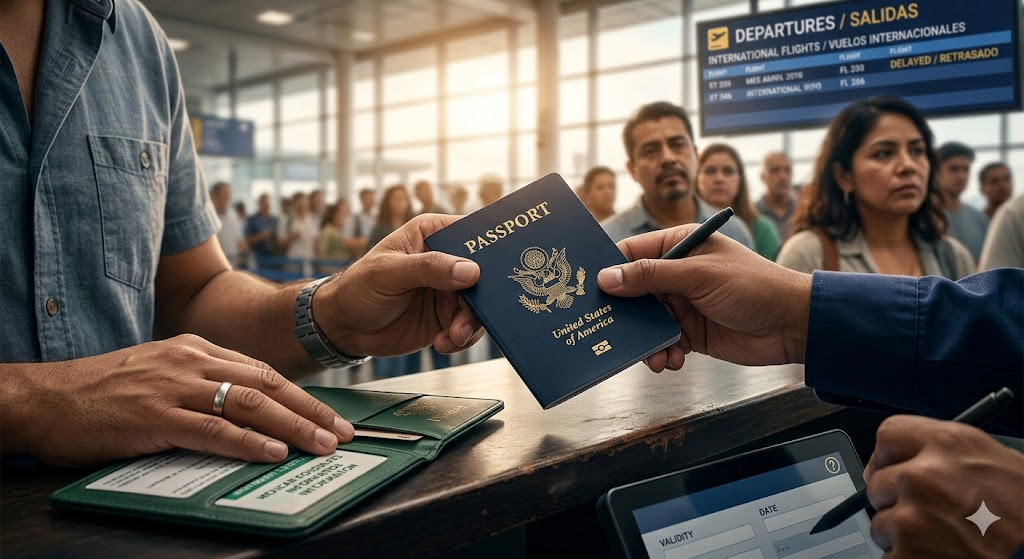
The origin of the chaos: Why does this rule exist?
Many travelers ask in frustration: If my passport says it expires in August, why can’t I travel in June? The logic behind foreign governments is simple, though frustrating. They want to ensure that if an unexpected event (an illness, a natural disaster, or a legal issue) forces you to stay longer than planned, your identification document won’t expire while you’re in their territory.
A citizen with an expired passport becomes a bureaucratic problem for the host country. To avoid the paperwork of deportation or emergency consular procedures, they simply close the door if you don’t have a sufficient “cushion” of time.
Countries that don’t forgive: The restriction map
Not all destinations are the same. While some are flexible, others are relentless. Here’s how the world handles your passport:
1. The Six-Month Zone (Strict)
In these places, if you have 5 months and 29 days of validity, you’ll be left on the ground.

- Asia: China, Thailand, Vietnam, Indonesia, Malaysia.
- Middle East: Egypt, Israel (sometimes varies, but 6 months is recommended), Saudi Arabia, Jordan.
- Africa: The vast majority of sub-Saharan countries.
2. The Three-Month Rule (The European standard)
If you’re traveling to the Schengen Zone (Spain, France, Italy, Germany, etc.), European regulations require your passport to be valid for at least three months after your planned departure date.
3. Exceptions and Special Agreements
Thanks to bilateral agreements, U.S. citizens often have more flexibility in:
- Mexico and Canada: Generally, they only require your passport to be valid at the time of entry, though it’s always best to have a buffer.
- United Kingdom: Only requires validity for the duration of your stay.
Comparison of Requirements by Region
| Region | Required Validity | Risk of Boarding Denial |
| Southeast Asia | 6 months | Critical |
| European Union (Schengen) | 3 months (after departure) | High |
| Central/South America | Varies (3 to 6 months) | Moderate |
| Caribbean | Mostly 6 months | High |
The role of airlines: Your first security checkpoint
Here’s the catch many forget: The airline is the one that will stop you, not just immigration. Airlines are financially responsible for returning you to your point of origin if a country denies you entry due to insufficient passport validity. That’s why gate agents are extremely thorough. If the system flags your validity, no amount of pleading will help; they won’t let you board the plane.

What to do if your trip is soon and your passport is in the “danger zone”
If you’ve just checked your document and realized you’re close to the limit, don’t panic—but act immediately. Complacency is the traveler’s enemy.
- IATA Verification: Visit the IATA (International Air Transport Association) portal. This is the same database airlines use. Enter your destination and details to see exactly what’s required.
- Expedited Renewal: The State Department offers accelerated services. If you have an international trip in the next 2-3 weeks, you can schedule an appointment at a Regional Passport Agency for an “Urgent Travel” need.
- The Dual Citizenship “Trick”: If you’re Hispanic and hold dual citizenship, check if your other country’s passport has longer validity or better entry agreements for your specific destination.
Pro Tip from El Hispano: Never book “non-refundable” flights if your passport has less than 9 months of validity. Government processing times can vary, and you could lose thousands of dollars over a $130 fee.
Common mistakes to avoid
- Trusting a friend’s experience: “I went to Costa Rica with 2 months left and nothing happened.” Rules change, and the mood of the immigration officer can too. Don’t gamble your vacation on an anecdote.
- Ignoring blank pages: Many countries (like South Africa) require not just validity but at least two completely blank pages for entry and exit stamps. If your passport is valid but full, it’s as good as expired.
- Not accounting for return time: The rule often counts from the date you leave the visited country, not when you enter. If you’re staying for a month, make sure the six months cover that extra month of your trip.
The truth is, in the post-pandemic world, border controls have become stricter. It’s not just bureaucracy—it’s sovereign control. For the Hispanic community that travels frequently to visit family or for business, keeping a passport with at least a one-year buffer is the only way to rest easy.
Image: ElHispanoparaTodos/PRESS