The drastic shift in migration policy: Why now?
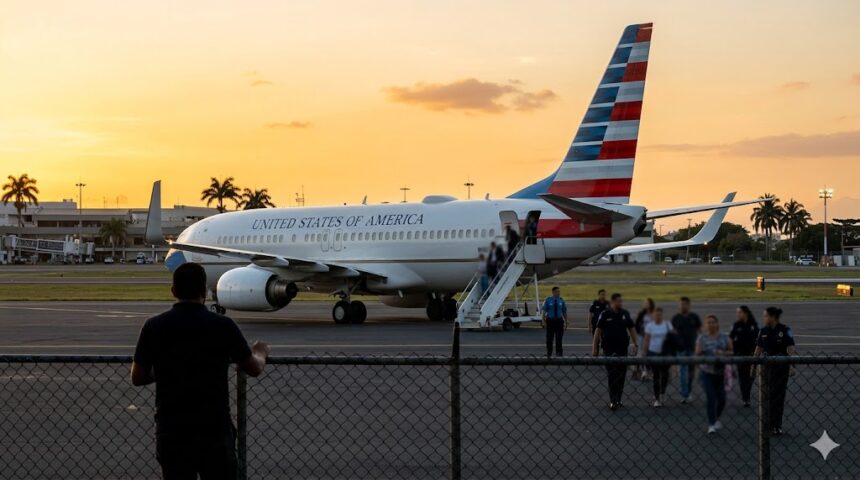
The news has hit like a bucket of cold water in the halls of human rights organizations. For the first time, a plane carrying Costa Rican citizens—the first deportation flight—those who once dreamed of the “American dream”—landed back at Juan Santamaría International Airport under strict federal escort. But this is not an isolated event; it’s part of a much larger and, frankly, harsher geopolitical puzzle than authorities admit.
- The drastic shift in migration policy: Why now?
- What you need to know today (Snippet Bait)
- Anatomy of the agreement: What did Washington and San José sign?
- Impact Comparison: Costa Rica vs. the Rest of Central America
- What will happen to those left behind?
- The human impact: From the American dream to Costa Rican reality
What’s happening exactly? The United States and Costa Rica have activated an accelerated repatriation protocol to curb irregular migration, sending a clear message: the border is not open, not even for those coming from traditionally stable democracies.

Key Fact to understand the context: This move is part of the “Safe Lines” strategy, where the U.S. seeks to externalize its borders through cooperation agreements with allied countries in Central America.
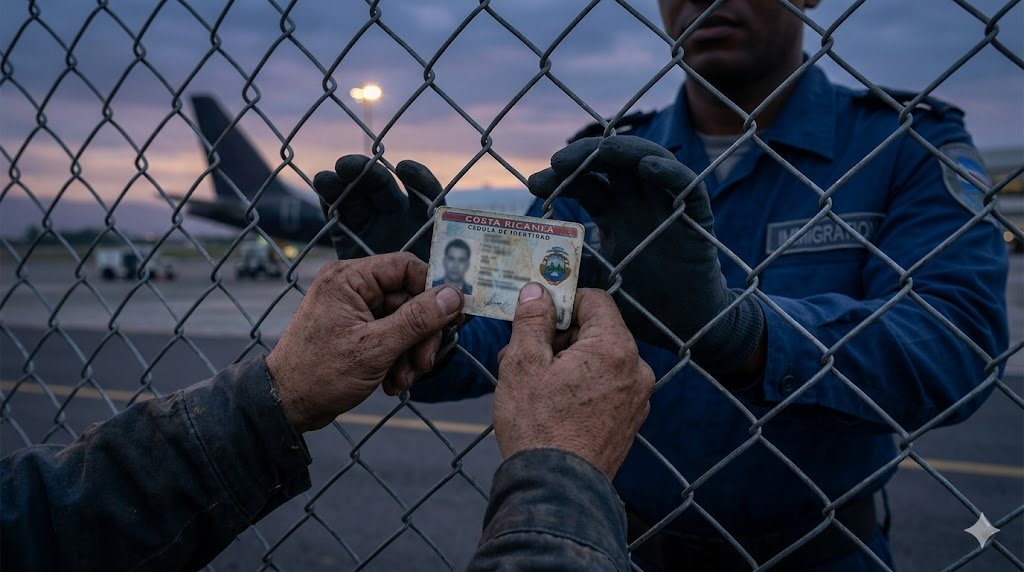
Credit: ElHispanoParaTodos
What you need to know today (Snippet Bait)
The first deportation flight from the U.S. to Costa Rica marks the official start of a coordinated repatriation agreement between the Department of Homeland Security (DHS) and the Costa Rican government. This flight carried citizens who did not meet asylum requirements or entered illegally after the end of Title 42. The goal is to discourage irregular migration through rapid and forced returns, eliminating the perception that Costa Rica is a “deportation-free bridge.”
Anatomy of the agreement: What did Washington and San José sign?
This is not just about a plane. It’s a paradigm shift. Historically, Costa Ricans did not represent an alarming number in border detentions compared to the Northern Triangle (Guatemala, Honduras, El Salvador). However, the numbers have risen by 15% in the last fiscal year, triggering alarms in Washington.
The selection process for deportation
Many wonder: “Who is being put on these flights?” The selection is not random. The protocol prioritizes:
- People with final removal orders: Those who have exhausted their legal options before an immigration judge.
- Recent crossings under Title 8: Individuals detained crossing the border irregularly who could not demonstrate a “credible fear” of persecution.
- Criminal records: Individuals who, in addition to their immigration status, have criminal records in the United States.
The logistics of the “Return Flight”
Unlike commercial flights, these are operated by ICE Air Operations. Deportees typically travel handcuffed and shackled until the plane enters international airspace, a measure many consider excessive but which DHS defends as a “security standard.”

Impact Comparison: Costa Rica vs. the Rest of Central America
| Analysis Factor | Costa Rica (New Scenario) | Northern Triangle (Traditional) |
| Flight frequency | Initial / Suggested monthly | Daily / Multiple flights |
| Main cause | Economic / Overwhelmed asylum applications | Violence / Political crisis |
| Consular reception | Reintegration process in development | Mass reception protocols |
| Impact on remittances | Moderate (growing) | Critical for GDP |
What will happen to those left behind?
Here’s the interesting part (and what no one tells you). This first flight doesn’t just affect those returning; it creates a domino effect in Costa Rican communities in places like New Jersey, North Carolina, and Florida. The question hanging in the air is: Is this the start of mass raids against Costa Ricans?
The truth is, while the focus is on the border, the internal message is one of vigilance. Costa Rica has been a historic U.S. ally, but in the game of migration policy, alliances are paid for with border control.
Pro tips for those with family members in the process:
- Don’t ignore the Notice to Appear (NTA): Many Costa Ricans believe that, because they come from a “friendly” country, the judge will be more lenient. Fatal mistake.
- Gather proof of ties: If your family member is detained, the defense should focus on family bonds and a history of moral conduct.
- Beware of “Notarios”: In moments of desperation, scams abound. Only an accredited immigration attorney can stop a deportation order.
The human impact: From the American dream to Costa Rican reality
Returning empty-handed is not just a financial failure; it’s a social trauma. Costa Rica, despite being the “Switzerland of Central America,” faces economic challenges that make reintegration difficult for these citizens.

- Unemployment: Many returnees sold everything to leave. They come back to a country where the cost of living has risen by 8% and opportunities are scarce for those who have been outside the system for years.
- Social stigma: There’s a harmful narrative that labels deportees as “failures” or “criminals,” ignoring that most are workers seeking a better life.
Do we really need this level of harshness with an allied country? Probably, from the perspective of U.S. national security, the answer is a resounding yes. But from a human perspective, this first flight is just the prologue to a story of family fragmentation.
Image: ElHispanoParaTodos/PRESS