The Orion capsule has splashed down in the Pacific. What does the success of Artemis II mean for the return to the Moon and the new space cold war? Full analysis.
Fifty-four years after humanity left its last footprints in lunar dust, the prelude to the great return of Artemis II has just been completed. On April 10, 2026, the Orion capsule pierced Earth’s atmosphere and landed in the waters of the Pacific Ocean, off the coast of San Diego.

But let’s not kid ourselves. This was not just a test flight to take pretty pictures of space. Behind the crew’s smiles and the applause at the Johnson Space Center, the technological prestige of the United States was at stake in the face of the relentless advance of rival powers.

The Artemis II mission successfully concluded on April 10, 2026, after nearly 10 days of flight. The crew, consisting of Reid Wiseman, Victor Glover, Christina Koch, and Jeremy Hansen, splashed down safely after traveling farther than any human in history (surpassing the Apollo 13 record). This success validates the life support systems of the Orion capsule and gives the green light for Artemis III to finally put human boots on the lunar surface.
We promised to get to the point. Let’s see exactly what happened and what this milestone leaves us.
The Trial by Fire (Literal): Orion’s Return
The most critical moment of the 10-day journey was not reaching the far side of the Moon. It was the return.

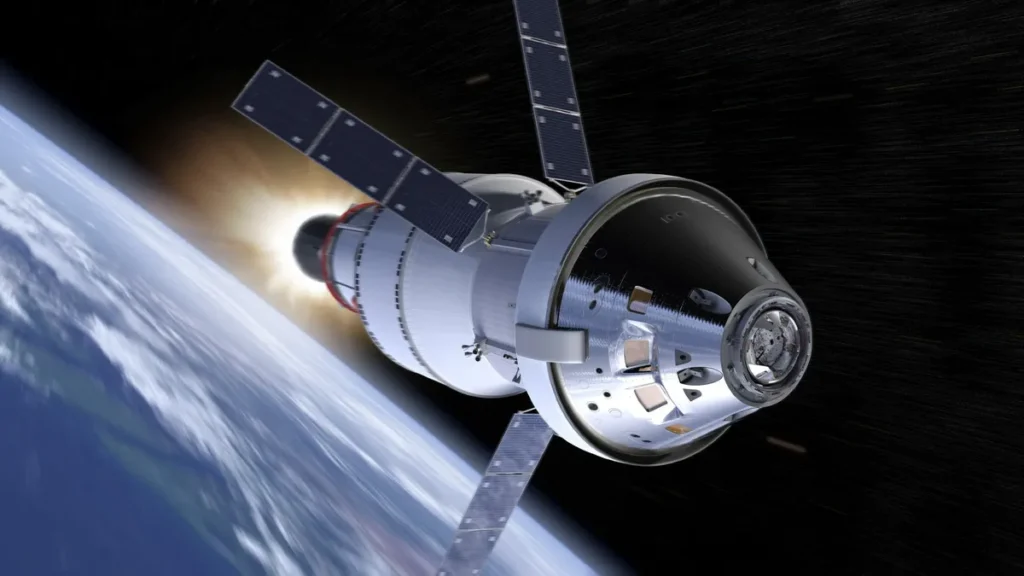
The Orion spacecraft had to withstand temperatures close to 3,000 degrees Fahrenheit (nearly half the heat of the Sun’s surface) while traveling at hypersonic speed. During the uncrewed Artemis I mission, the heat shield suffered more wear than expected, forcing engineers to drastically modify the re-entry trajectory for this flight.
Did the new tactic work? Yes. The enormous orange parachutes deployed perfectly, reducing the capsule’s speed to a manageable 24 meters per second before splashdown. The crews of the USS John P. Murtha recovered the capsule in a flawless military maneuver.
Real Implications: The Space Chessboard
The implications of this mission go far beyond pure science. Here, we’re not just talking about exploring exoplanets or observing the cosmos without Earth’s interference. We’re talking about raw geopolitics.

- The Specter of China’s Advance: While NASA celebrated Orion’s return, everyone in the background is watching the calendar. China has already brought back samples from the far side of the Moon and has aggressive plans to build a lunar base. Artemis II is Washington’s political response to ensure that the lunar south pole (where vital frozen water exists for future bases) is territory dominated by Western allies.
- Validation of Space Privatization: Although Orion is NASA’s, the Artemis ecosystem depends on the private sector. Today’s success keeps the multibillion-dollar budget alive for companies like SpaceX (Elon Musk’s) and Blue Origin (Jeff Bezos’) to continue developing lunar landing modules for Artemis III and IV. A failure in Artemis II would have frozen the industry for years.
- The Psychological Record: By traveling more than 248,000 miles from Earth and photographing an unusual “Earthset” from the far side of the Moon, this mission demonstrated that current hardware can withstand deep-space travel. It’s the necessary psychological bridge before aiming for Mars.
Quick Facts Table: Artemis II Mission
| Key Fact | Milestone Details |
| Splashdown Date | April 10, 2026 (5:07 p.m. PT) |
| Recovery Zone | Pacific Ocean (Off San Diego, California) |
| Trip Duration | Approx. 10 days |
| Historic Crew | First woman (Koch), first African American (Glover), first non-American (Hansen). |
| Next Step | Artemis III (Landing at the Lunar South Pole). |
Conclusions: Is the Cost Worth It?
The Artemis program’s budget continues to be an easy target for critics. And rightfully so. Spending billions of dollars to return to a place we already visited in 1969 seems, at first glance, like an extravagant redundancy.
The reality is that Artemis II demonstrated that we are not repeating history, we are scaling it. It’s no longer about planting a flag and rushing back home. The success of these four astronauts confirms that the United States has the transportation and survival technology to establish a permanent presence off planet Earth.
What comes next is the real challenge: leaving orbit, braking in the vacuum, and getting our boots dirty with lunar dust again.
Source: Nasa.gov