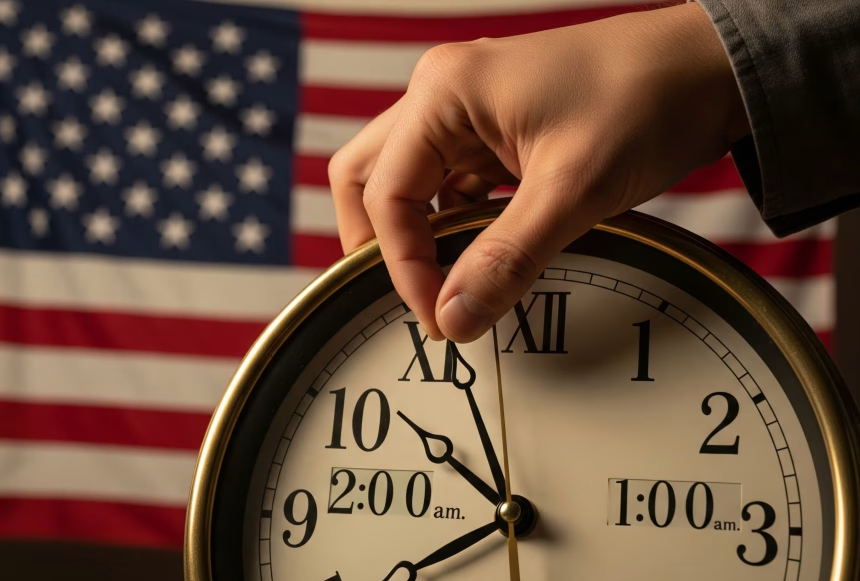
How many times have you heard the phrase “this time we really forgot to change the clock“? Year after year, the promise to eliminate the time adjustment fades in the halls of Congress. But now, the idea of making Daylight Saving Time permanent has gained traction in Washington. The truth is, for most people, this sounds like a blessing: longer, brighter evenings during the winter.
However, there’s a hidden side to this change that rarely comes up at family dinner tables. Is it really best for our biology, or just a strategic win for retail?

The push for change (Snippet Bait): The proposal to establish permanent Daylight Saving Time (Sunshine Protection Act) seeks to eliminate the biannual clock change. If ratified, winter mornings would be noticeably darker, but evenings would enjoy extended daylight—a change that, according to supporters, would improve mental health and the economy, though the scientific community warns of potential chronic risks to our biological clock.

The anatomy of the “Sunshine Protection Act”
To understand why this is such a contentious issue, we must look beyond the convenience of having light at 6:00 p.m. in January.
1. The battle between “Summer” and “Winter”
Sleep experts have repeatedly warned that Standard Time (winter time) aligns best with natural light and our circadian rhythms. By choosing permanent Daylight Saving Time, we would be forcing our bodies to wake up in near-total darkness during the coldest months. Is it worth sacrificing restorative sleep for a slightly brighter evening? Politicians say yes; science says we should be cautious.
2. The impact on the local economy
This is where Congress has its eyes set. More evening light statistically means more shopping. People go out more, spend more, and the service sector—so vital to the small businesses we cover at El Hispano—directly benefits. It’s a bet on consumption over biology.
Table: Benefits vs. Risks of Permanent Time
To help you form your own opinion, we’ve broken down what’s at stake:

| Factor | Permanent Daylight Saving Time | Standard Time (Winter) |
| Evening Light | Extended (Ideal for recreation) | Sets early |
| Sleep Health | Risk of circadian disruption | Natural sync with the sun |
| Productivity | Higher commercial activity | Greater morning focus |
| Traffic Safety | Fewer accidents at dusk | More risks on dark mornings |
Practical guide: How would this change affect your family?
If this measure is implemented, the routine of millions would change overnight. Here are the key points to keep in mind:
1. Dark mornings: School adjustment.
For parents with school-aged children, this means kids will wait for the bus in complete darkness for much of the winter. It’s imperative to review bus stop safety and use reflective elements on children’s clothing.
2. Sleep hygiene: Circadian rhythms.
If the body senses it’s daytime for longer, melatonin production will be delayed. Consider investing in blackout curtains so your family can fall asleep earlier, offsetting the extra outdoor light.

3. The transition week: Cardiovascular health.
Studies have shown that the traditional time change is linked to a spike in heart attacks. While permanent time would eliminate this annual shock, the initial adjustment could be tough. Keep a light diet and avoid caffeine after noon during the first few weeks.
The truth is, beyond politics, we’re facing a massive social experiment. Many applaud the possibility of eliminating the clock change, but the price will be a biological adjustment we can’t ignore. As a community, we must prepare to adjust not just our clock hands, but also our habits. We’ll continue monitoring whether Congress finally gives the green light to this measure so you can plan your life with precision.
Image: ElHispanoParaTodos/PRESS