If you are part of the international academic community or work in communications on U.S. soil, you likely felt the weight of this news as soon as the first draft leaked. This is not just a simple form change; it is a restructuring of the trust that the federal government places in two of the most dynamic sectors of the knowledge economy—students and journalists.
The truth is, for DHS, the border is no longer just physical; it is an invisible barrier of surveillance that now seeks to audit even the last activity of a scholarship recipient or the contents of a correspondent’s notebook.

Immediate operational impact (Snippet Bait): The Department of Homeland Security (DHS) has announced a tightening of oversight for F-1 (student) and I (journalist) visas. The new controls include quarterly audits of academic compliance, strict limitations on stay extensions, and deep scrutiny of news coverage deemed “sensitive,” putting the freedom of movement and professional work of thousands of foreign nationals at risk.
The anatomy of control: Why did DHS change the rules?
The official discourse speaks of “national security,” but the technical reality is a bureaucratic maze designed to reduce the discretion of immigrants.
1. The student under constant surveillance
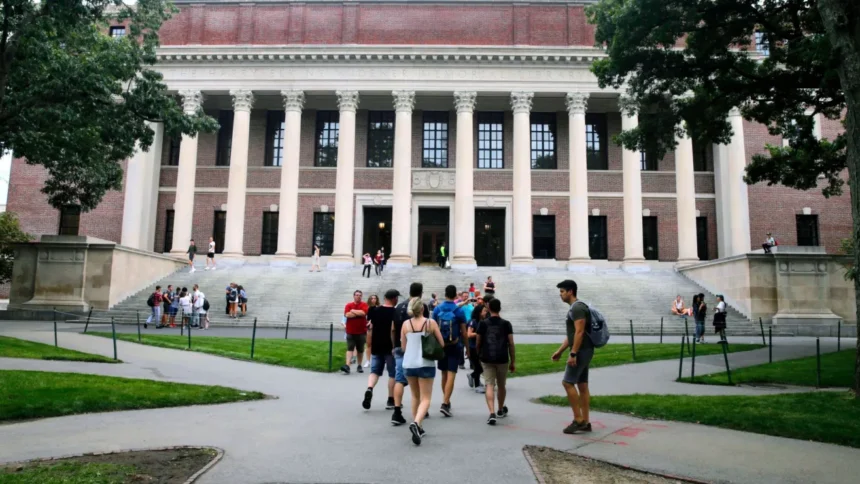
Until recently, an international student lived under annual or semester-based supervision. Under the new system, DHS is integrating real-time monitoring systems.
- What changed?: Now, any change in course load, a temporary leave, or even an unreported change of address within less than 48 hours can trigger an automatic “out of compliance” alert.
- The trap: Many students lose their status without realizing it, simply due to an administrative error by their university’s international office.
2. Journalists: Information or “Foreign Influence”?
This is the most delicate point. The tightening for foreign journalists is not just about processing times; it is about forced transparency. DHS now requires a detailed justification for each journalistic assignment, skirting the boundaries of what in other countries would be considered prior censorship.
Risk Table: The new reality for those affected
| Profile | Main Risk | Proactive Action |
| Students (F-1) | Immediate visa cancellation due to administrative error | Document every curricular change with the DSO. |
| Journalists (I) | Requirement to register activities | Maintain records of contacts and sources. |
| Scholars/Researchers | Review of sensitive study topics | Consult with legal counsel about “technology transfer.” |
Survival guide: What to do if you are under this new scrutiny?
Do not let uncertainty cost you your visa. In this new environment, proactivity is your only legal shield.

1. Document your purpose: The activity log.
Both journalists and students must keep impeccable records. If you are a journalist, have your credentials on hand and, above all, a letter from your employer detailing the scope of your work. If you are a student, keep every enrollment receipt and email from your university.
2. Preventive cleanup: Digital footprint audit.
DHS no longer just looks at your paperwork; it looks at your social media and cloud activity if they suspect anything. Make sure your public profile does not contradict the purpose of your visa.
3. Right to silence: The golden rule: Do not provide more information than necessary.
If a migration officer questions you at a point of entry, you are obligated to respond about your purpose, but you do not have to provide confidential information about your journalistic sources or irrelevant academic details. Use the phrase: “That is not relevant to my immigration status.”

This measure is a brutal reminder that, in the U.S., a visa is a privilege subject to conditions that can change with the stroke of a pen. For the Hispanic community, this means staying one step ahead: do not let your immigration status be something you “hope works out”; make sure it is documented down to the last detail. We will continue monitoring how these new controls are applied at airports and local offices.
Image: ElHispanoParaTodos/PRESS