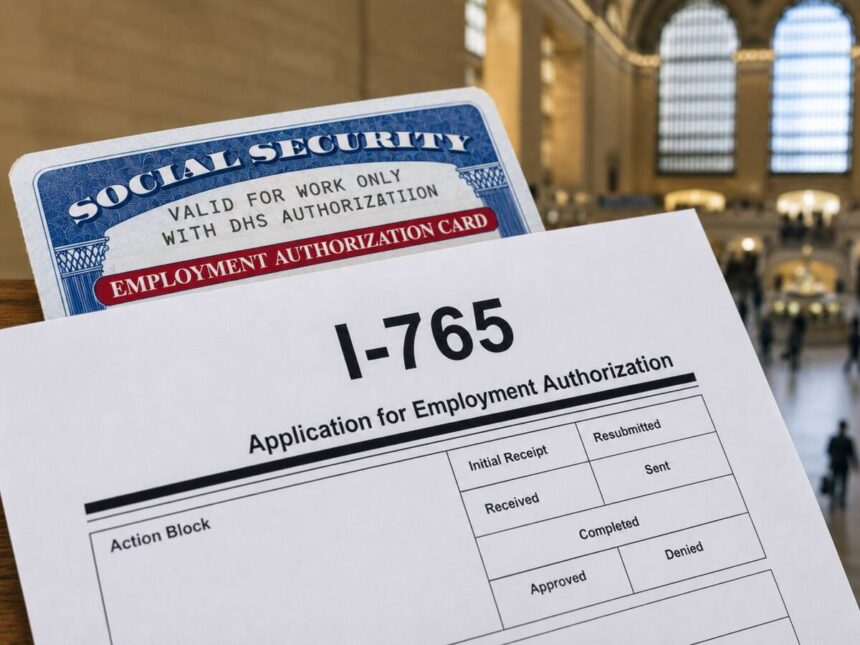
If you are in the middle of an immigration process in the United States, you know full well that keeping your documents up to date is the only real barrier between job stability and the nightmare of becoming undocumented overnight. The truth is that a simple bureaucratic detail, like using an outdated edition of official forms, can cost you months of delays, hundreds of dollars in non-refundable fees, and, in the worst-case scenario, the temporary loss of your permit to bring home a paycheck.
- Which Form I-765 Should Be Used Before and After September 15
- USCIS Warns There Will Be No Grace Period
- The Anatomy of the Bureaucratic Change: Why Is USCIS Modifying Form I-765?
- 1. The Transition Toward Digitalization and New Security Filters
- 2. The Direct Impact on Hispanic Workers and Families
- Table: Breakdown of the Regulatory Change — Editions, Deadlines, and Consequences
- Practical Guide: How to Verify Your Form and Avoid USCIS Rejecting Your Work Permit
- 1. Never use forms previously saved on your computer: Always download the form directly from the official source.
- 2. Check the print codes before filling out the fields: Verify the edition date in the footer.
- 3. Where to consult reliable sources and avoid notary scams: Legal advice and immigration policy monitoring.
- What Happens If You Submit the Previous Version After the Change
- Another Important Immigration Form Is Also Changing
The recent directive issued by U.S. Citizenship and Immigration Services (USCIS) is no minor matter. The federal agency has set an inflexible deadline for transitioning to the new edition of Form I-765 (Application for Employment Authorization), warning that any package received with previous versions will be returned without exception. Why is USCIS changing this form, which specific editions are being blacklisted, and how can applicants protect themselves from this bureaucratic hurdle? Let’s break it down thoroughly.

The key date is September 15, 2026. From that day forward, USCIS will only accept the new edition of the I-765, identified with the date 09/15/26. There will be no grace period during which both versions can be used interchangeably.
The Pulse of Immigration Change (Snippet Bait): U.S. Citizenship and Immigration Services (USCIS) formally implemented a new edition of Form I-765 for work permits, establishing that starting from the set deadline, all applications submitted using previous versions will be automatically rejected. The measure aims to standardize biometric validations and digital security controls, requiring petitioners to strictly download the latest version available on the agency’s official portal.
Which Form I-765 Should Be Used Before and After September 15
Until September 14, the current edition of Form I-765 is the one dated 08/21/25. USCIS has set specific rules for the transition:
- If the form is mailed before September 15, the 08/21/25 edition must be used.
- If mailed on September 15 or later, only the new 09/15/26 edition must be used.
- The new edition should also not be submitted before it takes effect: USCIS indicated it will begin accepting it starting September 15.
For applications sent by mail, USCIS will consider the postmark date. For electronic submissions, the date the form is sent through the agency’s system will count.
This detail is particularly important for those currently preparing an application and planning to submit it around the change date.

USCIS Warns There Will Be No Grace Period
Normally, when USCIS updates some of its forms, it may establish a period during which it still accepts the previous version. This time will be different. The agency explicitly stated there will be no grace period because the new version of the I-765 is necessary to implement a recent change in immigration rules.
Therefore, an application sent on September 15 with the form dated 08/21/25 will be rejected even if it was prepared days earlier.
USCIS has already made a preliminary version of the new form and its instructions available so that applicants and legal representatives can review the changes before they officially take effect.

The Anatomy of the Bureaucratic Change: Why Is USCIS Modifying Form I-765?
To understand the rigor with which the immigration agency operates, it is necessary to look behind the counter and analyze the operational reasons driving these constant updates.
1. The Transition Toward Digitalization and New Security Filters
Every time USCIS modifies an official form, it is not simply about changing the document’s graphic design but integrating new barcodes, digital validation fields, and specific questions aimed at cross-referencing data with national security agencies.
- The Danger of Outdated Editions: Previous versions of Form I-765 lack the updated fields to reflect recent changes in eligibility categories, especially for asylum seekers, TPS beneficiaries, and spouses of work visa holders (such as H-4 or L-2).
- The Uncomfortable Truth: For independent filers or those completing their paperwork without specialized legal advice, continuing to use a form saved on their computer from last year is the most common and costly mistake. USCIS does not issue prior warnings; it simply processes the rejection (rejection notice) and returns the entire package, wasting valuable weeks in the immigration timeline.
2. The Direct Impact on Hispanic Workers and Families
In an economy where thousands of families depend on the timely renewal of their work permit (Employment Authorization Document or EAD) to keep their jobs in sectors like construction, hospitality, and services, a rejection due to a form error can trigger an immense labor crisis.
- The Print Date Rule: At the bottom of each page of the official form, USCIS prints the version date (for example, with a month and year code). Mailroom officers meticulously check this detail before accepting the application and charging the corresponding fee.
- The Risk of EAD Expiration: If your current permit is about to expire and you make the mistake of submitting an old version of the form, the time it takes the agency to return your paperwork—plus the new submission—could leave you temporarily without legal authorization to work, jeopardizing your job continuity.
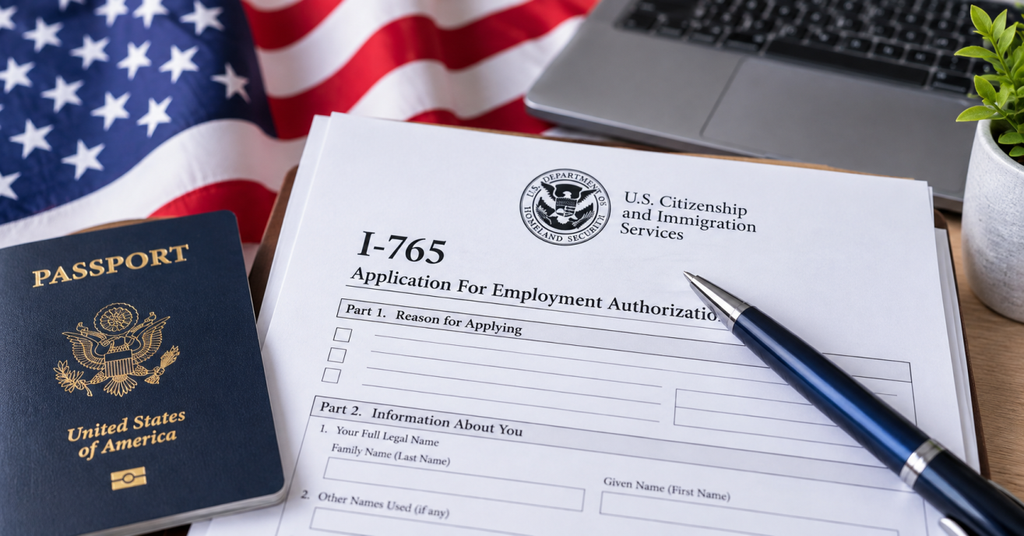
Table: Breakdown of the Regulatory Change — Editions, Deadlines, and Consequences
To precisely visualize what you must check before submitting your documentation to USCIS, we compare the key aspects of this update:
| Application Variable | Previous (Obsolete) Formats | New Edition of Form I-765 |
| Legal Validity | Automatically rejected by USCIS starting the cutoff date. | Only version accepted for processing EAD applications and renewals. |
| Visible Print Date | Older versions printed in previous agency cycles. | Most recent edition actively published on USCIS’s official website. |
| Consequence of Error | Return of the entire mailed package, loss of time, and critical delays. | Standard processing and fee receipt issuance without issues. |
Practical Guide: How to Verify Your Form and Avoid USCIS Rejecting Your Work Permit
Given the strictness of USCIS’s new filters, applicants must adopt a rigorous verification protocol before mailing their package. Follow these foolproof steps to safeguard your application:
1. Never use forms previously saved on your computer: Always download the form directly from the official source.
Avoid searching for the document on third-party websites or using forms a family member or friend sent you in PDF. Always go directly to the agency’s official portal at U.S. Citizenship and Immigration Services (USCIS), navigate to the Form I-765 section, and download the most recent edition available in digital format.
2. Check the print codes before filling out the fields: Verify the edition date in the footer.
Once the document is downloaded or opened online, scroll to the bottom of each page of the form. Ensure the printed edition date exactly matches the one currently required by the agency. If there are discrepancies, discard the document immediately.
3. Where to consult reliable sources and avoid notary scams: Legal advice and immigration policy monitoring.
Form changes are often exploited by unscrupulous notaries and fake agents charging excessive fees for special processing. To stay informed about deadlines and requirements, check the agency’s official updates or follow specialized coverage on Associated Press.
The truth is that in U.S. immigration processes, document accuracy is as important as meeting substantive requirements. For our Hispanic community, staying informed on time is the best tool to avoid abuses, unnecessary costs, and setbacks on the path to work authorization.
What Happens If You Submit the Previous Version After the Change
USCIS is explicit: the application will be rejected. This does not necessarily mean the person permanently loses the chance to obtain a work permit, but it may require preparing and resubmitting the application with the correct form.
The delay can be especially problematic for someone close to an immigration deadline or needing to renew their employment authorization.
Therefore, September 15 is not just the date USCIS will post another form on its website. Starting that day, the valid edition changes, and using a version that was correct until the day before may be enough for the agency to reject the submission.
Another Important Immigration Form Is Also Changing
The I-765 will not be the only form changing on September 15. On that same day, USCIS will publish a new edition of Form I-539, Application to Extend/Change Nonimmigrant Status, also identified with the date 09/15/26.
Until then, the edition dated 08/28/24 is in use. Starting September 15, USCIS will reject that previous version and require the new one, also with no grace period.
Form I-539 is used in various situations by foreigners seeking to extend their stay or change to a specific nonimmigrant status.
Image: ElHispanoParaTodos/PRESS